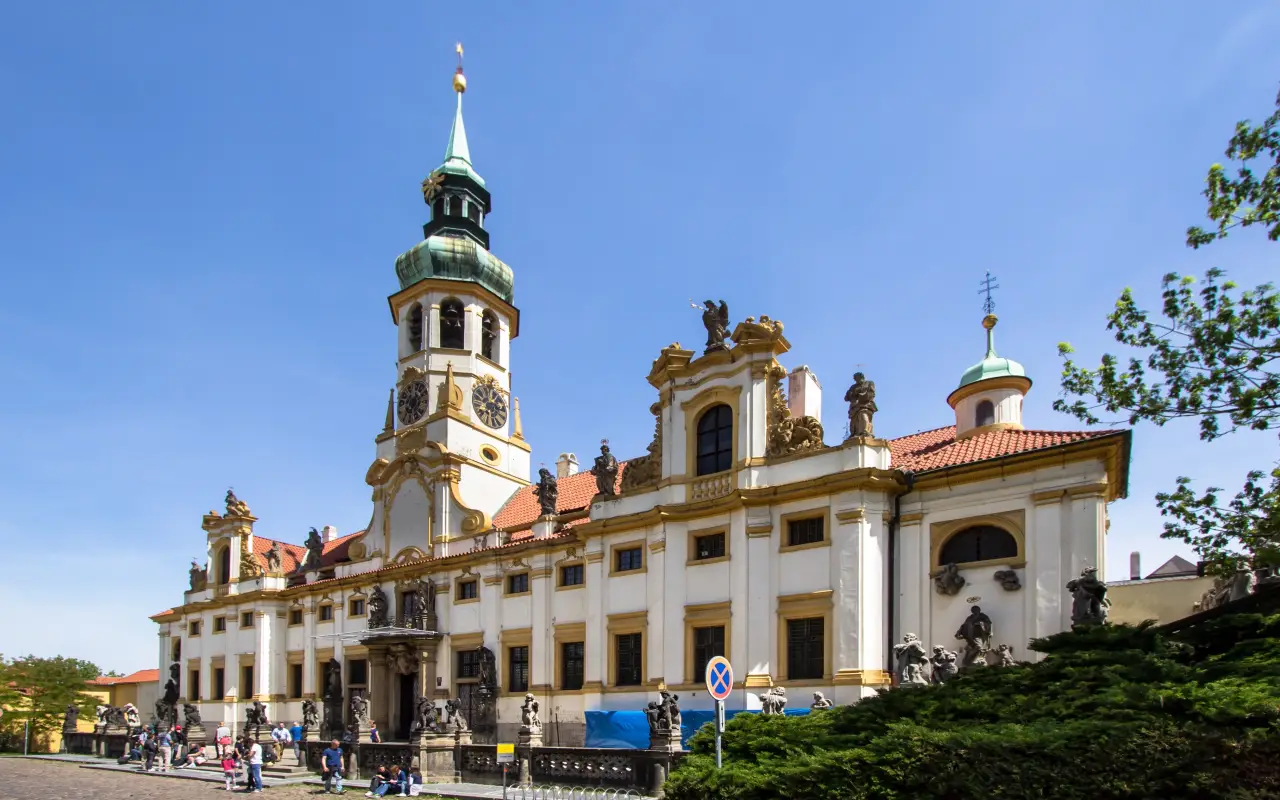
Claim to Fame
The Prague Loreto is Central Europe’s most important Baroque Marian pilgrimage site, famed for its miraculous Santa Casa replica and the daily chimes of its ornate carillon clock.
📌 Navigating Prague Loreto : Answers to Frequently Asked Questions
- Admission Fee: Admission fees vary, with discounts available for students and seniors; check the official website for current pricing.
- How Long to Visit: A visit usually takes around 1 to 2 hours, allowing time to explore the grounds and exhibits.
- Washrooms: Restroom facilities are available within the premises for visitor convenience.
- Hours of Operation: The Prague Loreto is typically open from 9 AM to 5 PM, but hours may vary by season.
- Important Information: It is advisable to check for any special events or closures before visiting, as these can affect access.
- Handicap Accessible: The Prague Loreto is wheelchair accessible, with ramps and facilities for visitors with mobility challenges.
- Pets: Pets are not allowed inside the Loreto complex to maintain the sanctity and cleanliness of the site.
- Guided Tours: Guided tours are available and provide insightful information about the history and architecture of the Loreto.
- Restaurant or Cafe: There is a small café on the premises serving light refreshments and snacks.
- Gift Shop: A gift shop on-site offers religious souvenirs, books, and unique local crafts.
- Parking: Limited street parking is available nearby, but public transportation is recommended due to narrow roads.
- Family Friendly: The site is family-friendly, offering educational activities and a welcoming environment for children.
- Photography: Photography is permitted inside the grounds, but flash photography and tripods are typically prohibited.
- WIFI: Free Wi-Fi is not available on-site; visitors are encouraged to use their mobile data.
- Picnic Area: There is no designated picnic area, but visitors can enjoy the surrounding gardens in a respectful manner.
Photos of Prague Loreto
Perched on Hradčany Hill near Prague Castle, the Loreto complex draws pilgrims and art lovers alike to its gilded chapels, cloisters, and the revered replica of the Holy House (Santa Casa). Built in the early 17th century by Italian architects under the patronage of the Lobkowicz family, Loreto’s richly decorated facades and frescoed interiors channel Counter-Reformation splendor. Visitors explore sacred art, listen to the Loreto Bells’ Baroque melodies, and ascend to vantage points overlooking the castle district.
What to Expect
Your visit begins at the grand Baroque façade adorned with marble columns and glazed tile roofing. Inside the central Basilica of the Nativity, admire frescoes by Kilian Ignaz Dientzenhofer and the silver-gilded altar housing the Santa Casa—an exact reproduction of the Virgin Mary’s Nazareth home, studded with votive hearts from grateful pilgrims.
Wander through the cloister courtyard, study the museum’s collection of Baroque art and ecclesiastical treasure (including Chalices of the Seven Sorrows), and be sure to hear the Loreto Bells chime the hourly carillon tune. A small café in the former sacristy offers refreshments beneath vaulted ceilings and views of the Gothic spires beyond.
Background and Cultural Context
Modeled on the original Italian Loreto shrine, Prague’s version was commissioned in 1626 to reaffirm Catholic devotion during the Thirty Years’ War. Architects Carlo Lurago and Giovanni Orsi crafted a harmonious ensemble of chapels—Santa Casa, Chapel of the Annunciation, and Governor’s Chapel—each reflecting Baroque theatricality and Marian iconography.
Over centuries, Loreto became a focal point for Habsburg ceremonies, monastic processions, and aristocratic patronage. Despite wartime damage and secularization attempts, the site was restored in the 19th century and remains an active pilgrimage destination, blending living tradition with museum-quality art and architecture.
Best Time to Visit
Weekday mornings (9–11 AM) offer quiet contemplation in the basilica before guided tours arrive. The Loreto Bells play special melodies at noon—plan to be in the cloister for this highlight. Late spring (May–June) and early autumn (September) bring mild weather for strolling the adjacent Castle Gardens and enjoying unobstructed views of Lesser Town.
How to Get There
From Prague Castle, walk down through the Royal Garden toward the Loreto turnoff on Loretánské náměstí. Alternatively, tram 22 or 23 stops at “Pohořelec,” a short uphill walk through historic lanes. Parking is very limited—public transport or a castle-district walking route is recommended.
Photo Opportunities
- Baroque façade’s marble pilasters and tile roof against a blue sky
- Interior view of the silver-gilded Santa Casa surrounded by votive hearts
- Cloister courtyard with arcaded galleries and central fountain
- Close-up of the carillon’s gilded clock face and bell tower details
- Panorama of Prague Castle rooftops from the Loreto’s terrace
Travel Tips
- Purchase a combined Loreto–Strahov Monastery ticket for both sites at a discount.
- Respect worshippers—keep voices low inside the basilica and chapels.
- Wear comfortable shoes—the cobblestones and slight inclines around the complex can be uneven.
- Listen for the Loreto Bells 15 minutes before the hour to experience the full carillon rehearsal.
- Combine with a visit to nearby St. Vitus Cathedral and the Castle Gardens for a full Hradčany day.
FAQs
Is there an entry fee?
Yes—a modest admission fee (around 120 CZK) covers the basilica, Santa Casa, and museum; audio guides cost extra.
Can I attend Mass at Loreto?
Masses are held daily in the basilica; check the posted schedule for times, particularly on Marian feast days.
Are guided tours available?
Yes—official guided tours depart hourly from the entrance; private guided visits can be arranged in advance.
Is photography allowed?
Non-flash photography is permitted in most areas; flash and tripods inside the Santa Casa nave are prohibited to protect artworks.
Final Thoughts
The Prague Loreto offers a unique blend of Baroque art, living pilgrimage tradition, and commanding views of Prague’s castle district. Whether drawn by its sacred Santa Casa, the haunting Loreto Bells, or its ornate cloisters, this complex invites both spiritual reflection and architectural admiration.