Claim to Fame
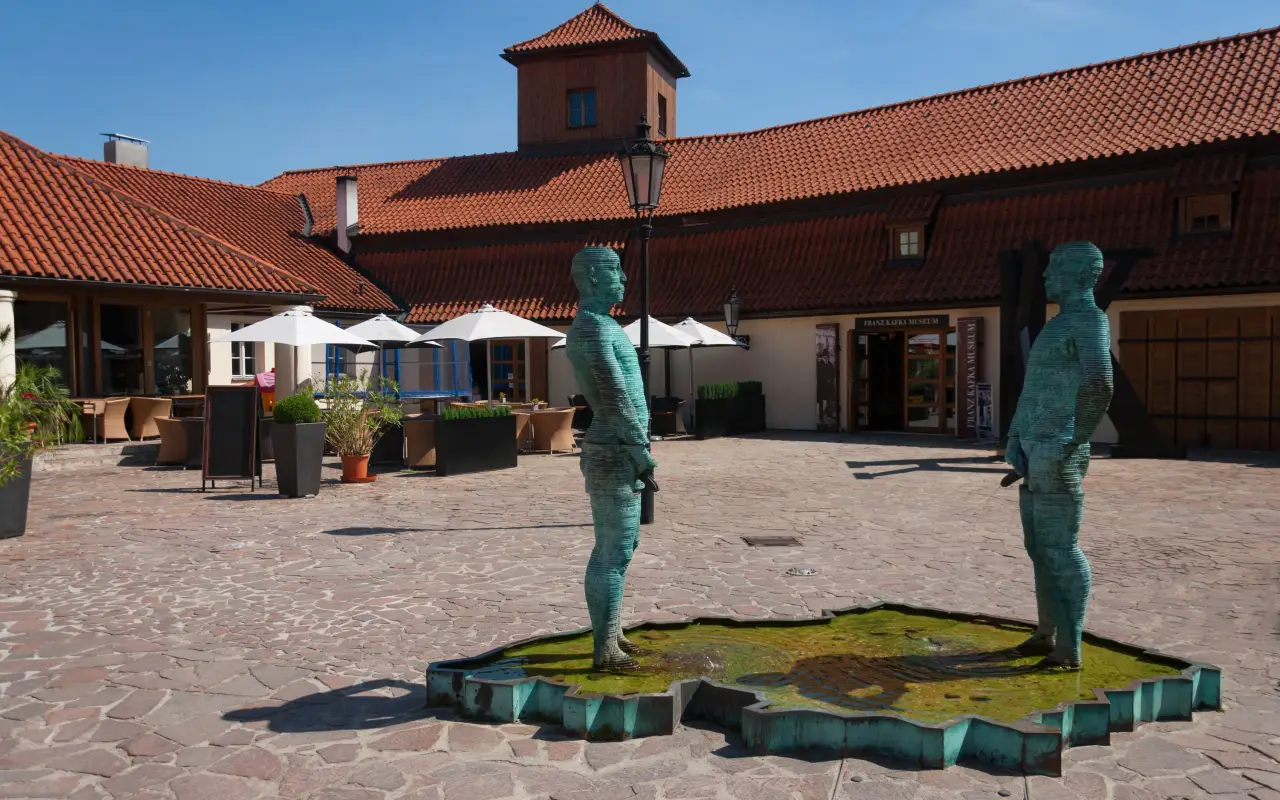
The Franz Kafka Museum is the world’s only museum devoted to the enigmatic writer, featuring original manuscripts, multimedia installations, and a haunting atmosphere in Prague’s historic Lesser Town.
📌 Navigating Kafka Museum : Answers to Frequently Asked Questions
- Important Information: It is recommended to book guided tours in advance, especially during peak tourist seasons.
- Washrooms: Washrooms are accessible within the museum for visitor convenience.
- Hours of Operation: The museum operates daily from 10 AM to 6 PM, with extended hours on weekends.
- How Long to Visit: Most visitors spend about 1 to 2 hours exploring the exhibits.
- Admission Fee: Admission fees vary, with discounts available for students and seniors.
- Parking: Limited parking is available nearby, with public parking options in the vicinity.
- Family Friendly: Family-friendly activities and exhibits are available, making it suitable for visitors of all ages.
- Photography: Photography is permitted in certain areas, but flash photography may be restricted.
- WIFI: Free WIFI is available for visitors throughout the museum.
- Picnic Area: There is no dedicated picnic area within the museum grounds.
- Handicap Accessible: The museum is handicap accessible, with ramps and elevators for easy navigation.
- Pets: Pets are not allowed inside the museum.
- Guided Tours: Guided tours are offered, providing deeper insights into Kafka's life and works.
- Restaurant or Cafe: A cafe is located on-site, offering a selection of beverages and light snacks.
- Gift Shop: A gift shop is available, featuring Kafka-related merchandise and literature.
Photos of Kafka Museum
Nestled in a vaulted Renaissance burgher’s house on the banks of the Vltava beneath Charles Bridge, the Kafka Museum offers a journey into the mind of Prague’s most famous literary son. Through a blend of documents, photographs, and surreal lighting, the exhibit traces Kafka’s life—from his Jewish upbringing and fraught family relations to his modernist novellas that captured existential angst. The museum’s design evokes Kafkaesque themes of isolation, metamorphosis, and bureaucratic labyrinths, making each visit both informative and hauntingly atmospheric.
What to Expect
The permanent exhibition unfolds across three dimly lit rooms. You’ll encounter rare first editions, personal letters, and photographs of Kafka’s Prague, interspersed with interactive displays that evoke dreamlike dislocation—mirrored walls, whispering voices, and fragmented texts. A centerpiece installation—a room filled with falling typewriter keys—symbolizes the writer’s fractured creativity.
Special rotating exhibits highlight Kafka’s contemporaries, adaptations of his work, and scholarly perspectives on his manuscripts. An adjacent reading nook invites you to leaf through translations in multiple languages, while a small gift shop offers books, prints, and Kafka-inspired design objects.
Background and Cultural Context
Born in Prague’s Old Town in 1883, Franz Kafka wrote in German amid a multicultural city under the Austro-Hungarian Empire. His works—*The Trial*, *The Metamorphosis*, *In the Penal Colony*—explored alienation and absurdity, influencing 20th-century literature profoundly, despite his own wish that his manuscripts be destroyed after his death in 1924.
Posthumously published by his friend Max Brod, Kafka’s reputation grew into a global phenomenon. The museum, opened in 2005, reflects Prague’s commitment to preserving his legacy and situates his work within the city’s Jewish, German, and Czech cultural crosscurrents.
Best Time to Visit
Weekday mornings (10–11:30 AM) offer quieter galleries and uninterrupted reflection. Late afternoons (4–6 PM) bring softer light filtering through small windows and fewer guided groups. In November—Kafka’s birth month—special commemorative talks and readings occur, though expect slightly larger crowds on those dates.
How to Get There
From Malostranská metro station (Line A), walk east across Mánes Bridge and descend the steps to Cihelná Street. The museum entrance is beneath Charles Bridge on a cobblestone lane marked by a minimalist brass plaque. Tram 17 also stops at “Malostranské náměstí,” a five-minute walk away.
Photo Opportunities
- The museum’s façade framed by the arches of Charles Bridge at dawn
- Reflections in the mirrored installation room, capturing distorted texts
- Close-up of Kafka’s handwritten manuscript pages under soft gallery lighting
- The typewriter-key installation in motion for a dynamic, surreal shot
- Exterior dusk silhouette of the Renaissance house against the river’s glow
Travel Tips
- Purchase tickets online to skip the small entrance queue—admission is limited to reduce crowding.
- Allow 60–75 minutes for a full exploration, including the reading nook and rotating exhibits.
- Wear comfortable shoes—the museum’s low ceilings and narrow passageways require careful navigation.
- Combine your visit with a walk to Kafka’s birthplace at Maiselova Street and the nearby Franz Kafka statue on Kampa Island.
- Check the schedule for evening “Kafka After Dark” events—film screenings, lectures, and late-night museum hours.
FAQs
Is photography allowed inside?
Non-flash, handheld photography is permitted except in timed special exhibitions—look for signage or ask staff.
Are guided tours available?
Yes—English and Czech guided tours depart daily at 11 AM and 3 PM; advance booking is recommended.
Is the museum accessible?
Due to the historic building’s layout, there is no elevator; visitors with mobility impairments should inquire about virtual tours or alternative access accommodations.
Is there a café?
No on-site café, but several riverside cafés are steps away under Charles Bridge for coffee and cake after your visit.
Final Thoughts
The Kafka Museum transcends a simple biographical exhibit—its immersive design and thoughtful curation evoke the very themes that define Kafka’s work. A pilgrimage for literature lovers, it offers an evocative window into the mind of a writer whose influence continues to shape our understanding of modern existential experience.