Claim to Fame
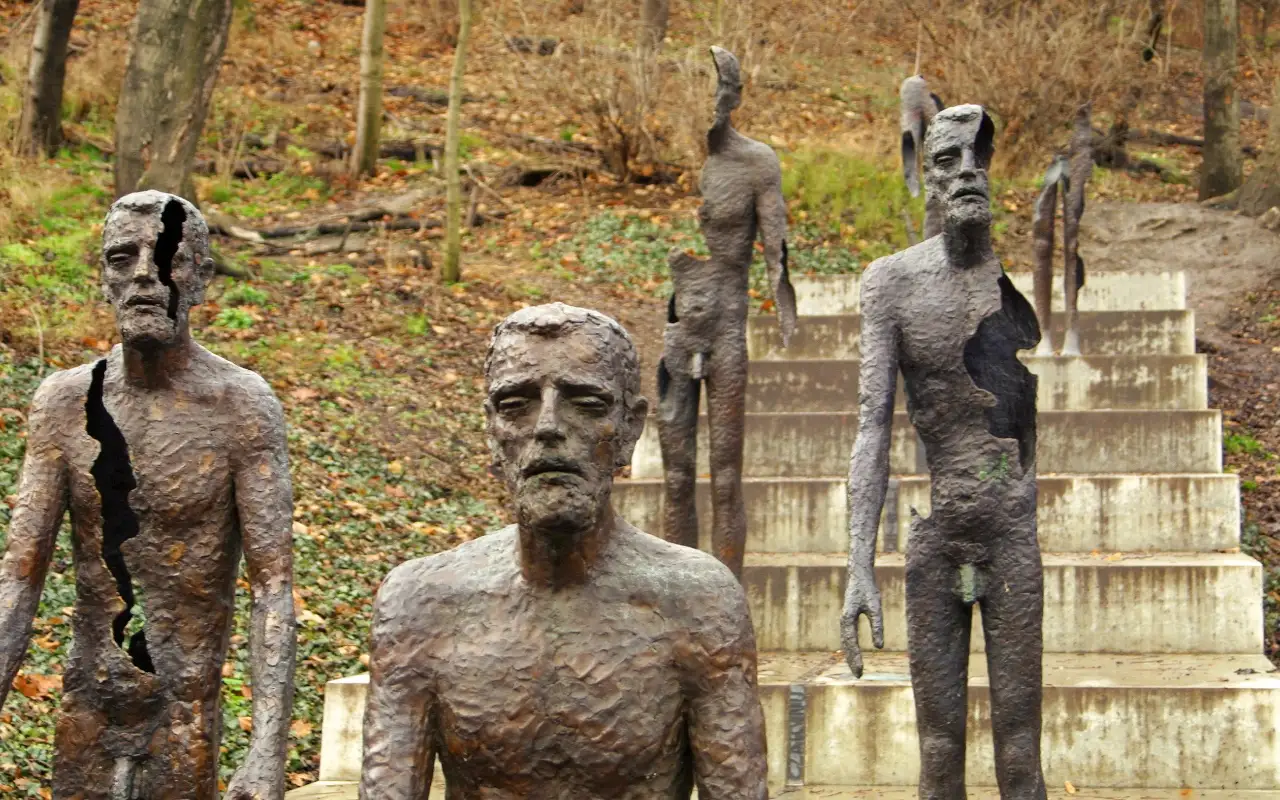
The Memorial to the Victims of Communism is a poignant Prague landmark featuring seven descending bronze figures that poignantly symbolize the human cost of six decades of totalitarian rule (1948–1989).
📌 Navigating Victims of Communism Monument : Answers to Frequently Asked Questions
- Admission Fee: There is no admission fee to visit the Victims of Communism Monument.
- How Long to Visit: Most visitors spend about 30 minutes to an hour exploring the monument and its surroundings.
- Washrooms: Washrooms are not available on-site; visitors should plan to use facilities in nearby locations.
- Hours of Operation: The monument is open year-round, typically from dawn until dusk.
- Important Information: It is recommended to be respectful while visiting, as the site memorializes the suffering of many individuals.
- Handicap Accessible: The monument is wheelchair accessible, with paved pathways leading to the site.
- Pets: Pets are not allowed on the monument grounds to maintain a respectful atmosphere.
- Guided Tours: Guided tours are available and can provide in-depth historical context and personal stories related to the monument.
- Restaurant or Cafe: There are no on-site restaurants or cafes, but several dining options are within walking distance.
- Gift Shop: A gift shop is not present at the monument, but local shops in the area may sell relevant souvenirs.
- Parking: Parking is available on nearby streets, but spaces can be limited, especially during peak hours.
- Family Friendly: The site is family-friendly, offering educational insights into the history of communism and its victims.
- Photography: Photography is encouraged, with many visitors capturing the poignant sculptures and inscriptions.
- WIFI: Free public Wi-Fi is not available at the monument, but nearby cafes may offer connectivity.
- Picnic Area: There is no designated picnic area at the monument, but nearby parks may offer suitable spots.
Photos of Victims of Communism Monument
Located at the base of Petřín Hill on Újezd street, this outdoor installation by sculptor Olbram Zoubek and architects Jan and Jiří Novotný presents a haunting procession of life-size figures gradually eroding into the pavement. Unveiled in 2002, it stands as one of Europe’s most powerful public commemorations of political imprisonment, forced labor, and exile under Communist regimes. A visit here offers a powerful moment of reflection amid Prague’s historic streetscape.
What to Expect
The memorial comprises seven bronze statues spaced along roughly 50 meters of cobblestone sidewalk. Each figure appears more fragmented than the last—first solid and whole, then chipped and hollowed, finally disappearing completely into the ground. Discreet plaques in Czech and English identify key dates of Communist rule, while benches and low walls nearby invite silent contemplation.
Complementing the sculpture is an information panel and adjacent “Cross of Wounds” monument honoring those who suffered or died resisting oppression. Visitors frequently pause to leave flowers, candles, or personal mementos at the base of the first statue, which is intact and unblemished as a symbol of remembrance.
Background and Cultural Context
Commissioned by the city and supported by the Václav Havel Library, the memorial was created by renowned Czech sculptor Olbram Zoubek with architects Jan and Jiří Novotný. It commemorates more than 200,000 Czechs persecuted from the 1948 Communist coup through the Velvet Revolution of 1989. The seven figures represent stages of physical and spiritual decay endured by political prisoners, forced laborers, and victims of show trials.
Prague’s location at Újezd—near tram lines and beneath the Petřín funicular—ensures visibility to both locals and visitors. Since its unveiling on June 18, 2002 (the 45th anniversary of the 1957 amnesty that freed many political prisoners), it has become a focal point for annual remembrance ceremonies and school visits, underscoring the importance of historical memory in Czech civic life.
Best Time to Visit
Early morning (8–10 AM) on weekdays provides a quiet atmosphere and soft light that accentuates the statues’ patina. Late afternoon (4–6 PM) casts warm shadows that dramatize the figures’ erosion. Special commemorative events occur each June 18 and November 17 (Struggle for Freedom and Democracy Day), though expect larger crowds then.
How to Get There
Take tram 12, 20, or 22 to the “Újezd” stop; cross the road and walk toward the base of Petřín Hill. The memorial lies along the left-hand sidewalk opposite Hotel Leopold, just below the funicular entrance. Alternatively, a five-minute walk from Malostranská metro station (Line A) brings you to the same point via Nerudova Street.
Photo Opportunities
- A low-angle shot of the intact first statue framed against Újezd’s historic facades
- Side-by-side panorama capturing all seven figures in sequence
- Detail of the eroded third and fourth statues highlighting the hollowed bronze
- Quiet evening shot with the figures softly illuminated by street lamps
- Close-up of personal tributes—flowers or candles—placed at the base of the first figure
Travel Tips
- Spend a few minutes at each figure to absorb the gradual symbolic decay—this memorial rewards slow pacing.
- Bring a small bouquet or single flower if you wish to pay respects in the local tradition.
- Combine your visit with a ride up the Petřín funicular or a walk through Petřín Park for sweeping city views.
- Wear comfortable shoes—the sidewalk is uneven and can be slippery after rain.
- Respect the solemn atmosphere—keep voices low and avoid obstructing the walkway.
FAQs
Is the memorial free to visit?
Yes—public access is free and available at all hours.
Can I touch the statues?
While touching is not prohibited, visitors are encouraged to observe respectfully without climbing or leaning on the figures.
Are guided tours available?
Many Prague walking tours include the memorial; self-guided audio guides can be downloaded via the Václav Havel Library website.
Is there seating nearby?
Benches and low walls around the site offer places to sit and reflect.
Final Thoughts
The Memorial to the Victims of Communism delivers a stark, visceral reminder of Prague’s 20th-century struggle for freedom. Its haunting procession of dissolving figures lends a powerful, wordless commentary on oppression and resilience—making it an essential stop for anyone seeking to understand the human stories behind historical events.