Claim to Fame
The Edinburgh Castle is a symbol of Scotland's turbulent history and a fortress that has stood guard over the capital for centuries, making it an essential destination for history enthusiasts and travelers alike.
📌 Navigating Edinburgh Castle Scotland : Answers to Frequently Asked Questions
- Admission Fee: Admission fees vary based on age and concessions, with discounts available for families and groups.
- How Long to Visit: A typical visit lasts between 1.5 to 3 hours, depending on the level of exploration and participation in guided tours.
- Washrooms: Washrooms are available on-site for visitor convenience.
- Hours of Operation: The castle typically operates from 9:30 AM to 5:00 PM, with extended hours during the summer months.
- Important Information: Visitors are advised to book tickets in advance during peak tourist seasons to avoid long queues.
- Washrooms: Washrooms are available on-site for visitor convenience.
- Hours of Operation: The castle typically operates from 9:30 AM to 5:00 PM, with extended hours during the summer months.
- Important Information: Visitors are advised to book tickets in advance during peak tourist seasons to avoid long queues.
- Admission Fee: Admission fees vary based on age and concessions, with discounts available for families and groups.
- How Long to Visit: A typical visit lasts between 1.5 to 3 hours, depending on the level of exploration and participation in guided tours.
- Handicap Accessible: Edinburgh Castle is partially handicap accessible, with ramps and designated areas, but some historic sections may be challenging to navigate.
- Pets: Pets are not allowed inside the castle grounds, with the exception of assistance dogs.
- Guided Tours: Guided tours are available and provide in-depth insights into the castle's history and significance.
- Restaurant or Cafe: There are several dining options on-site, including a café that offers light meals and refreshments.
- Gift Shop: A gift shop is located within the castle, featuring a variety of souvenirs, books, and Scottish-themed merchandise.
- Parking: Limited parking is available near Edinburgh Castle, with nearby public car parks offering additional options.
- Family Friendly: The castle is family friendly, offering educational exhibits and interactive displays that engage visitors of all ages.
- Photography: Photography is permitted throughout the castle, but tripods and drones are not allowed.
- WIFI: Free Wi-Fi is available in certain areas of the castle for visitors.
- Picnic Area: There is no designated picnic area within the castle grounds, but nearby parks offer suitable spots.
- Parking: Limited parking is available near Edinburgh Castle, with nearby public car parks offering additional options.
- Family Friendly: The castle is family friendly, offering educational exhibits and interactive displays that engage visitors of all ages.
- Photography: Photography is permitted throughout the castle, but tripods and drones are not allowed.
- WIFI: Free Wi-Fi is available in certain areas of the castle for visitors.
- Picnic Area: There is no designated picnic area within the castle grounds, but nearby parks offer suitable spots.
- Handicap Accessible: Edinburgh Castle is partially handicap accessible, with ramps and designated areas, but some historic sections may be challenging to navigate.
- Pets: Pets are not allowed inside the castle grounds, with the exception of assistance dogs.
- Guided Tours: Guided tours are available and provide in-depth insights into the castle's history and significance.
- Restaurant or Cafe: There are several dining options on-site, including a café that offers light meals and refreshments.
- Gift Shop: A gift shop is located within the castle, featuring a variety of souvenirs, books, and Scottish-themed merchandise.
📌Heads up: All times, prices and visitor policies are subject to change without notice. Please check the official website for the most recent information.
Photos of Edinburgh Castle Scotland
What to Expect
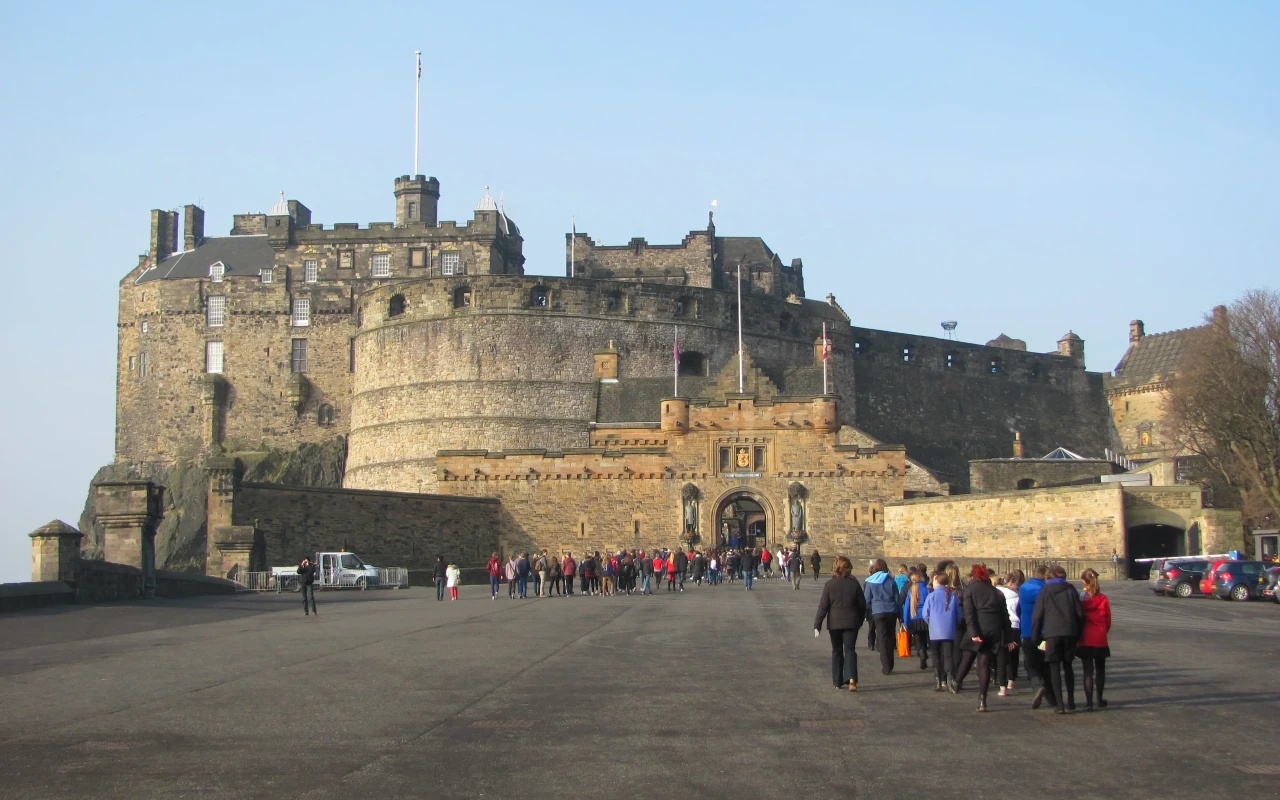
As you approach Edinburgh Castle, perched on the rugged volcanic rock of Castle Hill, the first thing that strikes you is its imposing silhouette against the skyline. Visitors will be awed by the castle’s formidable architecture, characterized by medieval stonework and the stark beauty of the Edinburgh landscape surrounding it. Entering the castle grounds, you’ll be greeted by the grandeur of the Crown Square, where the ancient buildings tell tales of past royalty and conflict. Inside the castle, a myriad of exhibits offers a deep dive into Scotland's storied past. You can visit the Crown Jewels of Scotland, which are displayed with a sense of reverence, showcasing a rich tapestry of Scottish heritage. The Stone of Destiny, traditionally used in the coronation of Scottish kings, adds to the castle’s mystique, drawing visitors who wish to connect with Scotland’s legacy. Walking through the Great Hall, with its high vaulted ceilings and impressive collection of weaponry, you can almost hear echoes of the past, where important decisions were made and battles were planned. Allow yourself to become lost in the various chambers, each one filled with dark histories and compelling stories. The castle’s war museum, one of the largest in the UK, holds artifacts that chronicle the military history of Scotland, giving insight into how deeply intertwined military campaigns and national identity are in Scottish culture.Background and Cultural Context
Edinburgh Castle is more than just a fortress; it is a symbol of Scotland's enduring spirit and resilience. Its origins trace back to at least the 12th century, cementing it as one of the oldest and most vital structures in Scottish history. Strategically located at the top of Castle Rock, it has acted as a defensive stronghold, royal residence, and military base throughout various historical epochs, including the Wars of Scottish Independence. The castle's significance extends beyond its role in wars; it is also a focal point for the Scottish identity. As the site of numerous royal ceremonies and coronations, it has hosted ceremonies that forged the foundations of Scotland's national character. The castle witnessed the turbulent reign of Mary, Queen of Scots, who gave birth to James VI within its walls—a fact that intertwines personal tragedy with national history, as her son would go on to unify the crowns of Scotland and England. Today, Edinburgh Castle stands not only as a monument to Scotland's past but as a canvas for its evolving narrative. The annual Edinburgh Military Tattoo, held on the castle esplanade, draws thousands of visitors each year, blending the heritage of military tradition with Scottish culture through music, dance, and spectacle.Best Time to Visit
Choosing the right time to visit Edinburgh Castle can significantly enhance your experience. The spring months of April to June are particularly enchanting, as the city bursts into bloom, and the weather is mild, making it perfect for exploring the castle grounds and the surrounding areas. During this time, visitor numbers are typically lower compared to the peak summer months, allowing for a more leisurely exploration of the castle without the throngs of tourists. Summer, from July to August, is the most vibrant time to visit. The city thrives with festivals, including the renowned Edinburgh Festival Fringe, and the castle becomes a hub of activity. However, be prepared for larger crowds and longer waiting times. If you can manage it, visiting early in the morning or later in the afternoon can help you escape the busiest periods. Autumn also presents a wonderful opportunity, particularly in September and October, when the foliage around the castle transforms into a palette of rich oranges and reds, providing a stunning backdrop for photography. Winter months, particularly December, offer a unique charm as Christmas festivities envelop the city. The sight of Edinburgh Castle dusted with snow is truly magical. However, be mindful that opening hours may vary, and some attractions within the castle may be closed in the off-peak season.How to Get There
Reaching Edinburgh Castle is straightforward due to its central location in Edinburgh. If you’re arriving by train, the nearest station is Edinburgh Waverley, just a short walk from the castle's entrance. As you navigate the charming, cobbled streets of the Old Town, the castle looms above you, making it impossible to miss. Public buses also serve the area well, and several routes have stops adjacent to the castle. For those who prefer cycling, Edinburgh has a network of cycle paths, with bike rental services conveniently located around the city. Cycling up to Castle Hill offers not only a great workout but also breathtaking views as you ascend. Walking is another popular option; the city’s compact nature allows for a pleasant stroll through historic streets, leading you directly to the castle’s gates. Moreover, guided walking tours often include the castle as a key stop, providing valuable insights into its history along the way. If you’re driving, be aware that parking near the castle can be limited. The best option is to park in one of the city’s designated car parks and then make your way on foot. This approach allows you to fully appreciate the scenic beauty of Edinburgh as you make your way to the iconic fortress.Photo Opportunities
- The stunning panorama from the castle ramparts overlooking the city.
- Close-up shots of the Crown Jewels during your visit.
- The majestic St. Margaret's Chapel, the oldest surviving building in Edinburgh.
- Impressive cannon at the castle that fires daily at 1 PM.
- The vibrant colors of the castle park during different seasons.
Travel Tips
- Book your tickets online in advance to save on admission costs and avoid long queues.
- Wear comfortable shoes; the castle has uneven surfaces and steep paths.
- Consider joining a guided tour for more in-depth stories and historical context.
- Check the daily events schedule, as the castle often hosts special performances and exhibitions.
- Bring a camera; the castle and its surroundings offer countless photo opportunities.