Claim to Fame
The Imperial City in Hue is renowned for its grand architecture, rich history, and the unique synergy of Vietnamese and Chinese cultures, making it a UNESCO World Heritage site.
📌 Navigating Imperial City in Hue : Answers to Frequently Asked Questions
- Admission Fee: The admission fee varies, with discounts available for children, students, and seniors.
- How Long to Visit: Visitors typically spend 2 to 3 hours exploring the Imperial City to fully appreciate its history and architecture.
- Washrooms: Washrooms are available within the complex for visitor convenience.
- Hours of Operation: The Imperial City is open daily from 7:00 AM to 5:30 PM, with extended hours during peak season.
- Important Information: It is advisable to wear comfortable shoes and bring water, as the site involves significant walking.
- Handicap Accessible: The site is partially handicap accessible, with some areas equipped for wheelchair access.
- Pets: Pets are not allowed within the Imperial City to preserve the site's historical integrity.
- Guided Tours: Guided tours are available and provide in-depth insights into the history and architecture of the Imperial City.
- Restaurant or Cafe: There are cafes and restaurants nearby offering local cuisine and refreshments for visitors.
- Gift Shop: A gift shop is located near the entrance, offering souvenirs and local handicrafts.
- Parking: Parking is available near the Imperial City, with designated areas for visitors.
- Family Friendly: The Imperial City is family-friendly, offering educational experiences suitable for all ages.
- Photography: Photography is permitted throughout the site, but tripods and professional equipment may require permission.
- WIFI: Free Wi-Fi is not available on-site, so visitors should prepare for limited internet access.
- Picnic Area: Picnic areas are not available inside the Imperial City, but parks nearby provide suitable spots.
📌Heads up: All times, prices and visitor policies are subject to change without notice. Please check the official website for the most recent information.
Photos of Imperial City in Hue
What to Expect
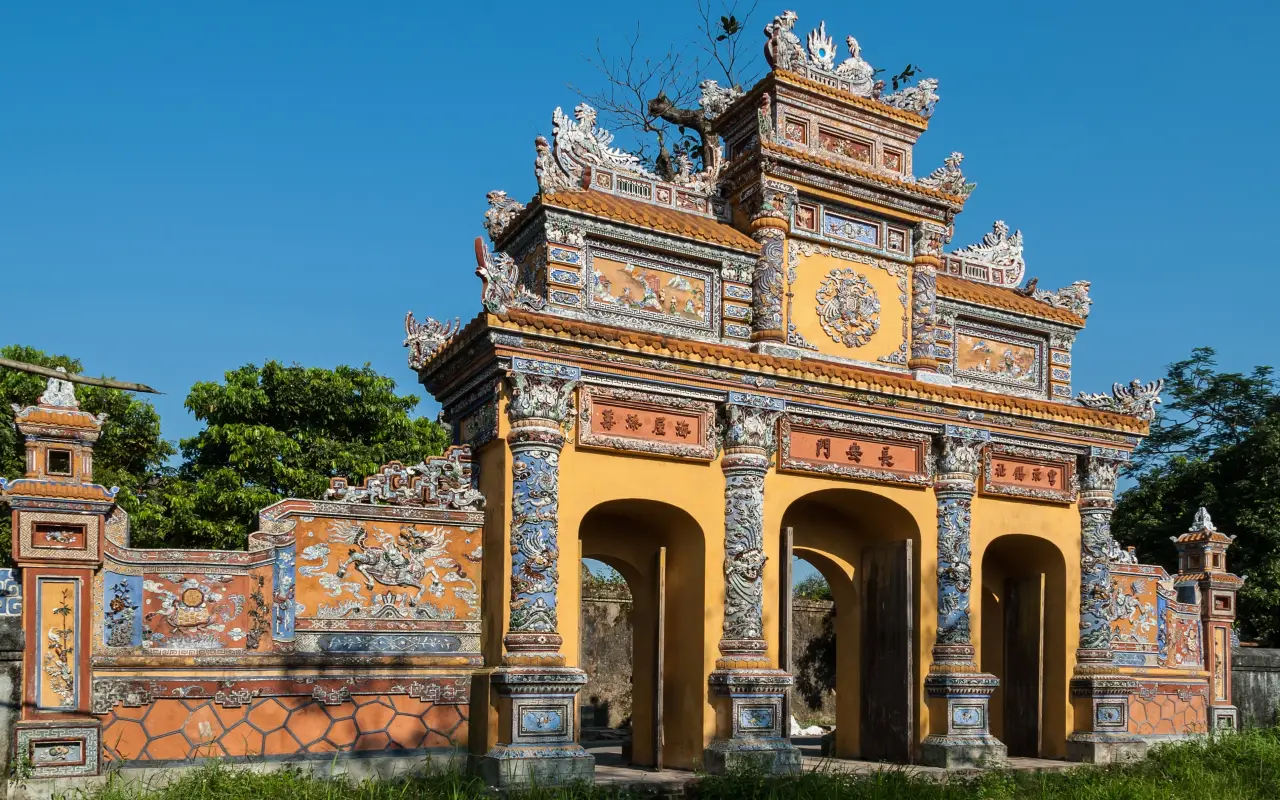
As you step into the Imperial City, you are greeted with an imposing outer wall that spans over two kilometers. This fortress, with its enormous gates and moats, showcases the architectural prowess of the Nguyen Dynasty, the last ruling dynasty of Vietnam. The atmosphere is imbued with a serene yet majestic ambiance, inviting travelers to wander through its intricate layouts and lush gardens. Within its confines, historical palaces, temples, and residential quarters await exploration, each telling tales of Vietnam's royal past. A stroll through the well-maintained pathways reveals the beautifully restored edifices and courtyards that showcase a harmonious blend of Vietnamese architectural styles interwoven with strong Chinese influences. The vibrant colors of the mosaics and the artistry of wooden carvings tell compelling stories of the past, while the tranquil environment allows for contemplation and admiration of the grandeur surrounding you. Be prepared for a sensory experience—a mélange of scents from nearby eateries wafts through the air, while the sounds of traditional music mingling with the whispers of history create a unique atmosphere. This is not just a historical site; it is a living testament to the culture and resilience of Vietnam, where every corner holds secrets waiting to be discovered.Background and Cultural Context
The Imperial City in Hue, recognized as a UNESCO World Heritage site in 1993, served as the political, cultural, and religious center of Vietnam for nearly 150 years, particularly during the Nguyen Dynasty from 1802 to 1945. The city was designed to reflect the Confucian principles that governed the era, with its layout following a strict geomantic pattern, believed to enhance spiritual harmony. The city’s design is a microcosm of Vietnamese culture, embodying its values, beliefs, and traditions, which were heavily influenced by Chinese culture. Dotted throughout the Imperial City, you will find vestiges of its regal past, such as the Forbidden Purple City, where only the emperor and select individuals could enter. This area, now largely in ruins, speaks volumes of the lavish life led by the royalty and offers a glimpse into the elegance of bygone days. The temples and shrines scattered around further enhance the cultural significance, as they were dedicated to worshipping ancestors and deities, reflecting the deep spiritual ties of the Vietnamese people. Despite the hardships endured through wars and natural disasters, concerted restoration efforts have preserved this remarkable site. Today, the Imperial City stands as a symbol of national pride and cultural resilience. Visitors can engage with local guides who often share lesser-known stories of its historical significance, deepening their understanding of Hue’s role in Vietnam’s narrative.Best Time to Visit
Timing your visit to the Imperial City is key for a fulfilling experience. The best months are generally from February to April, when the weather is temperate, making it particularly conducive for outdoor exploration. During this period, you can enjoy pleasant sunshine without the oppressive heat and humidity that characterize the summer months. Additionally, these months coincide with the blooming of flowers, adding a splash of color to the city’s majestic grounds. If you prefer fewer crowds, visiting during weekdays also enhances the experience, allowing for an intimate engagement with the historical surroundings. However, if you are keen to embrace local traditions, planning your visit around the Tet Festival, the Vietnamese Lunar New Year, could be rewarding. The celebrations often feature various cultural activities and rituals within the Imperial City, offering visitors a vibrant and immersive cultural experience. While the rainy season from September to December can deter some visitors, it also unveils a different side of the city. The rainfall often adds an ethereal charm to the ancient structures, creating dramatic photo opportunities and a quieter atmosphere for exploration. Just be prepared with an umbrella and appropriate footwear, as the gentle rain enhances the lush greenery around you.How to Get There
Reaching the Imperial City is relatively straightforward, given Hue's strategic location in central Vietnam. The city is served by Phu Bai International Airport, where domestic flights connect it with major cities, including Hanoi and Ho Chi Minh City. Upon arrival, taxis and ride-sharing services provide convenient transfers to the Imperial City, located a mere 16 kilometers from the airport. For those who prefer overland travel, Hue is well-connected by bus and train, with regular services enabling connections from major cities. Arriving via train allows travelers to enjoy picturesque landscapes, making the journey part of the adventure. Once in Hue, the Imperial City is easily accessible by foot or bicycle, promoting an immersive exploration of the city’s historical sites and local life along the way. Moreover, local guided tours often include transportation, providing travelers with an informative context as they make their way to the Imperial City. Consider booking a tour that includes insightful visits to other nearby attractions, such as the Tombs of the Emperors or the Thien Mu Pagoda, enhancing your understanding of the region's historical and cultural landscape.Photo Opportunities
- The imposing Ngo Mon Gate at sunrise
- The intricate wall decorations within the Forbidden Purple City
- Colorful flowers peppering the gardens
- The serene moats and lotus ponds surrounding the temples
- Traditional performances at the royal palace grounds
- Emerging lanterns during evening visits
- Buzzing marketplaces just outside the Imperial gates
Travel Tips
- Wear comfortable walking shoes to enjoy hours of exploration.
- Carry a water bottle to stay hydrated while wandering the vast grounds.
- Consider hiring a local guide for deeper insights into the history.
- Respect local customs, especially when visiting temples and shrines.
- Time your visit to catch the changing colors at dusk or dawn for photography.
- Try local specialties, such as Bun Bo Hue, at nearby eateries.