Claim to Fame
The Berlin Wall’s most famous crossing point, Checkpoint Charlie, serves as a poignant reminder of the city's tumultuous Cold War history and the enduring human spirit that sought freedom against the odds.
📌 Navigating Checkpoint Charlie : Answers to Frequently Asked Questions
- Admission Fee: Admission to the outdoor area is free, while indoor exhibits may have a small fee.
- How Long to Visit: A visit usually takes about 30 minutes to 1 hour, depending on interest in exhibits.
- Washrooms: Public washrooms are available nearby, but not directly at Checkpoint Charlie.
- Hours of Operation: Checkpoint Charlie is open year-round, typically from 9 AM to 10 PM.
- Important Information: It's advisable to check for any special events or temporary closures before your visit.
- Handicap Accessible: Checkpoint Charlie is wheelchair accessible, with ramps and pathways for ease of movement.
- Pets: Pets are not permitted in the main exhibit area, but service animals are allowed.
- Guided Tours: Guided tours are available and provide in-depth historical context and insights.
- Restaurant or Cafe: There are several cafes and restaurants within walking distance offering a variety of dining options.
- Gift Shop: A gift shop is located nearby, offering souvenirs, books, and memorabilia related to the Berlin Wall.
- Parking: Parking is available in nearby public garages, but street parking is limited.
- Family Friendly: The site is family-friendly, featuring educational exhibits suitable for all ages.
- Photography: Photography is encouraged, especially at the iconic checkpoint sign and with the Berlin Wall backdrop.
- WIFI: Free Wi-Fi is available in the surrounding area, but not directly at the checkpoint.
- Picnic Area: There is no designated picnic area at the site, but nearby parks can be used for picnicking.
📌Heads up: All times, prices and visitor policies are subject to change without notice. Please check the official website for the most recent information.
Photos of Checkpoint Charlie
What to Expect
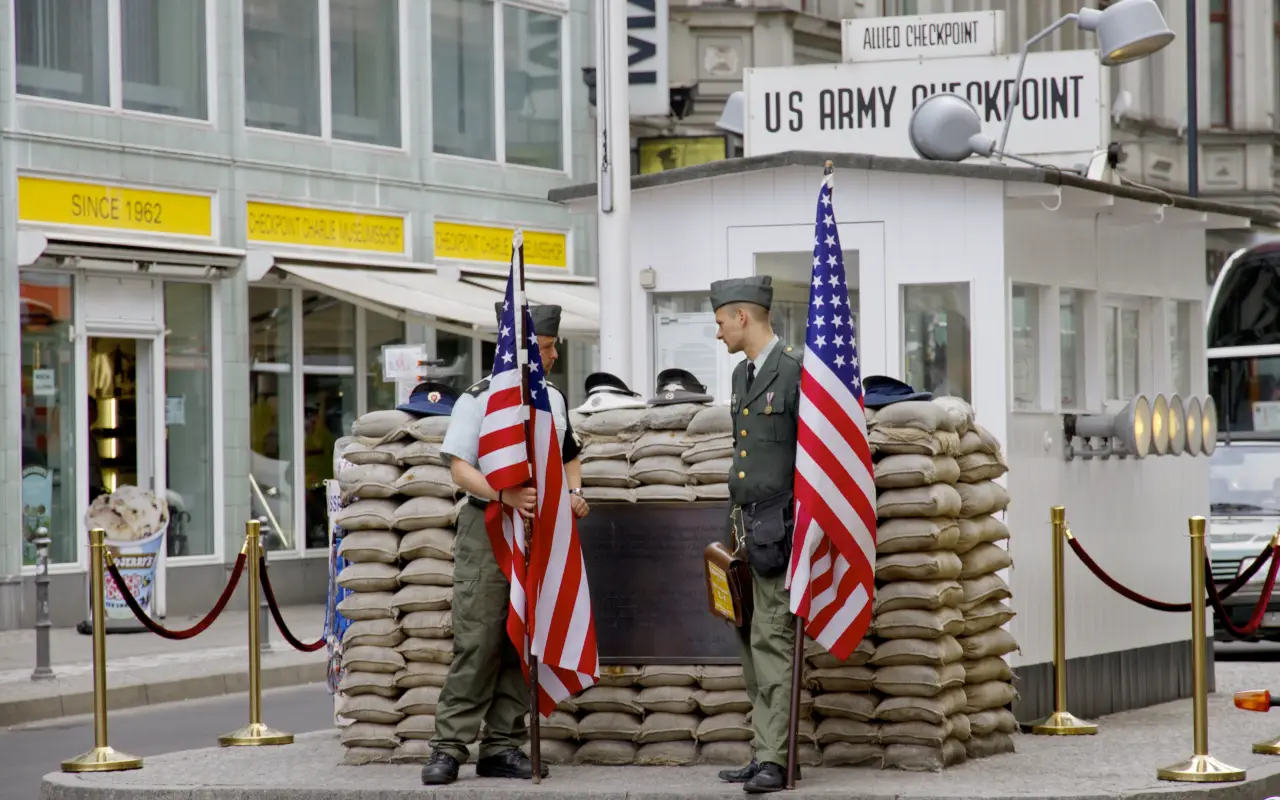
As you approach Checkpoint Charlie, you will find a blend of history and nostalgia enveloping the cobbled streets. The iconic wooden guard hut, originally constructed as a military checkpoint, stands proud, drawing visitors eager to capture its image. Around you, pieces of the Berlin Wall are displayed, illustrating the stark contrast between the oppressive regime and the hope for freedom that many sought during a divided Germany. Expect to see a vibrant atmosphere filled with tourists, historians, and locals alike. Tour guides often share riveting stories of escape attempts, which add an emotional layer to the experience. As you stroll the area, you might encounter street performers and vendors selling memorabilia, offering a lively backdrop to a site steeped in serious historical context. A replica of the checkpoint sign, which reads "You are now leaving the American Sector," beckons visitors for photographs, cementing the site’s significance both then and now. The museum nearby, Haus am Checkpoint Charlie, provides a deeper dive into the experiences and narratives surrounding the Cold War, featuring personal accounts and artifacts from those who dared to cross the divide. To enhance your visit, consider taking a guided tour that contextualizes Checkpoint Charlie within the broader tapestry of Berlin’s history.Background and Cultural Context
Checkpoint Charlie was established in 1961, marking the boundary between East and West Berlin during the Cold War. Its name evokes a sense of intrigue; "Charlie" signifies the letter "C" in the NATO phonetic alphabet. Initially, the checkpoint was simply a passage for foreign diplomats and military personnel, but over time, it became emblematic of the stark divide between a repressive regime and the quest for freedom. The terrain around Checkpoint Charlie tells a story of contrasts, with remnants of barbed wire and watchtowers juxtaposed against modern cafés and shops. This dichotomy serves to remind visitors of the resilience of the human spirit amidst oppression. Many escape attempts were undertaken, some successful, others tragically thwarted, contributing to the lore of this infamous location. As you explore, the stories of individuals who risked everything for freedom come to life through documentation and photography scattered throughout the area. In the wake of the Berlin Wall's fall in 1989, Checkpoint Charlie morphed into a symbol of reunification. Today, it stands not simply as a reminder of the coldness of division but also as a testament to the triumph of hope and unity. Berlin itself, evolving and vibrant, continues to draw from its past while looking forward to the future.Best Time to Visit
The best time to visit Checkpoint Charlie is during the spring and early fall when temperatures are mild, making it ideal for leisurely walks through the area. The months of April to June and September to October often present clear skies, inviting you to absorb the historical significance of Checkpoint Charlie while enjoying the lively street scenes that characterize the area. Summer can be bustling with tourists, leading to crowded conditions, especially around major attractions, which might detract from the contemplative experience one seeks at such a historic site. Visiting during early mornings or late afternoons allows for a less crowded experience, letting you absorb the atmosphere without the hustle of the midday crowd. These quieter times provide an opportunity to engage with nearby museums and historical exhibitions more deeply. Special events or guided tours may also require advance planning, so checking local listings can enhance your visit and ensure you won’t miss out on unique experiences. Winter offers a different kind of beauty with a blanket of snow that transforms Berlin, though it may restrict outdoor activities. The charm of the surrounding streets adorned with festive decorations provides a cozy ambiance, while the cold might curtail long walks. If you choose to brave the chill, layer up and venture out to experience Checkpoint Charlie’s profound significance, even in the frostier months.How to Get There
Reaching Checkpoint Charlie is remarkably straightforward, thanks to Berlin’s extensive public transportation network. The Berlin U-Bahn (subway) is a reliable option; you can board the U6 line and disembark at the Kochstraße station, which is just a short walk from the checkpoint. Trams and buses also service the nearby areas, making it easily accessible from different parts of the city. With well-marked signs guiding you in both English and German, navigating to this historical landmark is user-friendly and convenient. For those who prefer to walk, Checklist Charlie’s central location means it is often a stop on many guided tours that cover significant Berlin landmarks. A scenic stroll through the Unter den Linden boulevard or along the remnants of the Berlin Wall can also be a rewarding route, allowing you to immerse yourself in the city's rich history along the way. If you opt for a more personalized journey, taxis and ride-sharing services are readily available throughout Berlin. Cycling is another excellent alternative, with bike rentals widely accessible, offering a unique perspective of the city's sights as you navigate the streets of this dynamic metropolis.Photo Opportunities
- The iconic Checkpoint Charlie guardhouse and sign.
- Pieces of the Berlin Wall adorned with graffiti.
- Nearby Haus am Checkpoint Charlie museum.
- Street performers and vendors surrounding the checkpoint.
- Historical displays highlighting escape stories.
Travel Tips
- Plan your visit early in the day to avoid crowds and ensure a more intimate experience.
- Bring your camera; photo opportunities abound, but be respectful of any signage.
- Consider downloading an audio guide app for more in-depth historical insights as you explore.
- Stay aware of your surroundings, especially in busier areas; pickpockets may be present.
- Check for any special events or exhibitions at the nearby museum before your visit.