Claim to Fame
Nijo Castle is a UNESCO World Heritage Site in Kyoto known for its beautifully preserved Edo-period architecture, ornate interiors, and the famous “nightingale floors” that chirp underfoot to guard against intruders.
📌 Navigating Nijo Castle : Answers to Frequently Asked Questions
- Washrooms: Washrooms are available within the castle complex for visitor convenience.
- Hours of Operation: Nijo Castle operates from 8:45 AM to 5:00 PM, with extended hours during peak seasons.
- Important Information: It is advisable to check for any special events or closures before visiting, as the castle may host exhibitions.
- Admission Fee: The admission fee typically ranges from 600 to 1,000 yen, with discounts for children and seniors.
- How Long to Visit: Most visitors spend around 1.5 to 2 hours exploring the castle and its gardens.
- Parking: Nijo Castle has limited parking available nearby, with options for paid parking in the vicinity.
- Family Friendly: Nijo Castle is family-friendly, offering engaging historical exhibits and spacious gardens for children to explore.
- Photography: Photography is permitted throughout the castle grounds, but flash photography and tripods may be restricted indoors.
- WIFI: Free Wi-Fi is not typically available on the castle grounds, but nearby cafes may offer access.
- Picnic Area: Picnic areas are not designated within the castle grounds, but visitors can enjoy the gardens while snacking.
- Handicap Accessible: The castle grounds and facilities are generally handicap accessible, including ramps and designated pathways.
- Pets: Pets are not allowed inside the castle grounds, with the exception of service animals.
- Guided Tours: Guided tours are available and can enhance the visitor experience by providing in-depth historical context.
- Restaurant or Cafe: There is a cafe on site that offers light refreshments and snacks for visitors.
- Gift Shop: A gift shop is located at the entrance, offering souvenirs, traditional crafts, and local snacks.
Photos of Nijo Castle
Located in central Kyoto, Nijo Castle was built in 1603 as the residence of Tokugawa Ieyasu, the first shogun of the Edo Period. This stunning complex offers a rare glimpse into Japan’s feudal past, combining imposing fortifications with refined palatial elegance.
What to Expect
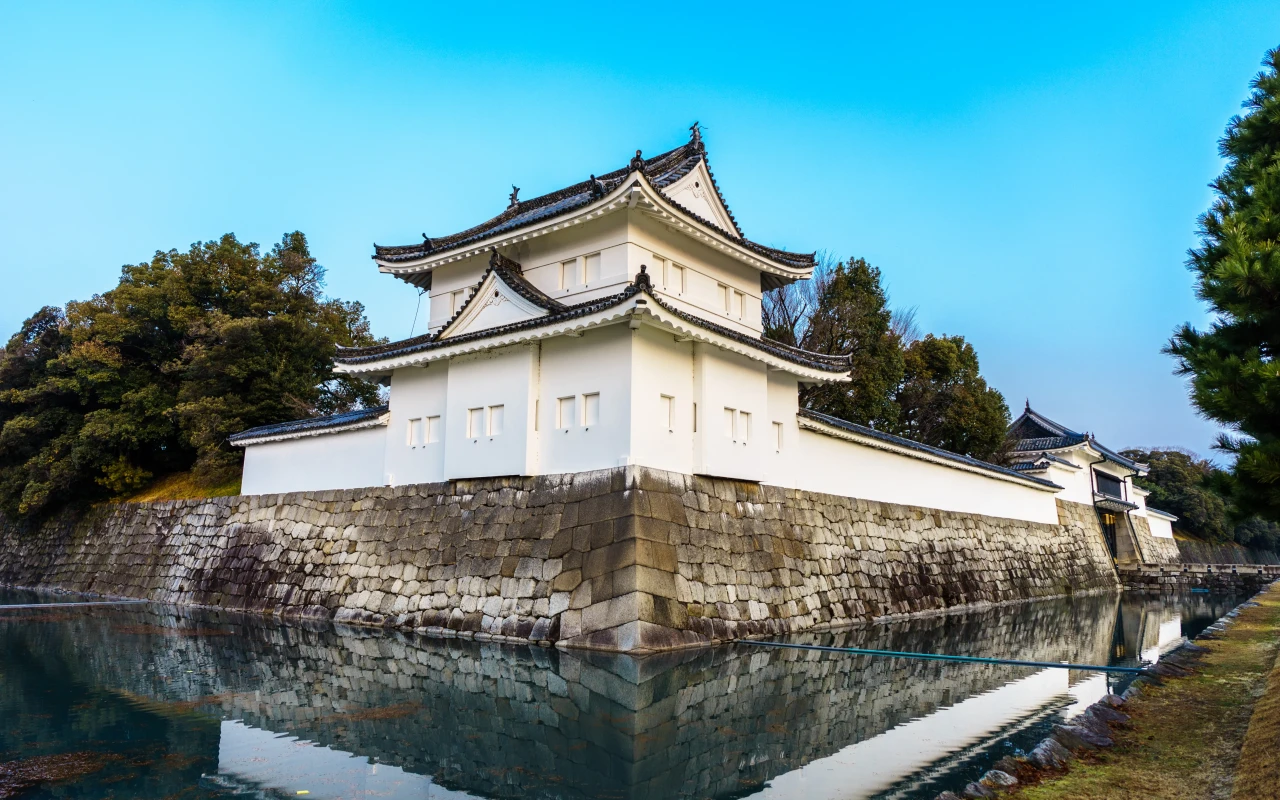
The castle grounds are surrounded by thick stone walls and moats, leading into the Ninomaru Palace, the highlight of any visit. Inside, visitors can admire lavish screen paintings by the Kano School, finely carved transoms, and tatami mat rooms where shoguns once held court.
One of the most unique features is the “nightingale floors,” ingeniously designed wooden corridors that squeak like birds when walked upon — an early security system to detect intruders. The expansive gardens, including a large pond and manicured pine trees, provide a peaceful counterpoint to the grand interiors.
Background and Cultural Context
Nijo Castle was constructed as a symbol of shogunal authority and a statement of power in the imperial capital. It was later used by the Tokugawa Shogunate for official business and ceremonies. In 1867, it became the site where the last shogun returned power to the emperor, ending over two centuries of shogunal rule.
The castle has been designated a National Treasure and is part of the UNESCO "Historic Monuments of Ancient Kyoto." It stands as a testament to both political history and artistic heritage.
Best Time to Visit
Spring and autumn are ideal times to visit Nijo Castle. In late March and early April, cherry blossoms bloom beautifully throughout the grounds. In November, the gardens transform with fiery fall foliage. Early mornings are best to avoid crowds and capture the golden light on the castle structures.
How to Get There
Take the Subway Tozai Line to Nijojo-mae Station, which is right outside the main entrance. Alternatively, Nijo Castle is a 15-minute walk from Nijo Station on the JR Sanin Line. City buses also stop nearby.
Photo Opportunities
- The main gate (Karamon) with intricate woodwork and gold leaf
- Reflections of the Ninomaru Garden in the pond
- Cherry blossoms or autumn leaves framing the castle walls
- Wide shots of the moats and stone fortifications
Travel Tips
- Shoes must be removed to enter Ninomaru Palace — socks are required.
- English audio guides or smartphone apps enhance the experience and explain each area.
- Allow 60–90 minutes to explore both the palace and the gardens.
- The site is mostly flat and wheelchair accessible.
FAQs
Is photography allowed inside the palace?
No — photography is prohibited inside Ninomaru Palace, but you may photograph the exterior and gardens freely.
Is the castle open year-round?
Yes, although it closes on Tuesdays in January, July, August, and December, and during New Year holidays.
Are guided tours available?
Yes — English-language guided tours and audio guides are available at the entrance.
Final Thoughts
Nijo Castle offers a captivating journey into Japan’s samurai-era politics, art, and ingenuity. With its elegant palaces, haunting nightingale floors, and seasonal gardens, it’s an essential Kyoto destination that blends beauty with history in unforgettable ways.