Claim to Fame
At 634 m, Tokyo Skytree is the world’s tallest tower and Japan’s highest observation point—renowned for its futuristic “neighborhood” of shopping, dining, and its Tembo Galleria skywalk offering 360° metropolis vistas.
📌 Navigating Tokyo Skytree : Answers to Frequently Asked Questions
- Admission Fee: Admission fees vary by age and access level, typically ranging from 2,100 to 3,100 yen for adults.
- How Long to Visit: Visitors generally spend about 1 to 2 hours enjoying the views and facilities at Tokyo Skytree.
- Washrooms: Washrooms are conveniently located throughout the building for visitor use.
- Hours of Operation: Tokyo Skytree operates daily from 8:00 AM to 10:00 PM, with last entry at 9:00 PM.
- Important Information: It is advisable to check the weather and book tickets in advance, as the observation decks may close during inclement weather.
- Handicap Accessible: The Skytree is fully handicap accessible, with elevators and facilities to accommodate visitors with disabilities.
- Pets: Pets are not allowed inside the Skytree premises, except for service animals.
- Guided Tours: Guided tours are available and can enhance the experience by providing in-depth information about the structure and surrounding areas.
- Restaurant or Cafe: There are several dining options, including restaurants and cafes on the premises, offering a variety of cuisines.
- Gift Shop: A gift shop is located on-site, selling souvenirs, merchandise, and local products.
- Parking: Tokyo Skytree offers limited parking options nearby, with public transportation being the recommended mode of access.
- Family Friendly: This attraction is family-friendly, featuring observation decks and interactive exhibits suitable for all ages.
- Photography: Photography is encouraged, with stunning views available from the observation decks, but tripods and selfie sticks may be restricted.
- WIFI: Free WiFi is available throughout the building for visitors to stay connected.
- Picnic Area: There is no dedicated picnic area within the Skytree, but nearby parks provide spaces for outdoor dining.
Photos of Tokyo Skytree
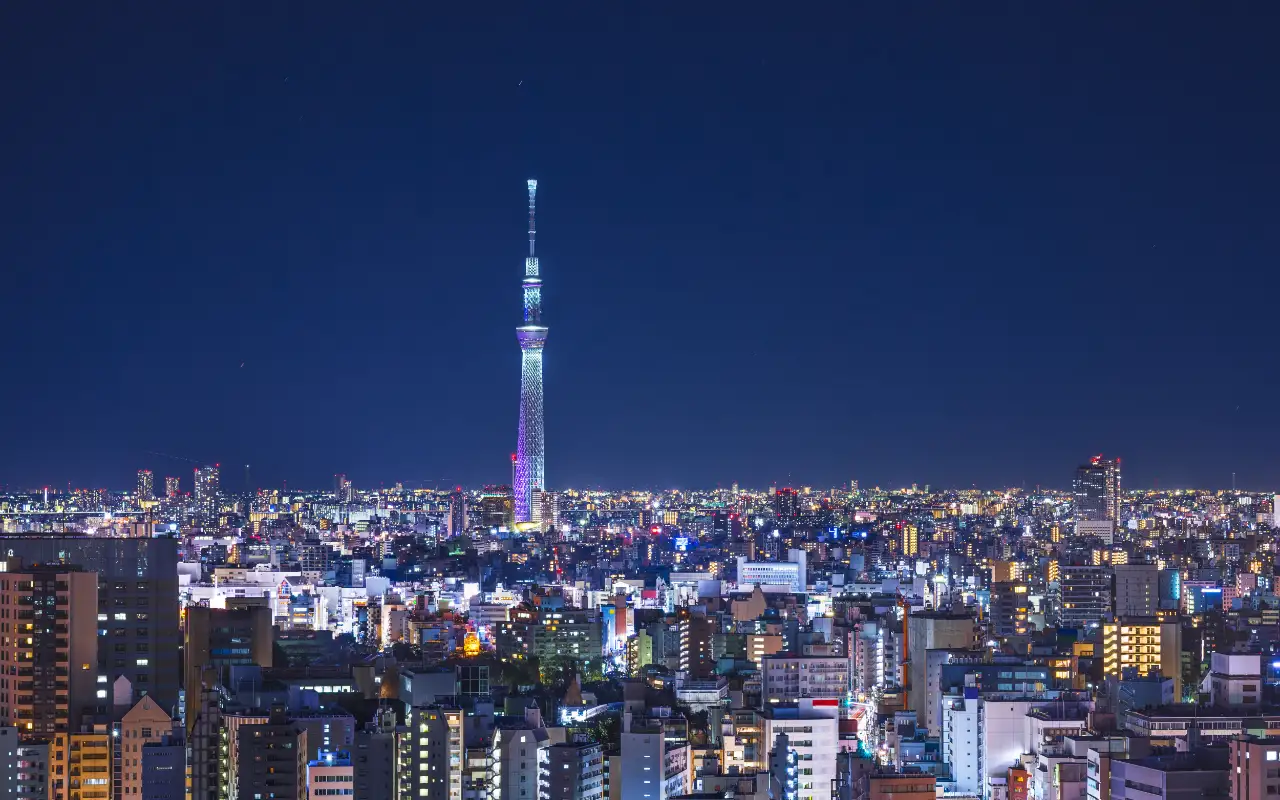
Rising above the Sumida Ward skyline, Tokyo Skytree draws visitors to its dual observation decks: the Tembo Deck at 350 m—with floor-to-ceiling windows and a glass-floored “Sky Wook” section—and the soaring Tembo Galleria at 450 m, a spiraling skywalk through Tokyo’s sea of lights. Below, Solamachi combines over 300 boutiques, restaurants serving Edo-style ramen and saké, and an aquarium celebrating Tokyo Bay’s marine life. As day turns to night, the tower’s LED façade shifts through seasonal color themes, illuminating the city beneath.
What to Expect
Arrive via Tokyo Skytree Station—join the timed-entry queue and take the high-speed elevator to the Tembo Deck in 50 seconds. Step onto the circular observation floor to spot landmarks: Asakusa’s Sensō-ji, Tokyo Bay, Mt. Fuji on clear days, and the Shinjuku skyline. For the bravest, stand on the glass floor panel. Continue upward via a transparent glass elevator to the Tembo Galleria’s gentle incline corridor—feel as if you’re walking among the clouds. End your visit at the Sky Restaurant 634 or the café overlooking the city for refreshments with a view.
Background and Cultural Context
Completed in 2012 to replace aging TV towers, Skytree’s design merges traditional Japanese aesthetics (the five-membered “kimono” column structure) with cutting-edge seismic damping technology. Its height—634 m—was chosen for the phonetic “Mu-Sa-Shi,” evoking the ancient province of Musashi. As a symbol of rebirth after the 2011 earthquake, Skytree embodies Tokyo’s resilience and its role as a global broadcast, tourism, and cultural hub.
Best Time to Visit
Weekday mornings (9–11 AM) offer shorter lines and clear views before haze builds. Late afternoons (4–6 PM) let you witness Tokyo’s transition from day to night—secure tickets in advance to catch both daylight and sunset. For illumination shows, check the tower’s lighting schedule: seasonal themes range from cherry-blossom pinks to winter blues. Avoid weekend twilight hours when queues can exceed two hours.
How to Get There
Tokyo Skytree sits at 1-1-2 Oshiage, Sumida City. Access: Tobu Skytree Line or Tokyo Metro Hanzomon Line to Oshiage Station; direct exit leads into the Solamachi complex. Buses #S-1 and #都営スカイツリーライン shuttle from Asakusa too. The entire complex, lifts, and decks are wheelchair-accessible; priority seating and assistance are available at ticket counters.
Photo Opportunities
- Panoramic cityscape from the Tembo Deck at sunset with Mt. Fuji on the horizon
- Looking straight down through the glass floor “Sky Wook” panel to the streets below
- Curving spiral of the Tembo Galleria skywalk as lights twinkle beneath
- Nighttime silhouette of Skytree lit in seasonal LED hues against a dark sky
- Exterior shot from Sumida River banks capturing the tower’s full height framed by cherry blossoms in spring
Travel Tips
- Buy timed-entry tickets online or via the official app to skip the ticket hall queue.
- Allow 1.5–2 hours for both observation decks and browsing Solamachi shops.
- Check the weather forecast—book clear days for the best distant views.
- Visit the Solamachi dining terrace for regional specialties before or after your tower ascent.
- Combine with a river cruise on the Sumida for complementary low-angle views of the tower.
FAQs
Is admission required?
Yes—tickets start at ¥2,100 for Tembo Deck only; add ¥1,100 for Tembo Galleria access. Discounts for children and seniors apply.
Can I re-enter?
No—entry is single admission per ticket; plan to stay through both decks on the same visit.
Final Thoughts
Tokyo Skytree stands as a beacon of modern Tokyo—where architectural innovation meets panoramic splendor. Whether you seek sweeping city vistas, a thrill atop the glass floor, or simply a leisurely stroll through the Solamachi shops, an ascent to its decks offers an unforgettable perspective on Japan’s capital.