Claim to Fame
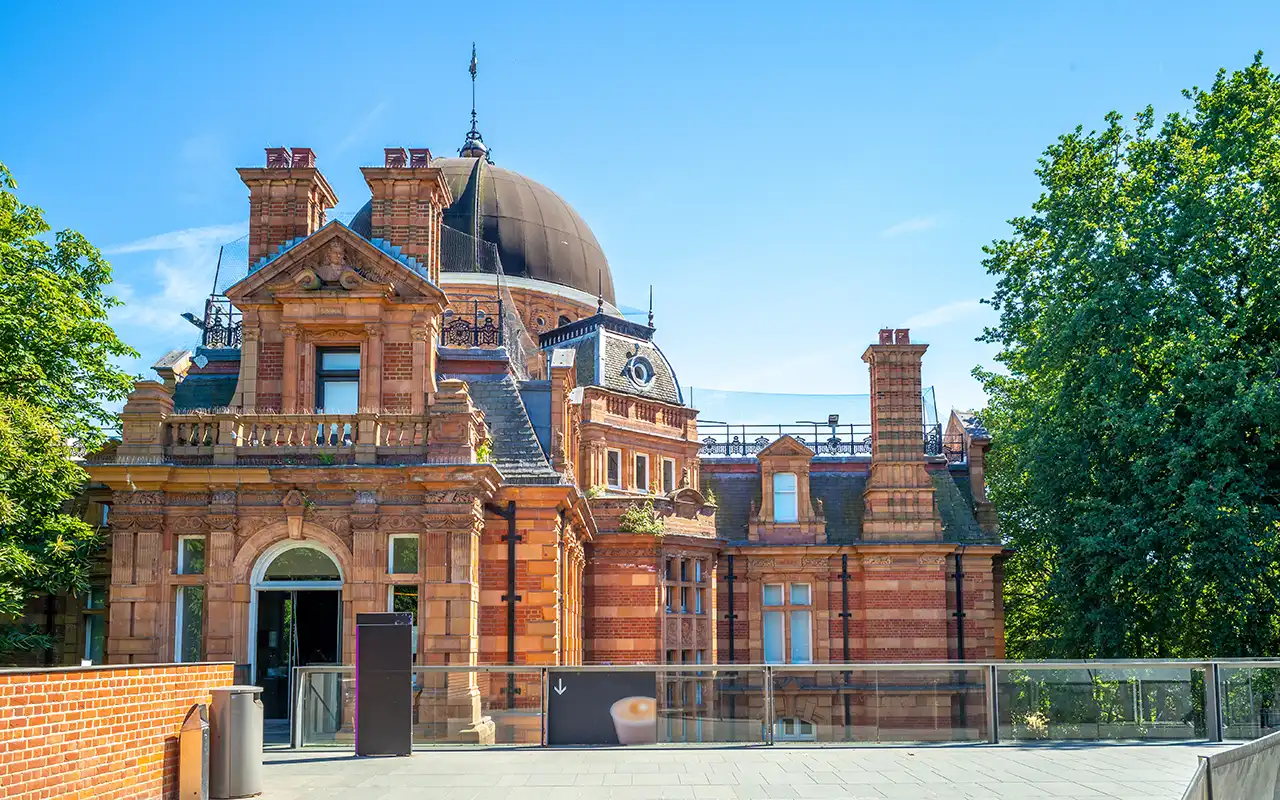
The Royal Observatory in Greenwich is home to the Prime Meridian — the line that divides the eastern and western hemispheres — and is the historic center of global timekeeping.
📌 Navigating Royal Observatory in Greenwich : Answers to Frequently Asked Questions
- Washrooms: Public washrooms are available in the Royal Observatory.
- Hours of Operation: The Royal Observatory is open daily from 10 AM to 5 PM.
- Important Information: The Royal Observatory in Greenwich is known for its prime meridian and astronomy exhibits.
- Admission Fee: An admission fee is required to enter the Royal Observatory.
- How Long to Visit: A visit to the Royal Observatory typically lasts about 1 to 2 hours.
- Parking: Parking is available at the Royal Observatory and nearby public lots.
- Family Friendly: The Royal Observatory is family-friendly, with exhibits and activities for all ages.
- Photography: Photography is allowed, but no flash photography inside the Royal Observatory.
- WIFI: Free public WIFI is available in some areas of the Royal Observatory.
- Picnic Area: There are no designated picnic areas within the Royal Observatory grounds.
- Handicap Accessible: The Royal Observatory is accessible for visitors with disabilities.
- Pets: Pets are not allowed inside the Royal Observatory.
- Guided Tours: Guided tours of the Royal Observatory are available and highly informative.
- Restaurant or Cafe: The Royal Observatory has a cafe offering light meals and beverages.
- Gift Shop: The gift shop at the Royal Observatory offers astronomy-related souvenirs and books.
Photos of Royal Observatory in Greenwich
Perched on a hill in Greenwich Park with sweeping views over London, the Royal Observatory is one of the most important scientific sites in the world. It’s where east meets west, time begins, and astronomical discoveries helped shape the modern world.
What to Expect
Visitors can straddle the Prime Meridian Line — literally standing with one foot in the eastern hemisphere and one in the western. Inside the observatory, exhibits explore centuries of navigation, astronomy, and timekeeping, including Harrison’s marine chronometers that revolutionized sea travel.
The observatory's historic telescopes, Octagon Room, and interactive galleries are fascinating for adults and kids alike. Don’t miss the red Time Ball that drops each day at 1 PM — an original tool for synchronizing clocks.
Background and Cultural Context
Founded in 1675 by King Charles II, the Royal Observatory played a central role in defining longitude, timekeeping, and celestial mapping. Greenwich Mean Time (GMT), once the global standard, originated here and remains an essential reference point in navigation and astronomy.
Its position on the Prime Meridian was established in 1884 and is still recognized as the line dividing the eastern and western hemispheres of the Earth — the basis for the world's time zones.
Best Time to Visit
Clear weather is ideal to enjoy the views over the Thames and Canary Wharf. Weekdays tend to be quieter, especially outside of school holidays. Plan about 1–2 hours for a full visit, more if you also want to explore the nearby National Maritime Museum or Greenwich Market.
How to Get There
The observatory is located in Greenwich, southeast London. Take the DLR to Cutty Sark station or a boat from central London to Greenwich Pier. It’s a short but steep walk uphill through Greenwich Park to the observatory entrance.
Photo Opportunities
- Straddling the Prime Meridian Line
- Views over London from the hilltop
- Historic telescopes and the red Time Ball
- Octagon Room interior with antique instruments
Travel Tips
- The observatory is part of the Royal Museums Greenwich complex — combo tickets are available.
- Wear comfortable shoes for the park walk and observatory stairs.
- Bring a tripod if visiting for night-sky photography or stargazing events.
- There’s a planetarium on site with shows for all ages (extra charge).
FAQs
Is the Royal Observatory suitable for children?
Yes — many exhibits are interactive, and the planetarium offers family-friendly shows.
Is the Prime Meridian real?
Yes — it’s the internationally recognized zero-longitude line, marked at the observatory’s courtyard.
Do I need to book in advance?
Booking online is recommended, especially during weekends or school breaks.
Final Thoughts
The Royal Observatory is more than just a museum — it’s a place where science, history, and geography intersect. Whether you're a fan of astronomy, navigation, or panoramic London views, this landmark offers a fascinating journey through time and space.