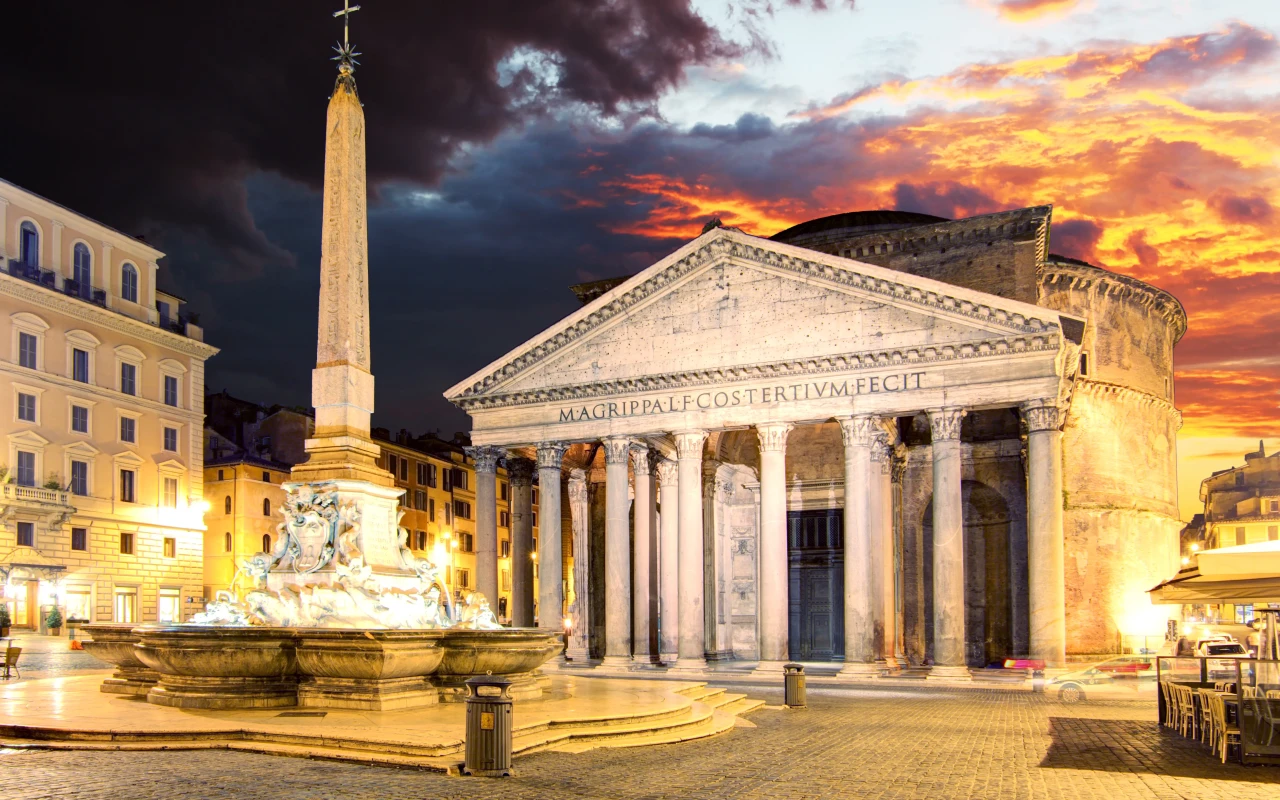
Claim to Fame
The Pantheon is the best-preserved building from Ancient Rome — and features the largest unreinforced concrete dome in the world, a feat of engineering that still amazes architects today.
📌 Navigating Pantheon : Answers to Frequently Asked Questions
- Washrooms: Washrooms are available on-site for visitor convenience, though they may have limited capacity.
- Hours of Operation: The Pantheon is open daily, typically from 9:00 AM to 7:00 PM, but hours may vary on holidays.
- Important Information: It is recommended to check for any special events or closure notices before your visit, especially during religious ceremonies.
- Admission Fee: Admission to the Pantheon is free, but a small fee may apply for guided tours and audio guides.
- How Long to Visit: Visitors usually spend about 30 minutes to an hour exploring the Pantheon, depending on their interest in the details.
- Parking: Parking is limited in the vicinity of the Pantheon, with several nearby paid parking options available.
- Family Friendly: The site is family-friendly, offering a fascinating glimpse into ancient history that can engage visitors of all ages.
- Photography: Photography is permitted inside the Pantheon, but flash and tripods are not allowed to preserve the artwork.
- WIFI: Free Wi-Fi is not available on-site; visitors may need to use their mobile data for internet access.
- Picnic Area: There is no designated picnic area at the Pantheon, as it is primarily an indoor historical site.
- Handicap Accessible: The Pantheon is wheelchair accessible, with ramps and designated areas for visitors with mobility challenges.
- Pets: Pets are not allowed inside the Pantheon, with the exception of service animals.
- Guided Tours: Guided tours are available in multiple languages, providing in-depth historical context and insights about the monument.
- Restaurant or Cafe: There are no restaurants or cafes within the Pantheon itself, but many dining options are located nearby.
- Gift Shop: A gift shop is located near the entrance, offering a variety of souvenirs, books, and memorabilia related to the Pantheon.
Photos of Pantheon
The Pantheon is one of Rome’s most iconic and enduring landmarks — a temple turned church that spans nearly 2,000 years of continuous use. With its massive portico, perfect proportions, and awe-inspiring dome crowned by the open oculus, it is both an architectural wonder and a sacred space.
Whether you're visiting for its engineering marvels, historical importance, or quiet grandeur, the Pantheon leaves a lasting impression of the brilliance of Roman innovation.
What to Expect
Entering the Pantheon, you're immediately struck by its enormous dome — 43.3 meters in diameter, exactly matching the building’s height. The oculus, a circular opening at the top, lets in sunlight (and rain), bathing the space in natural light and emphasizing its symmetrical perfection.
Inside, you'll find tombs of Italian kings, as well as that of Raphael, the famed Renaissance artist. Marble floors, Corinthian columns, and richly decorated side chapels line the rotunda, while crowds move in quiet awe beneath the dome.
Background and Cultural Context
Originally built around 27 BCE by Marcus Agrippa, the Pantheon was completely rebuilt by Emperor Hadrian around 118–128 AD after previous versions were destroyed by fire. Hadrian kept Agrippa’s inscription on the front, preserving a link to Rome’s early imperial era.
Converted into a Christian church in the 7th century, the Pantheon was spared the decay and destruction that befell many Roman structures. Over the centuries, it has served as a model for Western architecture — inspiring everything from Renaissance domes to neoclassical government buildings worldwide.
Best Time to Visit
Early morning or late afternoon provides the most peaceful experience and softer lighting for photos. Avoid midday if you want to skip crowds, especially on weekends. Visiting on a rainy day? You’ll get a rare chance to see rain falling through the oculus — a magical sight.
How to Get There
The Pantheon is located in Piazza della Rotonda, a short walk from Piazza Navona, the Trevi Fountain, or Campo de' Fiori. Several buses stop nearby at Largo di Torre Argentina or Via del Corso. It’s a pedestrian-friendly area, ideal for exploring on foot.
Photo Opportunities
- Exterior shots from Piazza della Rotonda, especially at sunrise or sunset
- Wide-angle shots inside capturing the dome and oculus
- Close-ups of Raphael’s tomb and marble details
- Reflections of the oculus light on the polished floor
Travel Tips
- As of 2023, there is a small admission fee — check ahead and consider booking in advance.
- Guided tours or audio guides offer excellent historical context and architectural insight.
- The square outside is lively — enjoy a coffee and view the facade from one of the cafes.
FAQs
Is the Pantheon still a functioning church?
Yes — it's officially the Basilica of St. Mary and the Martyrs, with regular masses and occasional weddings held inside.
Can I visit without a tour?
Absolutely — but a tour or guide will greatly enhance your understanding of the site’s history and symbolism.
How long should I plan to spend here?
About 30 to 45 minutes is enough for a thorough visit, though many linger to admire the space.
Final Thoughts
The Pantheon is more than a Roman ruin — it’s a living monument that bridges paganism and Christianity, engineering and art. A masterpiece of balance and grandeur, it’s a must-see for any visitor to Rome and a reminder that true beauty can endure for millennia.