Claim to Fame
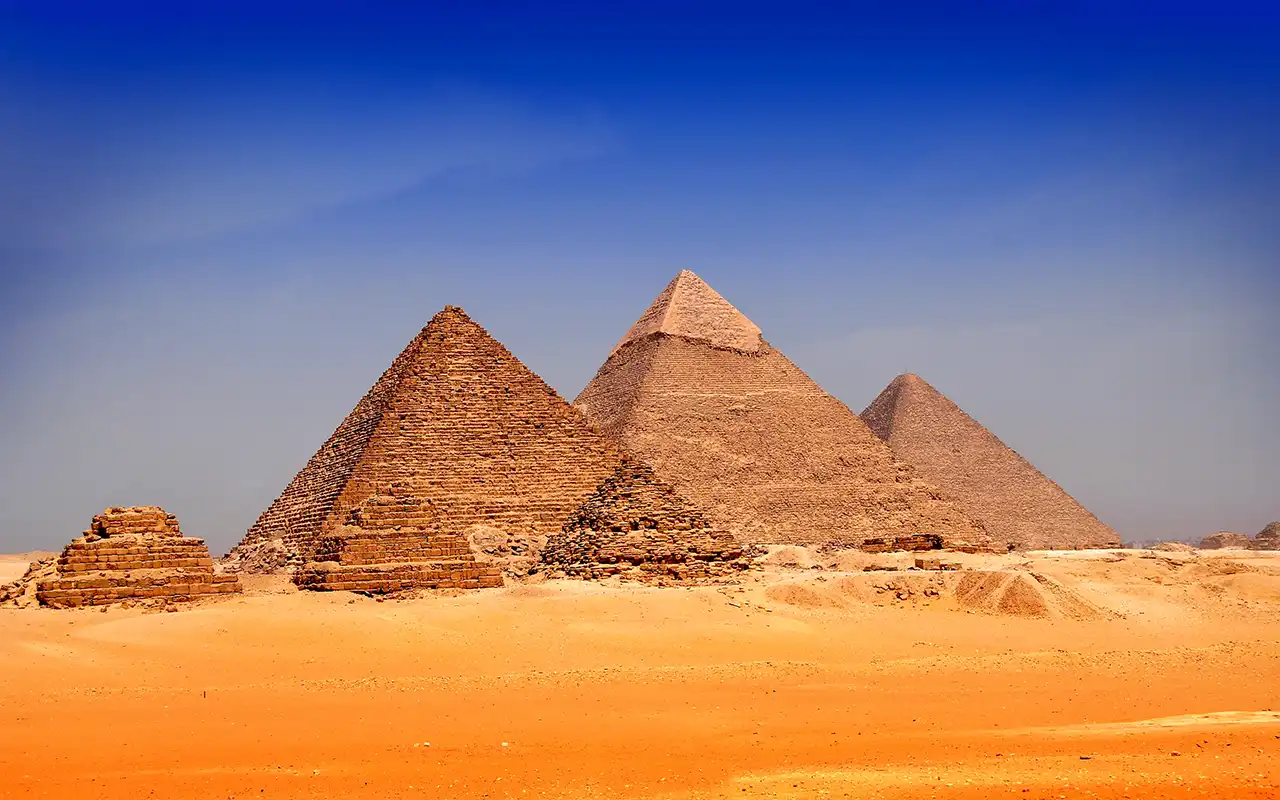
The Pyramids of Giza—Khufu, Khafre, and Menkaure—are the last surviving of the Seven Wonders of the Ancient World, standing as awe-inspiring testaments to ancient Egypt’s architectural and engineering brilliance.
📌 Navigating Pyramids of Giza : Answers to Frequently Asked Questions
- Washrooms: Washrooms are available on-site, but facilities may vary in cleanliness and maintenance.
- Hours of Operation: The site is open daily from 8 AM to 5 PM, with extended hours during peak tourist season.
- Important Information: It is recommended to dress appropriately for the weather, stay hydrated, and be mindful of local customs while visiting.
- Admission Fee: The admission fee varies depending on the type of access and whether you wish to enter the pyramids themselves.
- How Long to Visit: Visitors typically spend about 2 to 4 hours exploring the pyramids and surrounding area.
- Parking: Parking is available near the entrance, but spaces can fill up quickly during peak tourist hours.
- Family Friendly: The Pyramids of Giza are family-friendly, with educational opportunities and open spaces for children to explore.
- Photography: Photography is permitted, and visitors often capture stunning images of the pyramids against the desert backdrop.
- WIFI: WIFI is not widely available on-site, so it's advisable to download maps and information beforehand.
- Picnic Area: Picnic areas are not designated within the site, but nearby parks may offer suitable spots for outdoor dining.
- Handicap Accessible: The site is partially handicap accessible, with some pathways and areas accommodating wheelchair users.
- Pets: Pets are not allowed on the site to preserve the historical and archaeological integrity of the area.
- Guided Tours: Guided tours are available and highly recommended for a comprehensive understanding of the history and significance of the pyramids.
- Restaurant or Cafe: There are several restaurants and cafes nearby, offering a range of local and international cuisine.
- Gift Shop: A gift shop is present, featuring souvenirs such as replicas, books, and traditional Egyptian crafts.
Photos of Pyramids of Giza
Just outside Cairo on the Giza Plateau, these colossal pyramids have towered over the desert sands for more than 4,500 years. Built as royal tombs during the Fourth Dynasty of Egypt’s Old Kingdom, the Pyramids of Giza remain among the most studied and iconic monuments in human history. Visitors are mesmerized not only by their massive scale and geometric precision, but by the mystery, mythology, and mathematical sophistication behind their construction. No trip to Egypt—or even the world—is complete without standing in their shadow.
What to Expect
The Giza Pyramid Complex includes the Great Pyramid of Khufu (also called Cheops), the Pyramid of Khafre, the smaller Pyramid of Menkaure, the iconic Sphinx, satellite queen pyramids, and several tombs and temples. You can walk around and between the pyramids, explore internal chambers (extra fee), and visit the Solar Boat Museum. Camel and horse rides are available on the desert perimeter, offering classic panoramic views. Crowds gather especially near the Great Sphinx and the pyramid base areas, but open desert views offer space and perspective.
Background and Cultural Context
Constructed between ~2580–2510 BCE during Egypt’s Fourth Dynasty, these pyramids served as elaborate tombs for pharaohs. Khufu’s Great Pyramid originally stood 146.6 meters (481 feet) tall and was the tallest man-made structure in the world for over 3,800 years. Each pyramid was part of a larger funerary complex that included mortuary temples, causeways, and valley temples. The Giza site represents the zenith of pyramid building, followed by a shift to smaller, more hidden tombs in later dynasties. These structures have influenced everything from mathematics and astronomy to art and literature around the globe.
Best Time to Visit
Arrive early in the morning (8–10 AM) to beat the heat and avoid peak crowds. Cooler months—November through March—offer the most pleasant weather for exploring on foot. Avoid midday visits in summer (June–August) due to extreme heat. Sunset camel rides and night-time sound-and-light shows are also popular for unique experiences.
How to Get There
The pyramids are located ~13 km (8 miles) southwest of central Cairo. You can reach the site by taxi, Uber, or guided tour. There is a main entrance near the Great Pyramid and a second entrance near the Sphinx. Entry tickets (standard and combo options) are available at the gate—cash in Egyptian pounds is required. Inside, there are optional tickets to enter the Great Pyramid or Khafre’s Pyramid. The area is walkable, but distances are large; consider water, sun protection, and sturdy shoes.
Photo Opportunities
- Classic side-view shot with all three pyramids aligned against the sky
- Close-up of the Sphinx with the Great Pyramid in the background
- Inside the pyramid corridors and chambers (photography may be limited)
- Wide desert panoramas from camelback at golden hour
- Sunset silhouette of the pyramids from the Giza Plateau rim
Travel Tips
- Hire a licensed Egyptologist guide for deeper historical insight and help navigating the site.
- Bring bottled water, sunscreen, and a hat—there’s little shade on the plateau.
- Be cautious with unofficial guides and vendors near the entrance gates—politely decline if needed.
- Photography inside pyramid interiors may be restricted—check signage and ask staff before snapping photos.
- Pair your visit with the nearby Grand Egyptian Museum or the Solar Boat Museum (if open).
FAQs
Can I go inside the pyramids?
Yes—for an extra fee, visitors can enter the Great Pyramid, Pyramid of Khafre, or Pyramid of Menkaure. Interior chambers are narrow and hot but fascinating.
Is it safe to visit?
Yes—tourism is well-supported at Giza. Use standard precautions, hire a guide if desired, and avoid unofficial vendors for a hassle-free experience.
Is the site wheelchair accessible?
Access is limited due to uneven terrain and sand, though the base areas near the Sphinx and visitor center are more accessible.
Final Thoughts
Standing before the Pyramids of Giza is a humbling experience—one that transcends history books and postcards. With their ancient grandeur, mystical allure, and sheer scale, the pyramids remain one of humanity’s most awe-inspiring achievements. Whether you admire them from a distance, explore their chambers, or simply contemplate their timeless presence, the pyramids are a must-see wonder for every world traveler.