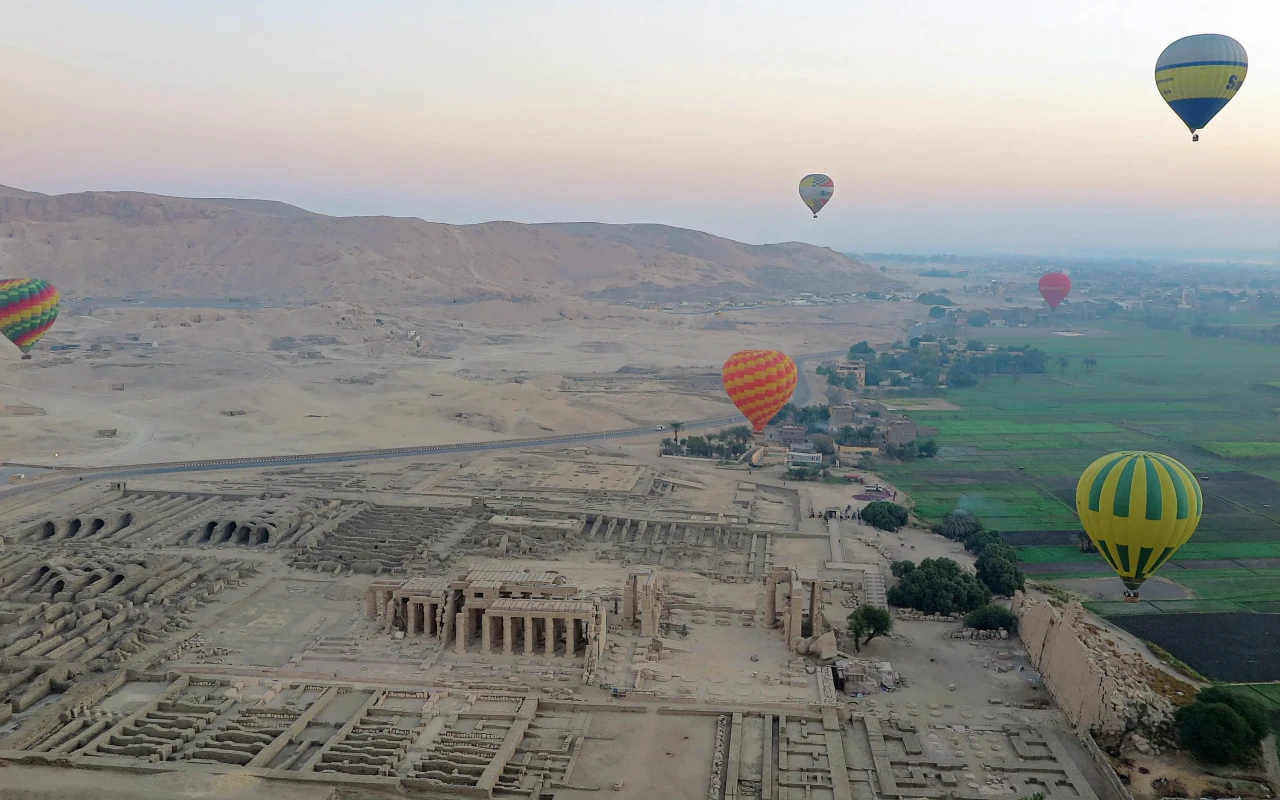
Claim to Fame
One of the most important archaeological sites in the world, the Valley of the Kings is the burial ground of ancient Egypt’s New Kingdom pharaohs—including the legendary tomb of Tutankhamun.
📌 Navigating Valley of the Kings in Luxor : Answers to Frequently Asked Questions
- Washrooms: Washrooms are available near the entrance for visitor convenience.
- Hours of Operation: The Valley of the Kings is open daily from 6:00 AM to 5:00 PM, with extended hours in the summer.
- Important Information: It is recommended to wear comfortable shoes, carry water, and check for any tomb closures before visiting.
- Admission Fee: The admission fee varies depending on whether you visit individual tombs or purchase a combined ticket.
- How Long to Visit: Most visitors spend about 2 to 3 hours exploring the valley and its tombs.
- Parking: Parking is available near the entrance, but spaces may be limited during peak tourist seasons.
- Family Friendly: The Valley of the Kings is family friendly, offering educational opportunities about ancient Egyptian history.
- Photography: Photography is permitted outside the tombs, but flash photography and tripods are prohibited inside.
- WIFI: Free Wi-Fi is not available on-site; visitors should prepare for limited connectivity.
- Picnic Area: Picnic areas are not provided, as food and drinks are not allowed within the archaeological site.
- Handicap Accessible: The site has some handicap accessible pathways, but certain areas may be challenging to navigate.
- Pets: Pets are not allowed in the Valley of the Kings to maintain the site’s integrity and cleanliness.
- Guided Tours: Guided tours are highly recommended and available in multiple languages to enhance the visitor experience.
- Restaurant or Cafe: There are no restaurants or cafes within the Valley, but options can be found nearby in Luxor.
- Gift Shop: A gift shop is available at the entrance, offering souvenirs related to ancient Egypt.
Photos of Valley of the Kings in Luxor
Tucked into the barren cliffs of Luxor’s west bank, the Valley of the Kings served as the necropolis for Egypt’s most powerful rulers for over 500 years. Unlike the grand pyramids of earlier dynasties, New Kingdom pharaohs chose hidden rock-cut tombs filled with intricate carvings, celestial maps, and vivid murals. Today, the site holds more than 60 discovered tombs, some open to the public in rotation, offering visitors a rare chance to walk the sacred corridors once reserved for kings, priests, and gods.
What to Expect
Visitors typically tour 3 standard tombs included in general admission (e.g., Ramses III, Ramses IX, Merenptah), with optional access to premium tombs like Tutankhamun (KV62), Seti I (KV17), or Ramses V/VI (KV9) for additional fees. Expect steep ramps, underground corridors, and dramatic wall paintings depicting scenes from the Book of the Dead. While many tombs were looted in antiquity, the artistry remains awe-inspiring. Don’t expect to see mummies here—most are in museums—but Tutankhamun’s remains lie in his tomb under glass.
Background and Cultural Context
The Valley of the Kings (Wadi el-Muluk) was established during Egypt’s 18th Dynasty, when pharaohs sought more secure and sacred burial sites away from the vulnerable pyramids of the north. The secluded valley near Thebes (modern Luxor) became the final resting place for over 60 royals, nobles, and high priests. The tombs were carefully designed to aid the pharaoh’s journey through the underworld and into eternal life. The most famous discovery came in 1922, when Howard Carter unearthed Tutankhamun’s untouched tomb, sparking a global Egyptology craze.
Best Time to Visit
Arrive early morning (8–10 AM) for cooler temperatures and lighter crowds. Temperatures soar in the afternoon, especially from May to September. Winter (October–March) is peak season, offering pleasant weather but busier conditions. Avoid midday visits when the sun reflects off the surrounding cliffs and walking paths.
How to Get There
The Valley of the Kings is located on Luxor’s west bank, approximately 40 minutes from downtown by car. Most visitors arrive via private guide, taxi, or group tour. A visitor center offers ticketing, restrooms, and electric tram transport to the main entrance. Combination tickets may include nearby sites like the Temple of Hatshepsut and the Valley of the Queens.
Photo Opportunities
- Carved entrance and wide staircase into the tomb of Ramses V/VI (KV9)
- Celestial ceiling frescoes inside the tomb of Seti I (if accessible)
- Iconic view down the main shaft of Tutankhamun’s tomb
- Sunlit cliffs surrounding the valley and panoramic shots from nearby hills
- Hieroglyph-covered corridors glowing under artificial lighting
Travel Tips
- Buy separate tickets in advance for premium tombs—Seti I and Tutankhamun are limited-entry.
- Photography is permitted with a camera ticket—flash and tripods are strictly prohibited.
- Wear closed-toe shoes and bring water—walking paths are rocky and shaded areas are limited.
- Hire a licensed Egyptologist guide or rent the audio guide at the visitor center for context.
- Combine with a visit to the nearby Tombs of the Nobles or Hatshepsut’s Mortuary Temple for a full day.
FAQs
How many tombs are open to the public?
Around 8–10 tombs are typically open at any time, with a rotating schedule managed by the Ministry of Antiquities to preserve the artwork.
Is Tutankhamun’s tomb worth the extra cost?
Yes—though modest in size, it’s one of the most famous archaeological sites in the world. You’ll see the king’s actual mummy and painted burial chamber.
Is the site wheelchair-accessible?
The visitor center and trams are accessible, but most tombs require descending stairs or uneven ramps. Visitors with mobility issues may need assistance.
Final Thoughts
A tour of the Valley of the Kings is a powerful encounter with ancient Egypt’s most sacred mysteries. Beneath the sun-baked cliffs lie stories of gods, royalty, and humanity’s quest for eternity—painted in colors that have endured for over 3,000 years. Whether you enter one tomb or many, you’ll leave with a deeper appreciation for the art, engineering, and spiritual vision of a civilization that still fascinates the world.