
Uncategorized
1. Pyramids Of Giza, Egypt: Witness The Last Standing Wonder Of The Ancient World
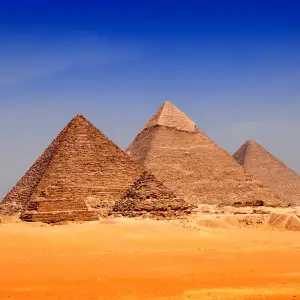
Just outside Cairo on the Giza Plateau, these colossal pyramids have towered over the desert sands for more than 4,500 years. Built as royal tombs during the Fourth Dynasty of Egypt’s Old Kingdom, the Pyramids of Giza remain among the most studied and iconic monuments in human history. Visitors are mesmerized not only by their massive scale and geometric precision, but by the mystery, mythology, and mathematical sophistication behind their construction. No trip to Egypt—or even the world—is complete without standing in their shadow.
What to ExpectThe Giza Pyramid Complex includes the Great Pyramid of Khufu (also called ...
2. The Great Sphinx Of Giza: Unravel The Mysteries Of Egypt’s Guardian Of Stone
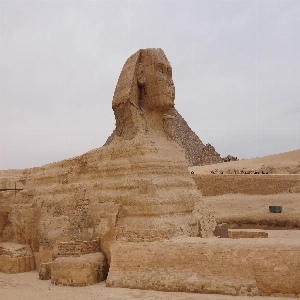
Situated just east of the Pyramid of Khafre on the Giza Plateau, the Great Sphinx of Giza is a towering limestone statue carved directly from bedrock. Measuring over 73 meters (240 feet) in length and 20 meters (66 feet) tall, the Sphinx is believed to have been built around 2500 BCE. Its exact origins, purpose, and even the identity of the face it bears remain subjects of scholarly debate and fascination. Visitors flock to stand before this ancient guardian, whose enigmatic expression has gazed over the desert for nearly 4,500 years.
What to ExpectThe Sphinx stands in a ...
3. Egyptian Museum Cairo: Journey Through 5,000 Years Of Ancient History
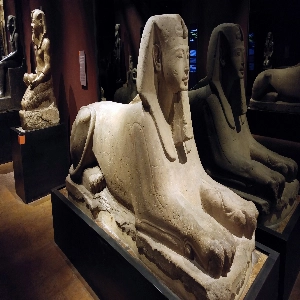
Located in the heart of downtown Cairo at Tahrir Square, the Egyptian Museum (also known as the Museum of Egyptian Antiquities) houses over 120,000 artifacts spanning 30 dynasties of Egypt’s ancient civilization. From colossal statues and royal mummies to intricate jewelry and papyrus scrolls, the museum offers an unparalleled glimpse into the life, death, and legacy of the pharaohs. While many treasures are transitioning to the new Grand Egyptian Museum in Giza, the original building remains a must-see for lovers of archaeology and history.
What to ExpectExpect to be amazed from the moment you walk into the museum’s ...
4. Valley Of The Kings: Explore Egypt’s Royal Tombs Beneath The Desert Cliffs Of Luxor
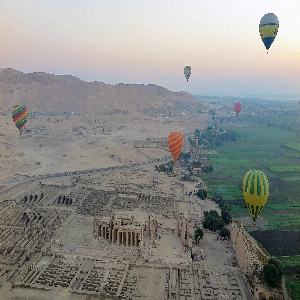
Tucked into the barren cliffs of Luxor’s west bank, the Valley of the Kings served as the necropolis for Egypt’s most powerful rulers for over 500 years. Unlike the grand pyramids of earlier dynasties, New Kingdom pharaohs chose hidden rock-cut tombs filled with intricate carvings, celestial maps, and vivid murals. Today, the site holds more than 60 discovered tombs, some open to the public in rotation, offering visitors a rare chance to walk the sacred corridors once reserved for kings, priests, and gods.
What to ExpectVisitors typically tour 3 standard tombs included in general admission (e.g., ...
5. Karnak Temple Complex: Walk Among The Sacred Columns Of Ancient Thebes
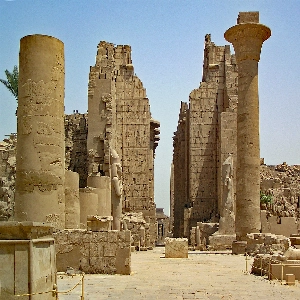
Located just north of modern Luxor, Karnak was the beating heart of ancient Thebes and the spiritual center of Egypt during the New Kingdom. Spanning over 200 acres, the complex is dedicated primarily to the god Amun-Ra, with subsidiary temples to Mut and Khonsu. Visitors enter through monumental pylons into sanctuaries, sacred lakes, towering obelisks, and the awe-inspiring Great Hypostyle Hall—a forest of stone that leaves even modern travelers speechless.
What to ExpectYour visit begins with the imposing First Pylon and the Avenue of Rams, flanked by sphinxes. Inside, the Great Hypostyle Hall is the star ...
6. Abu Simbel Temples: Marvel At Ramses II’s Monumental Legacy In The Nubian Desert
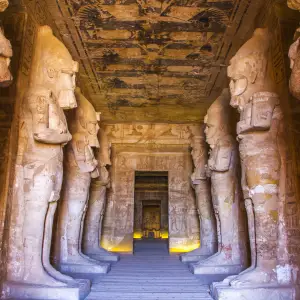
Set on the western bank of Lake Nasser, near Egypt’s southern border with Sudan, the Abu Simbel Temples are among the most iconic and awe-inspiring monuments of ancient Egypt. Built in the 13th century BCE, the temples honor Ramses II’s divine status and military might. With their massive façades, intricate carvings, and astronomical precision, they reflect both religious devotion and pharaonic propaganda. The entire site was famously relocated in the 1960s to avoid submersion by the Aswan High Dam—a feat of modern engineering rivaling the ancient original.
What to ExpectThe site features two main temples: the ...
7. Temple Of Philae: Explore Egypt’s Sacred Island Shrine To Isis And The Last Echoes Of Ancient Religion
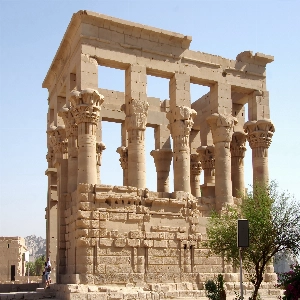
The Temple of Philae rises from the waters of the Nile on Agilkia Island near Aswan, a serene and mystical site that once marked the southernmost limit of Egyptian religious worship. Originally built on the island of Philae, the entire complex was moved in the 1960s to save it from flooding by the Aswan High Dam. With its graceful colonnades, mythological reliefs, and blend of Ptolemaic and Roman-era architecture, the temple honors Isis—the divine mother, healer, and protector—making it one of the most atmospheric and photogenic temples in Egypt.
What to ExpectYour visit begins with a ...
8. Mount Sinai: Climb Egypt’s Sacred Peak At Sunrise
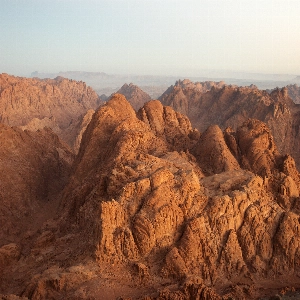
Located in Egypt’s rugged Sinai Peninsula, Mount Sinai rises 2,285 meters (7,497 feet) above sea level and draws pilgrims, hikers, and spiritual seekers from around the world. The trek to the summit—usually done overnight—culminates in a majestic sunrise above the surrounding peaks and desert valleys. Whether you come for religious reflection or natural beauty, Mount Sinai delivers an unforgettable experience steeped in history and awe.
What to ExpectMost climbs begin just after midnight to reach the summit in time for dawn. There are two main routes: the Camel Path (longer but easier) and the Steps of ...