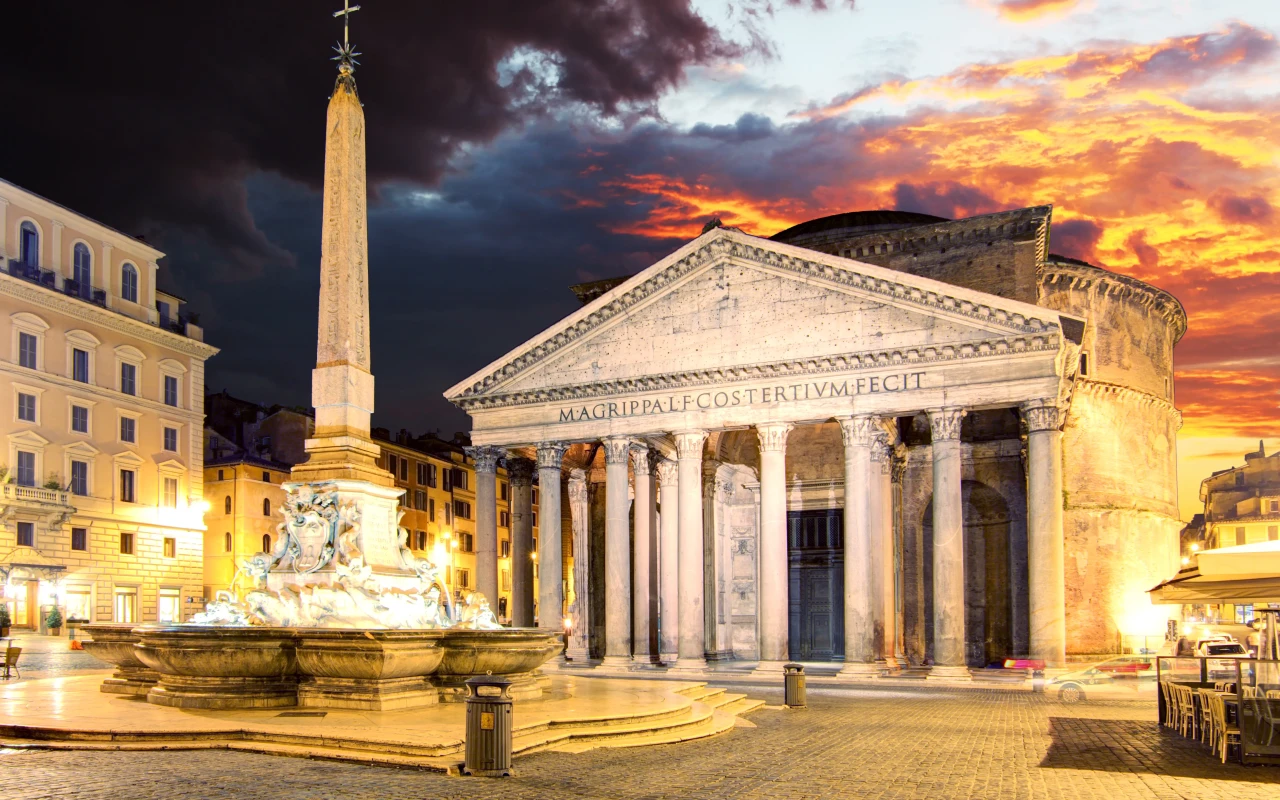
Claim to Fame
The Panthéon is France’s secular temple of honor — a neoclassical monument where the country’s greatest minds, including Voltaire, Marie Curie, and Victor Hugo, are laid to rest beneath an awe-inspiring dome.
📌 Navigating Panthéon : Answers to Frequently Asked Questions
- Admission Fee: An admission fee is required to enter the Panthéon.
- How Long to Visit: A visit to the Panthéon typically lasts about 1 to 2 hours.
- Washrooms: Public washrooms are available at the Panthéon.
- Hours of Operation: The Panthéon is open daily from 10 AM to 6:30 PM.
- Important Information: The Panthéon is a historic building and former church, now a mausoleum.
- Handicap Accessible: The Panthéon is accessible for visitors with disabilities.
- Pets: Pets are not allowed inside the Panthéon.
- Guided Tours: Guided tours are available to explore the history of the Panthéon.
- Restaurant or Cafe: There is no restaurant or cafe inside the Panthéon.
- Gift Shop: The gift shop at the Panthéon offers a variety of books and souvenirs.
- Parking: Limited parking is available near the Panthéon.
- Family Friendly: The Panthéon is a family-friendly site with educational exhibits.
- Photography: The architecture and interior of the Panthéon are great for photography.
- WIFI: WIFI is not available at the Panthéon.
- Picnic Area: There are no picnic areas within the Panthéon grounds.
Photos of Panthéon
Located in the heart of the Latin Quarter, the Panthéon is one of Paris’s most important historical and architectural landmarks. Originally built as a church dedicated to Saint Genevieve, it was transformed during the French Revolution into a mausoleum for the nation’s most celebrated citizens. Today, it stands as both a masterpiece of neoclassical design and a solemn tribute to French heritage.
What to Expect
As you approach the Panthéon, its grand portico and Corinthian columns immediately command attention. Inside, you're greeted by an expansive nave crowned by a majestic dome, murals celebrating French history, and Foucault’s Pendulum — a dramatic demonstration of Earth’s rotation first installed in 1851.
Descend into the crypt to explore the resting places of France’s most revered writers, philosophers, scientists, and politicians. You’ll find tombs of Rousseau, Voltaire, Victor Hugo, Émile Zola, Marie and Pierre Curie, and more — all honored for shaping French and global culture.
Background and Cultural Context
Commissioned by King Louis XV in 1758 and completed in 1790, the Panthéon was initially intended as a church. However, as revolutionary fervor swept through France, the building’s purpose shifted. Since then, it has alternated between religious and secular functions, ultimately becoming a civic shrine to republican values and intellectual achievement.
Inscribed above the entrance is the phrase: “Aux grands hommes, la patrie reconnaissante” — “To great men, the grateful homeland” — symbolizing its dedication to those who advanced the nation through thought, art, and science.
Best Time to Visit
Early morning or late afternoon visits offer the best lighting for photography and fewer crowds. Weekdays outside of peak tourist season are ideal. If you're interested in panoramic views, consider visiting on a clear day when the dome’s exterior viewing platform is open.
How to Get There
The Panthéon is located in the 5th arrondissement near the Jardin du Luxembourg and Sorbonne University. It's accessible by:
- Metro: Cardinal Lemoine (Line 10), Luxembourg (RER B), or Place Monge (Line 7)
- Bus: Lines 21, 27, 38, 82, 84, or 85
Photo Opportunities
- The striking façade with classical columns and sculptures
- Interior dome viewed from beneath
- Crypt architecture and historical tombs
- Panoramic rooftop views over Paris (when open)
Travel Tips
- Entry is free for EU citizens under 26 and on the first Sunday of each month (Nov–Mar).
- The dome climb is seasonal — check ahead to confirm access.
- Bring a light jacket — the crypt can be quite cool year-round.
- Combine with a walk through the Latin Quarter and the nearby Luxembourg Gardens.
FAQs
Is the Panthéon wheelchair accessible?
Yes — there is ramp and elevator access to most areas, though the dome terrace is not accessible to wheelchairs.
How long should I plan for a visit?
Plan for about 1–1.5 hours, or longer if exploring the dome and taking in the art and exhibits in detail.
Can I visit the dome terrace?
Yes, in spring through early fall — it offers one of the best views over central Paris.
Final Thoughts
A visit to the Panthéon is a powerful experience — a convergence of history, philosophy, and French identity beneath one monumental dome. Whether you come to honor France’s great thinkers or to marvel at the building itself, it’s a place that leaves a lasting impression.