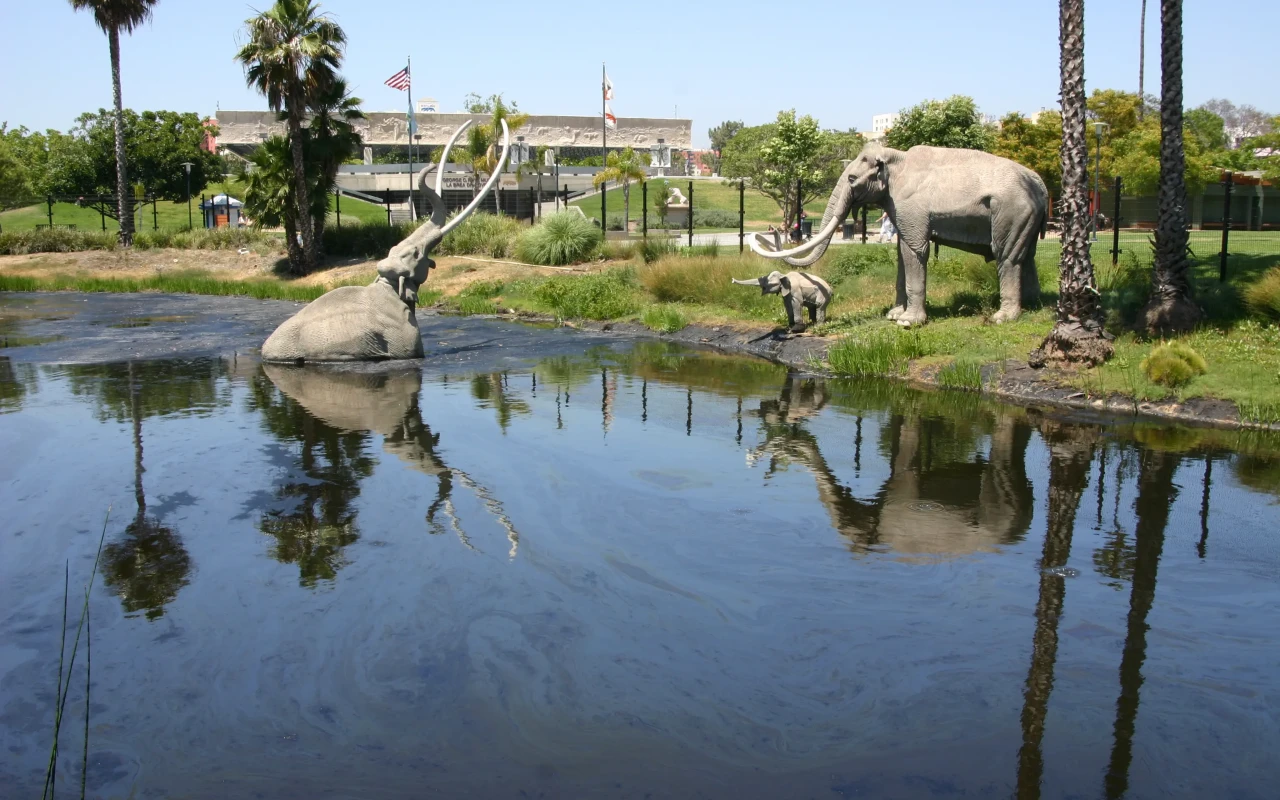
Claim to Fame
The La Brea Tar Pits and Museum is the world’s only active urban fossil dig—home to naturally preserved Ice Age fossils like saber-toothed cats, mammoths, and dire wolves recovered from bubbling asphalt since the early 20th century.
📌 Navigating La Brea Tar Pits and Museum : Answers to Frequently Asked Questions
- Admission Fee: An admission fee is required to enter the La Brea Tar Pits and Museum.
- How Long to Visit: A visit to the La Brea Tar Pits and Museum typically lasts about 1 to 2 hours.
- Washrooms: Public washrooms are available in the La Brea Tar Pits and Museum.
- Hours of Operation: The La Brea Tar Pits and Museum is open daily from 9:30 AM to 5 PM.
- Important Information: The La Brea Tar Pits and Museum offers a unique glimpse into prehistoric Los Angeles, with active excavation sites and exhibits.
- Handicap Accessible: The La Brea Tar Pits and Museum is accessible for visitors with disabilities.
- Pets: Pets are not allowed inside the La Brea Tar Pits and Museum, except for service animals.
- Guided Tours: Guided tours of the La Brea Tar Pits and Museum are available.
- Restaurant or Cafe: The La Brea Tar Pits and Museum has a cafe offering light meals and beverages.
- Gift Shop: The gift shop at the La Brea Tar Pits and Museum offers a variety of science-related souvenirs.
- Parking: Parking is available at various public lots near the La Brea Tar Pits and Museum.
- Family Friendly: The La Brea Tar Pits and Museum is family-friendly, with exhibits and activities for all ages.
- Photography: The La Brea Tar Pits and Museum is picturesque and excellent for photography.
- WIFI: Free public WIFI is available in some areas of the La Brea Tar Pits and Museum.
- Picnic Area: There are designated picnic areas within the La Brea Tar Pits grounds.
Photos of La Brea Tar Pits and Museum
Located in Hancock Park in the heart of Los Angeles, the La Brea Tar Pits and George C. Page Museum offer a window into a Pleistocene ecosystem frozen in time. Throughout the year, paleontologists continue to excavate more than 100,000 fossils from tar seep “pits” and the adjacent 13-acre Lake Pit. Visitors can watch real-time digs through glass windows, explore life-size Ice Age sculptural tableaux on the park grounds, and examine meticulously prepared bones in the museum’s Fossil Lab gallery.
What to Expect
Start at the outdoor Fossil Overlook, where tar-stained bone fragments protrude from the newly opened Pit 91 excavation. Guided “Pit Tours” detail the science of bone recovery and identification. Inside the George C. Page Museum, four floors of exhibits present mounted skeletons of mammoths, ground sloths, and the fearsome Smilodon fatalis (saber-tooth cat), alongside interactive displays on tar chemistry and climate change. Don’t miss the Fossil Lab windows, where technicians clean and assemble specimens under bright lights.
Seasonal “Field Station” programs allow families to cast replica bones or search sediment trays for microfossils. The museum store offers replica fossils, paleontology kits, and regional natural history books. Throughout the year, special lectures and behind-the-scenes tours delve into ongoing research and modern conservation of the tar pit environment.
Background and Cultural Context
Natural asphalt seeps have trapped and preserved animal remains for tens of thousands of years. Indigenous Tongva people knew and used “weitchpec” asphalt long before European settlement. In 1913, oil workers first uncovered the extraordinary bonebeds, leading to systematic excavations by the Natural History Museum of Los Angeles County. Today, La Brea Tar Pits remains a crown jewel of North American paleontology, illustrating how urban development and scientific stewardship coexist.
The museum’s research has reshaped understanding of Pleistocene extinction dynamics, predation behavior, and megafauna ecology. Collaborative projects with universities and international institutions continue to yield new species descriptions and insights into Ice Age biodiversity in Southern California.
Best Time to Visit
Weekday mornings (10–11 AM) offer quieter galleries and unobstructed views of Pit 91. Late afternoons (3–5 PM) provide soft light on outdoor life-size dioramas and the tar-slathered “Lake Pit.” Spring (March–May) brings mild temperatures for outdoor exploration, while fall (September–November) features extended hours on select weekends. Check the museum calendar for excavation site open days and special “Lab Late” evening events.
How to Get There
The Tar Pits are at 5801 Wilshire Boulevard (at Curson Avenue) in Hancock Park. Metro: Purple Line subway to Wilshire/La Brea Station, then a 5-minute walk north. DASH bus routes D and B run nearby. Street parking and a paid lot adjacent to the museum accommodate cars; bicycle racks are available at the entrance. The site is fully accessible with ramps, elevators, and guided-audio tools for visitors with sensory needs.
Photo Opportunities
- Smilodon fatalis mount in the museum’s main hall, framed by tall windows
- Pit 91 dig site with exposed fossils and paleontologists at work
- Life-size mammoth and dire wolf diorama beneath majestic ficus trees outdoors
- Close-up of resin-coated asphalt bubbling at the Lake Pit edge
- Fossil Lab technicians cleaning bones behind glass under task lighting
Travel Tips
- Purchase timed-entry tickets online to guarantee museum access during popular seasons.
- Arrive early for “Pit 91” guided tours—spot fossil finds before crowds gather.
- Wear comfortable walking shoes and layers—the outdoor park can be cooler than indoors.
- Bring a reusable water bottle—hydration stations are located near the visitor center.
- Combine your visit with a short walk to the nearby Los Angeles County Museum of Art (LACMA) and the Urban Light installation at Wilshire & Fairfax.
FAQs
Are fossils still being found?
Yes—active excavations continue year-round, with over 1,000 new specimens recovered annually from Pit 91 and Lake Pit.
Can I see real digs in progress?
Absolutely—the Pit 91 gallery’s viewing windows and guided tours offer live glimpses of paleontology teams at work.
Is the museum kid-friendly?
Yes—hands-on Field Station activities, interactive exhibits, and replica bone casts engage children of all ages.
Is photography allowed?
Non-flash photography is permitted throughout the museum and outdoor sites; drones are prohibited due to wildlife and tar pit hazards.
Final Thoughts
The La Brea Tar Pits and Museum offer a rare opportunity to witness the intersection of modern city life and ancient natural history. From the drama of active excavations to the wonder of Ice Age giants preserved in asphalt, this urban fossil site continues to captivate and educate visitors about Los Angeles’s prehistoric legacy.