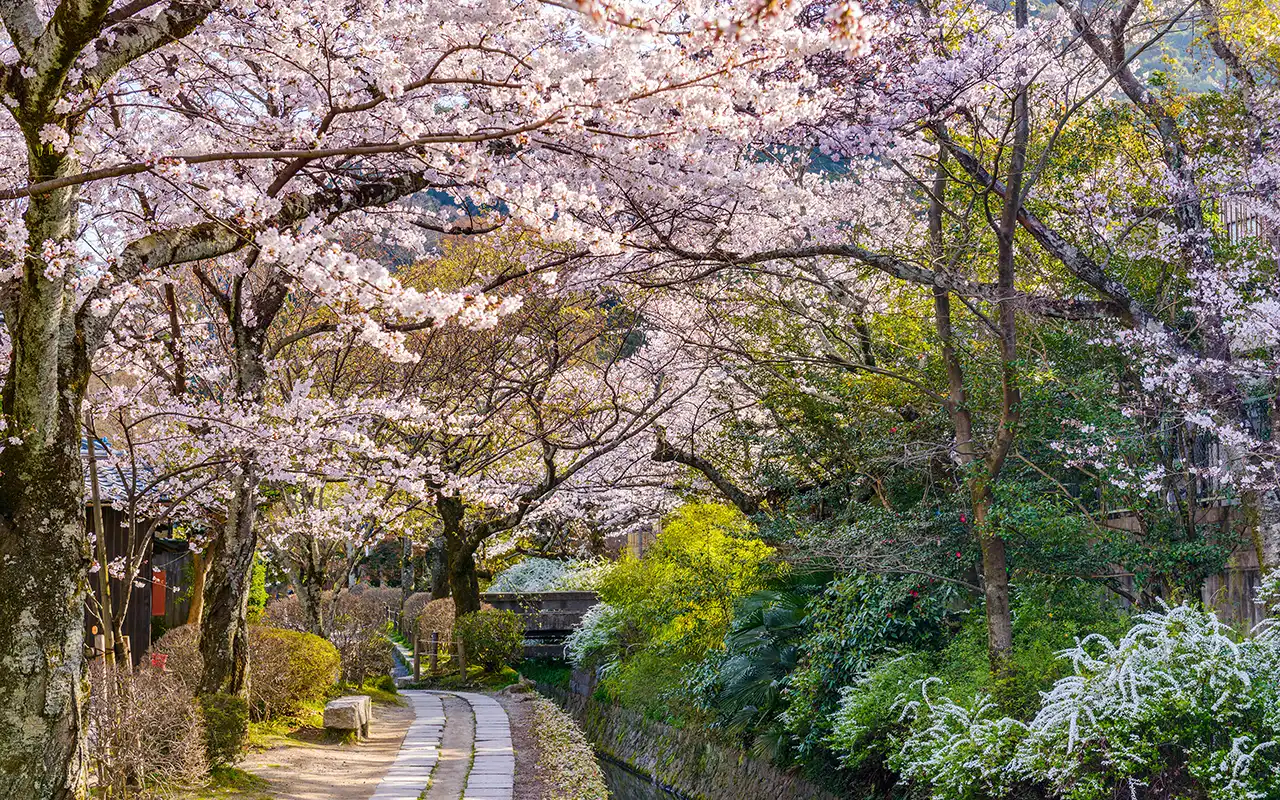
The Philosopher’s Path in Kyoto is renowned for its serene cherry blossom-lined canal, where the beauty of nature intertwines with philosophical reflection, attracting visitors seeking both peace and inspiration.
📌 Navigating Philosopher’s Path : Answers to Frequently Asked Questions
Admission Fee: There is no admission fee to walk the Philosopher's Path, making it a free attraction.
How Long to Visit: Visitors typically spend 1 to 2 hours walking the path, depending on the number of stops they make.
Washrooms: Public washrooms are available at intervals along the path, primarily near the entrance and attractions.
Hours of Operation: The path is open year-round and can be visited at any time, though daylight hours are recommended for safety.
Important Information: It is advisable to wear comfortable shoes and check the seasonal conditions, as the scenery varies throughout the year.
Handicap Accessible: The Philosopher's Path is generally accessible for individuals with mobility challenges, though some sections may have uneven surfaces.
Pets: Pets are allowed on the path, but they should be kept on a leash and cleaned up after.
Guided Tours: Guided tours are available, providing insights into the history and significance of the attractions along the path.
Restaurant or Cafe: There are several cafes and restaurants located near the path, offering local cuisine and refreshments.
Gift Shop: There are no gift shops directly on the path, but nearby shops offer souvenirs and local crafts.
Parking: There is limited parking available nearby, with several paid parking lots within walking distance of the path.
Family Friendly: The path is family-friendly, offering a safe and scenic environment for children to explore.
Photography: Photography is encouraged along the path, especially during cherry blossom season and autumn foliage for stunning scenic shots.
WIFI: Public Wi-Fi is not widely available on the path, so visitors should consider using mobile data.
Picnic Area: While there are no designated picnic areas on the path itself, nearby parks provide suitable spots for picnicking.
📌Heads up: All times, prices and visitor policies are subject to change without notice. Please check the official website for the most recent information.
Photos of Philosopher’s Path
What to Expect
As you begin your stroll along the Philosopher’s Path, prepare to be enveloped in an enchanting ambiance that marries the tranquility of nature with the echoes of history. This picturesque pathway stretches approximately 2 kilometers, meandering alongside a gentle stream and adorned with cherry blossom trees that burst into a vibrant pink during spring. As the petals cascade like soft rain, the path transforms into a whimsical corridor, inviting moments of reflection and serenity.
Each step along the stone walkway reveals charming temples and shrines nestled amidst the lush greenery, offering glimpses of traditional Japanese architecture. Alongside the water, you may encounter the graceful movements of koi fish, enhancing the calming atmosphere. Expect to find locals and travelers alike engaged in thoughtful conversation or simply soaking in the natural beauty that surrounds them. You may even stumble upon small art installations or local artisans showcasing their crafts, enriching the experience even further.
As you wander, the scents of jasmine and other blooming flowers waft through the air, accompanied by the soft sound of water flowing in the canal. The Philosopher’s Path is not merely a walk but a sensory exploration, where each element contributes to a unique tapestry of Kyoto’s cultural and natural heritage. This path, often compared to a sanctuary, invites individuals to pause and appreciate the moment, making it an ideal spot for contemplation.
Background and Cultural Context
The Philosopher’s Path, known as "Tetsugaku no Michi" in Japanese, derives its name from the esteemed philosopher Nishida Kitarō, who often took contemplative walks along this route while pondering the great questions of existence. Established in the 1890s during the Meiji era, the path was intended to serve as a canal for transportation; however, it soon evolved into a spiritual journey for locals and visitors alike. Its blend of nature and introspection makes it a significant cultural landmark in Kyoto, where philosophy and art converge.
Throughout the centuries, this tranquil corridor has inspired countless artists, writers, and thinkers, serving as a backdrop for deep reflection and intellectual exploration. The proximity of numerous temples, such as Ginkaku-ji, or the Silver Pavilion, adds a layer of historical significance, as these sites represent the zenith of Japanese design and thought, inviting visitors to delve into the aesthetics and philosophies that have shaped the region.
The pathway also serves as a reminder of Kyoto's enduring connection to nature, reflecting the Japanese cultural philosophy of harmony with the environment. With each season, the Philosopher’s Path offers different sensory experiences—from the delicate blooms of cherry trees in spring to the fiery hues of maple leaves in autumn—each change accentuating the philosophical underpinnings that inspired its creation. This path stands not only as a trail but as a testament to the intertwining of nature, thought, and culture.
Best Time to Visit
To fully appreciate and experience the Philosopher’s Path, timing your visit is crucial. The most magical moments occur during the cherry blossom season, typically from late March to early April. During this time, the path transforms into a breathtaking pink corridor, alluring visitors with its delicate blossoms that reflect the transient beauty of life—a theme deeply rooted in Japanese culture. Expect to find the path bustling with both locals and tourists reveling in the seasonal spectacle. Arriving early in the day can provide a more tranquil experience, allowing you to enjoy the quiet moments before the crowds gather.
Conversely, many visitors find that autumn, usually from mid-November to early December, is another ideal time to explore. The vibrant reds and golds of the maple trees create a stunning contrast against the backdrop of the peaceful canal, offering a different yet equally captivating aesthetic. Temperatures during this period are mild, making the walk pleasant and allowing for ample time to stop and soak in the views without the summer heat or winter chill.
In winter, while the path may lack the vibrant colors of spring and fall, it offers a serene solitude that many find appealing. The crisp air and potential for light snow create an ethereal quality, turning the landscape into a serene white wonderland, perfect for those seeking solitude and reflection. Regardless of the season, each visit to the Philosopher’s Path promises a unique experience shaped by the beauty of nature and the profundity of thought.
How to Get There
Reaching the Philosopher’s Path is convenient thanks to Kyoto’s extensive public transport system. Start your journey by taking a train to the nearest station, which is the Kyoto Municipal Subway’s Keage Station, on the Tozai Line. From there, it’s just a short 10-minute walk to the entrance of the path. Another popular starting point is from the Nanzenji Temple area, which offers not only direct access to the path but also a rich tapestry of historical sites to explore before or after your walk.
For those preferring a scenic adventure, it’s also feasible to rent a bike and cycle along the path. Many rental shops are conveniently located throughout Kyoto, and biking provides an alternative way to enjoy the stunning surroundings. Just remember that certain stretches of the path may be better suited for walking, so feel free to dismount and stroll at your leisure!
If you’re coming from other areas in Kyoto, consider using local buses or taxis, which can also bring you close to various access points of the Philosopher’s Path. This accessibility, combined with its central location within Kyoto’s historic district, ensures that this tranquil retreat is only a short journey away, making it easily integrated into any traveler’s itinerary.
Photo Opportunities
- Stunning cherry blossoms in spring
- Reflections of temple architecture in the canal
- Iconic stone lanterns lining the path
- Picturesque Ginkaku-ji Temple at the start of the path
- Quaint wooden bridges crossing the stream
- Autumn foliage in rich hues of red and gold
- Tranquil koi fish swimming in the canal
- Cultural performances or crafts along the way
Travel Tips
- Visit early in the morning to avoid crowds and enjoy a peaceful atmosphere.
- Bring a camera to capture the breathtaking seasonal changes and architectural beauty.
- Wear comfortable walking shoes, as the path is best enjoyed on foot.
- Check local cherry blossom forecasts if visiting in spring to catch the blooms at their peak.
- Respect local customs and keep noise to a minimum to maintain the tranquil ambiance.
- Consider planning your visit during a weekday for a quieter experience.
FAQs
Can I walk the Philosopher’s Path year-round? Yes, the Philosopher’s Path is accessible throughout the year, with each season offering a unique experience, from cherry blossoms in spring to colorful leaves in autumn.
Are there facilities or places to eat along the Philosopher’s Path? While the path itself is primarily focused on nature and contemplation, there are several cafés and shops nearby where you can find traditional Japanese snacks and drinks, adding to the overall experience of your visit.
Final Thoughts
Walking the Philosopher’s Path is not just a leisurely stroll through Kyoto's picturesque landscape; it is an invitation to reflect, to contemplate, and to connect with the essence of life itself. Each bend in the pathway reveals a new layer of beauty, as nature, culture, and philosophy intertwine to create a transformative experience for all who tread upon its stones. Whether you're seeking inspiration, tranquility, or simply a moment of pause, the Philosopher’s Path promises to enrich your journey through one of Japan's most revered cities. Take the time to breathe deeply, absorb the sights and sounds, and let the path guide you to a deeper understanding of both the world around you and the thoughts within.