Claim to Fame
Dedicated to the goddess Isis, the Temple of Philae was the last active center of ancient Egyptian religion—so revered that even Roman emperors added inscriptions to its walls.
📌 Navigating Temple of Philae : Answers to Frequently Asked Questions
- Admission Fee: Admission fees vary, so it's best to check the official website for current pricing and any discounts.
- How Long to Visit: A visit usually lasts about 1 to 2 hours, allowing time to explore the temple and enjoy the surroundings.
- Washrooms: Washrooms are available near the entrance of the site for visitor convenience.
- Hours of Operation: The Temple of Philae is typically open from 8 AM to 5 PM, but hours may vary seasonally.
- Important Information: It is advisable to check local weather conditions and dress appropriately, as the temple is primarily outdoors.
- Handicap Accessible: The Temple of Philae has some accessible paths, but visitors with mobility issues may need assistance due to uneven surfaces.
- Pets: Pets are not allowed on the temple grounds to preserve the site and ensure visitor comfort.
- Guided Tours: Guided tours are available and recommended for a comprehensive understanding of the temple's history and architecture.
- Restaurant or Cafe: There is a small café near the entrance where visitors can enjoy refreshments and snacks.
- Gift Shop: A gift shop is located at the entrance, offering souvenirs and educational materials related to the temple.
- Parking: Parking is available at the nearby ferry terminal, but there are no designated parking areas directly on the island.
- Family Friendly: The site is family-friendly, offering educational insights into ancient Egyptian history that can engage visitors of all ages.
- Photography: Photography is permitted, but visitors should be respectful of other guests and the site's cultural significance.
- WIFI: There is no public WIFI available on-site; visitors should prepare for limited connectivity.
- Picnic Area: Picnic areas are not designated on the temple grounds, but visitors can enjoy a meal at nearby spots outside the temple.
Photos of Temple of Philae
The Temple of Philae rises from the waters of the Nile on Agilkia Island near Aswan, a serene and mystical site that once marked the southernmost limit of Egyptian religious worship. Originally built on the island of Philae, the entire complex was moved in the 1960s to save it from flooding by the Aswan High Dam. With its graceful colonnades, mythological reliefs, and blend of Ptolemaic and Roman-era architecture, the temple honors Isis—the divine mother, healer, and protector—making it one of the most atmospheric and photogenic temples in Egypt.
What to Expect
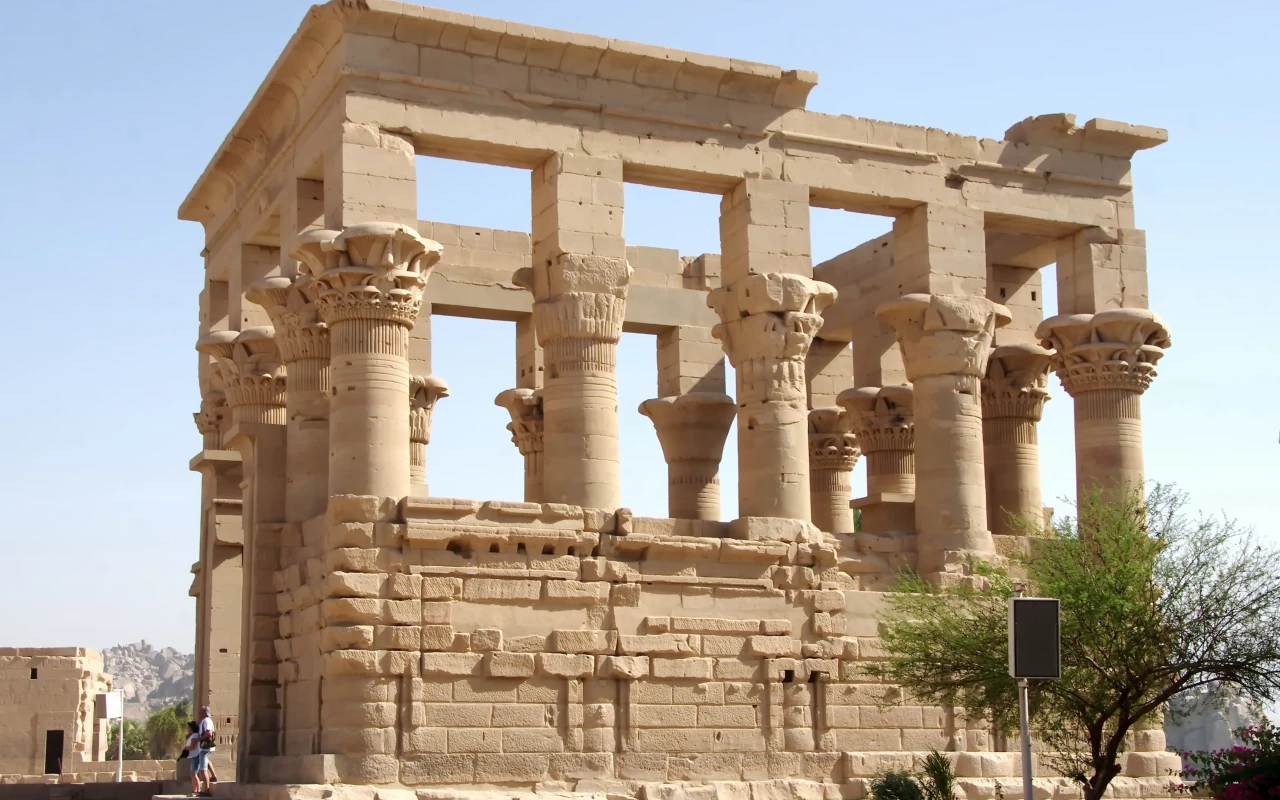
Your visit begins with a scenic boat ride to Agilkia Island, offering dramatic views as the temple appears through the reeds. Explore the First Pylon, with towering reliefs of Pharaoh Ptolemy XII smiting enemies, then enter the Great Court flanked by majestic columns. Inside the Sanctuary of Isis, you'll find ritual chambers, inscriptions, and cult images. Don’t miss the Kiosk of Trajan, an unfinished Roman-era pavilion often dubbed "Pharaoh’s Bed" for its elegant silhouette. The peaceful surroundings and soft stone hues make Philae uniquely enchanting—especially at sunrise or sunset.
Background and Cultural Context
Philae became a major center of Isis worship during the Ptolemaic dynasty and remained active through Roman rule—long after most Egyptian temples had closed. It was one of the last places where hieroglyphs were carved and ancient deities honored. The Temple of Isis symbolized renewal, divine motherhood, and resurrection. In the 1960s, UNESCO engineers painstakingly moved the temple stone by stone to Agilkia Island, a nearby hilltop that mirrored Philae’s original topography, preserving this legacy from the rising Nile waters.
Best Time to Visit
Visit early in the morning (8–10 AM) for cooler temperatures and softer light—especially ideal for photography. Sunset boat tours offer golden views and fewer crowds. The Sound and Light Show, held in the evening, dramatically illuminates the temple with narration in multiple languages. For pleasant weather, aim for the cooler months of October to April.
How to Get There
The Temple of Philae is located near the Aswan Low Dam, about 20 minutes by car from central Aswan. From the Philae Marina, visitors take a short motorboat ride to Agilkia Island (included in most tours or negotiable with local boatmen). Taxis, ride-shares, and guided tours are available from Aswan hotels. Be sure to bring small bills for boat fees and optional tipping.
Photo Opportunities
- Frontal view of the First Pylon reflected in the Nile waters
- Interior carvings of Isis nursing Horus inside the inner sanctuary
- Silhouette of the Kiosk of Trajan at golden hour
- Panoramic temple views framed by palm trees and reeds
- Lit-up columns during the evening Sound and Light Show
Travel Tips
- Bring water, a hat, and sunscreen—shade is limited on the island.
- Wear sturdy shoes for uneven temple floors and boat docks.
- Hire a certified guide or use a mobile app to decode the symbolism and history.
- Arrive early or late in the day to avoid cruise ship tour crowds.
- Negotiate the roundtrip boat fare at the marina before boarding.
FAQs
Is the boat to Philae included in admission?
No—temple entry is separate from the boat fee, which must be paid to the local boat operators (usually shared between visitors or arranged by tour groups).
Can I visit Philae independently?
Yes. Taxis can drop you at the marina, and you can hire a boat yourself. However, a guide is recommended for deeper context.
Are there food or restrooms on the island?
There are restrooms near the dock and a small café area. Bring snacks if you plan to stay long.
Final Thoughts
With its poetic setting and layers of history, the Temple of Philae is more than just a shrine—it’s a symbol of enduring devotion, architectural grace, and Egypt’s eternal reverence for the divine feminine. Whether you're fascinated by mythology, art, or ancient engineering, a visit here is bound to leave a lasting impression.