Claim to Fame
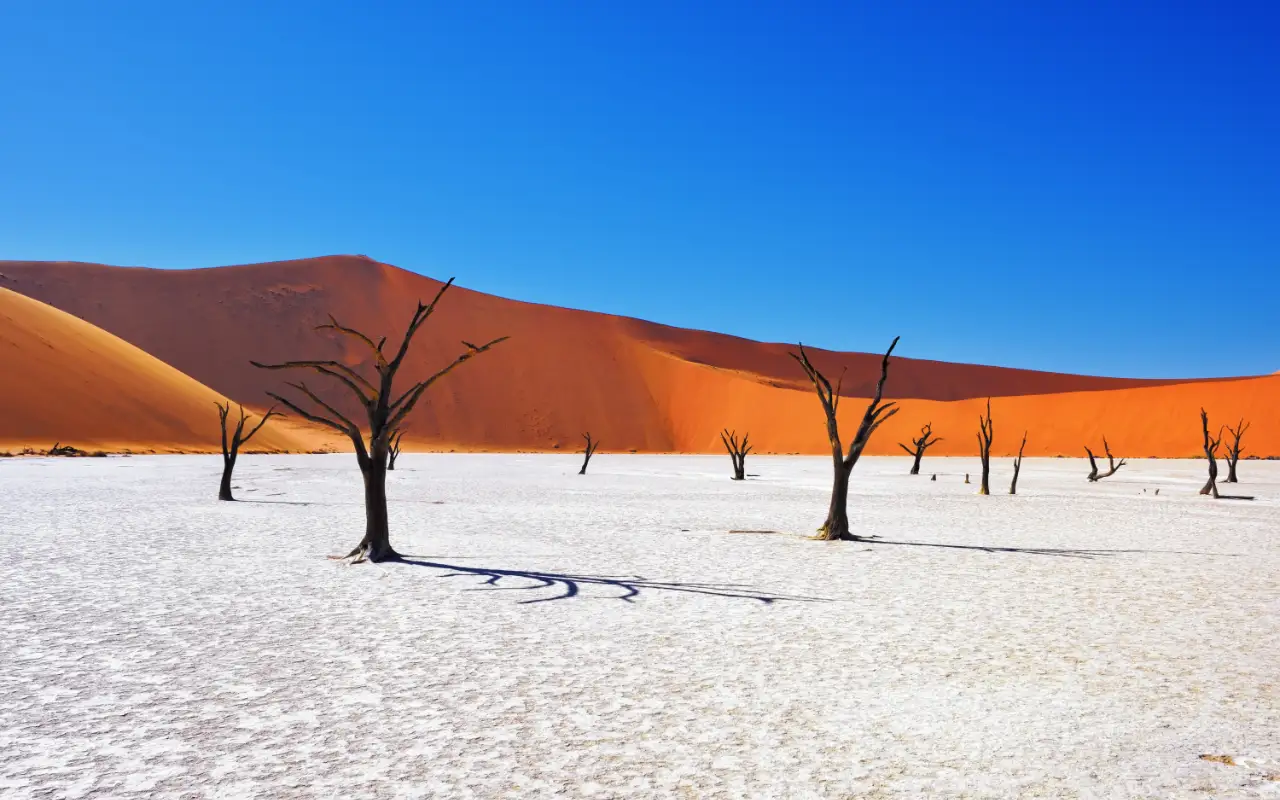
Namibia is home to some of the most surreal and otherworldly landscapes on Earth — including the world’s oldest desert, the towering dunes of Sossusvlei, and the skeletal trees of Deadvlei.
📌 Navigating Namibia : Answers to Frequently Asked Questions
- Washrooms: Washrooms are available at most national parks and tourist facilities, though they may be basic.
- Hours of Operation: Hours of operation depend on the specific park or attraction, but many are open from sunrise to sunset.
- Important Information: Travelers should be aware of the vast distances between attractions in Namibia and plan their itineraries accordingly.
- Admission Fee: Admission fees vary by park; for example, Etosha National Park charges a daily entry fee for visitors.
- How Long to Visit: A visit to major attractions typically takes between a few hours to a full day, depending on the site.
- Parking: Parking is available at major attractions and national parks, often included in the admission fee.
- Family Friendly: Namibia is family-friendly, with numerous activities suitable for children, including wildlife safaris and cultural experiences.
- Photography: Namibia offers stunning landscapes and wildlife, making it a photographer's paradise, especially in places like Sossusvlei and Etosha National Park.
- WIFI: Wi-Fi is limited in remote areas but is available in some hotels, cafes, and urban centers.
- Picnic Area: Picnic areas are available in some parks and reserves, providing scenic spots for visitors to enjoy their meals.
- Handicap Accessible: Many national parks and tourist facilities offer handicap accessibility, but it's advisable to check in advance.
- Pets: Pets are generally not allowed in national parks and wildlife reserves to protect local fauna.
- Guided Tours: Guided tours are widely available and recommended for a deeper understanding of the region's wildlife and culture.
- Restaurant or Cafe: Many national parks and lodges have on-site restaurants or cafes offering local cuisine.
- Gift Shop: Gift shops can be found in major tourist areas, selling local crafts, souvenirs, and wildlife-themed items.
Photos of Namibia
Why Namibia Is a Landscape Photographer’s Dream
Namibia is a destination made for dramatic visuals — bold colors, extreme contrasts, and vast, unspoiled terrain. From Martian-like dune fields to wild coastline shipwrecks and wildlife-rich savannas, it offers immense variety in both subject and scale. Photographers will find Namibia not only visually powerful, but refreshingly quiet — with skies so clear they invite night photography, astrophotography, and time-lapse work without interruption.
Best Time of Year to Photograph Namibia
The dry season (May to October) is the best time for landscape clarity, desert access, and wildlife movement.
- May–July: Cool mornings, golden light, excellent for desert shots and fog on the Skeleton Coast
- August–October: Ideal for wildlife in Etosha and stunning contrast in Deadvlei under blue skies
- November–April: Rainy season — unpredictable skies, storm light, and moody desert greens
Tip: Namibia has very little light pollution. Plan at least one night for Milky Way astrophotography.
Top Photography Locations in Namibia (With GPS)
- Deadvlei (GPS: -24.7405, 15.2922): Bleached white clay pan dotted with ancient dead trees — best shot just after sunrise with long shadows and blue skies.
- Sossusvlei & Dune 45 (GPS: -24.7503, 15.3524): Towering red-orange dunes with sweeping curves and patterns. Golden hour is essential.
- Kolmanskop Ghost Town (GPS: -26.7052, 15.2331): Sand-filled abandoned buildings — shoot late morning to get light rays inside dusty rooms.
- Etosha National Park (GPS: -18.7750, 16.2300): Wide salt pans and superb wildlife — elephants, lions, oryx, giraffes. Dry season brings animals to waterholes for great compositions.
- Skeleton Coast (e.g., Möwe Bay GPS: -19.3834, 12.6765): Misty shoreline with shipwrecks, rusted vehicles, and a haunting atmosphere — great for B&W and minimalism.
- Spitzkoppe (GPS: -21.8403, 15.1944): Granite peaks rising from desert plains. Arch rock is a fantastic framing device for sunrises and Milky Way shots.
- Quiver Tree Forest (GPS: -26.5811, 18.0102): Alien-looking trees against dramatic skies — outstanding at night for star trails or long exposures.
Desert Light and Long Shadows
Namibia is all about contrast — and contrast is all about timing. Shoot early and late in the day to create long shadows across dunes, reveal textures on tree bark, and carve shapes into cracked desert floor. Harsh midday light can work too, especially for infrared or black and white work, but you’ll want ND filters to control exposures.
Use wide apertures at dusk for silhouette work (especially at Deadvlei) and switch to telephoto during golden hour to isolate lone trees or patterns in sand.
Wildlife Photography in Namibia
Etosha National Park is the prime location for wildlife in Namibia, thanks to its vast open salt pans and waterholes that act as magnets for animals during the dry season.
- Use a 100–400mm or 600mm lens for tight wildlife compositions
- Waterhole hides like Okaukuejo are excellent for low-angle, close-up shots
- Early morning dust + backlighting creates golden halos around animals
Also look for desert-adapted wildlife — springbok, oryx, ostriches, and desert elephants — in Damaraland and Palmwag regions.
Recommended Camera Gear for Namibia
- Wide-angle lens (14–24mm or 16–35mm): For dunes, pans, and Milky Way photography
- Standard zoom (24–70mm): Great for travel shots, interior ruins, and general landscapes
- Telephoto (100–400mm or 150–600mm): Necessary for wildlife in Etosha and isolating desert shapes
- Tripod: Essential for long exposure, astrophotography, and low-light dune shooting
- ND/grad filters: For balanced exposures, especially at sunrise/sunset or midday skies
- Intervalometer or remote trigger: For star trails and time-lapse desert skies
Sample 10-Day Photography Itinerary
- Day 1–2: Arrive in Windhoek, drive to Sossusvlei, scout Dune 45 and Deadvlei for morning light
- Day 3: Sunrise at Deadvlei, midday shoot at Dune 45, sunset over Elim Dune
- Day 4: Drive to Kolmanskop, arrive for late afternoon exterior shots
- Day 5: Interior ghost town shoot mid-morning, travel to Lüderitz or Aus
- Day 6–7: Head north to Spitzkoppe — shoot Milky Way at night, arches at sunrise
- Day 8: Quiver Tree Forest for dusk + night sky work
- Day 9–10: Etosha National Park wildlife days — waterholes at dawn/dusk, night safari (if allowed)
Post-Processing Tips for Namibia Photography
- Boost contrast carefully: Namibia’s dusty tones benefit from gentle clarity, not over-sharpening
- Color grading: Let reds and oranges pop, but retain natural blues and earth tones
- Black & White: Consider B&W for Skeleton Coast, foggy dunes, and sand patterns
- Noise control: Night skies are clean here — don’t over-denoise Milky Way shots
Final Thoughts: Why Namibia Should Be in Every Photographer’s Portfolio
Namibia is still relatively undiscovered by the mainstream — which makes it all the more powerful for photographers seeking solitude, silence, and visual impact. Its surreal forms, stark contrasts, and ancient light make for a truly cinematic experience behind the camera. If you’re chasing scale, storytelling, and timelessness — Namibia delivers all three, every day.