Claim to Fame
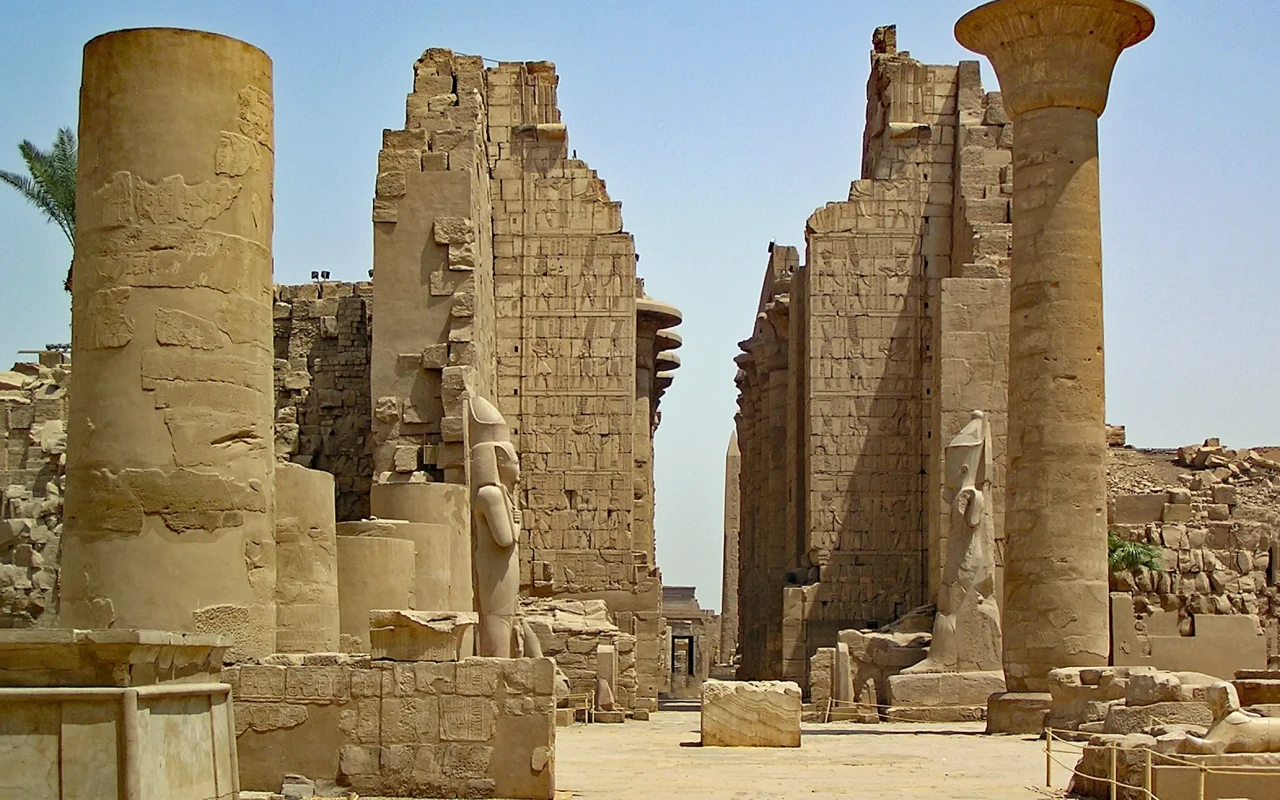
The Karnak Temple Complex is the largest religious structure ever built—featuring the towering Hypostyle Hall with 134 massive sandstone columns and thousands of years of continuous construction by over 30 pharaohs.
📌 Navigating Karnak Temple Complex : Answers to Frequently Asked Questions
- Washrooms: Washrooms are located at the entrance and are maintained for visitor convenience.
- Hours of Operation: The complex is generally open from 6 AM to 5 PM, but hours may vary by season.
- Important Information: It is advisable to wear comfortable shoes, stay hydrated, and bring sun protection, as the area can be quite hot and sunny.
- Admission Fee: The admission fee varies for local and international visitors; check the official website for current prices.
- How Long to Visit: A typical visit lasts around 2 to 3 hours to fully explore the major attractions and take in the history.
- Parking: Parking is available nearby, with designated areas for visitors to leave their vehicles safely.
- Family Friendly: The site is family-friendly, offering educational opportunities and space for children to explore.
- Photography: Photography is permitted, but visitors are encouraged to be respectful of the sacred nature of the site.
- WIFI: Free Wi-Fi is not available on-site; visitors should prepare for limited connectivity.
- Picnic Area: Picnic areas are not provided; visitors are encouraged to enjoy meals at the restaurant.
- Handicap Accessible: The Karnak Temple Complex is equipped with ramps and accessible pathways, making it suitable for visitors with disabilities.
- Pets: Pets are not allowed within the temple complex to preserve the site's integrity and cleanliness.
- Guided Tours: Guided tours are available and provide in-depth insights into the history and significance of the temple complex.
- Restaurant or Cafe: There is a restaurant and cafe within the complex, offering a variety of local and international cuisine.
- Gift Shop: A gift shop is available, selling souvenirs, books, and crafts related to the history and culture of ancient Egypt.
Photos of Karnak Temple Complex
Located just north of modern Luxor, Karnak was the beating heart of ancient Thebes and the spiritual center of Egypt during the New Kingdom. Spanning over 200 acres, the complex is dedicated primarily to the god Amun-Ra, with subsidiary temples to Mut and Khonsu. Visitors enter through monumental pylons into sanctuaries, sacred lakes, towering obelisks, and the awe-inspiring Great Hypostyle Hall—a forest of stone that leaves even modern travelers speechless.
What to Expect
Your visit begins with the imposing First Pylon and the Avenue of Rams, flanked by sphinxes. Inside, the Great Hypostyle Hall is the star attraction—134 massive columns rise up to 21 meters, carved with pharaonic exploits and religious scenes. Other highlights include the sacred lake, the obelisks of Hatshepsut and Thutmose I, and the Precinct of Mut and Khonsu temples. Signage is limited—hiring a guide or using an audio tour is highly recommended. Allow at least 1.5 to 2 hours to explore.
Background and Cultural Context
Construction at Karnak began around 2000 BCE during the Middle Kingdom and continued for over 1,500 years, with each pharaoh adding to the complex. It was the centerpiece of the annual Opet Festival, where statues of the gods were paraded from Karnak to Luxor Temple along the Avenue of Sphinxes. Karnak reflected the divine power of the pharaohs and served as the religious epicenter for the cult of Amun. It was linked to other temples across Egypt via processional routes and sacred alignments.
Best Time to Visit
Visit early in the morning (8–10 AM) for cooler temperatures and softer light in the Hypostyle Hall. Alternatively, arrive around 3–4 PM to catch the golden hour glow. The Sound & Light Show at night is a popular option, offering a narrated journey through the complex with dramatic lighting. Avoid midday during summer, when heat can exceed 40°C (104°F).
How to Get There
Karnak is about 3 km (1.8 miles) north of Luxor’s city center. It’s easily accessible by taxi, private tour, or horse-drawn carriage (caleche). Entry tickets can be purchased at the gate, and combo tickets may include access to Luxor Temple or nearby sites. There are restrooms, a small café, and souvenir vendors near the entrance.
Photo Opportunities
- Golden sunlight filtering through the Great Hypostyle Hall’s columns
- Reflection of obelisks in the Sacred Lake at dawn or dusk
- Close-up carvings of Ramses II’s battle scenes and offering rituals
- Perspective shot down the Avenue of Sphinxes toward Luxor Temple
- Sunset light casting long shadows across broken columns and statues
Travel Tips
- Wear sturdy shoes—uneven stones, steps, and sandy paths are common.
- Bring water, a hat, and sunscreen—shade is limited inside the complex.
- Hire a licensed Egyptologist guide at the entrance or book one in advance for deeper insight.
- Night Sound & Light Shows require separate tickets—available on site or online.
- Use a wide-angle lens to capture the scale of the Hypostyle Hall.
FAQs
Is Karnak bigger than the Pyramids?
In terms of area and complexity, yes—Karnak is the largest religious site in the world. While the pyramids are taller and older, Karnak is far more sprawling and detailed.
Are parts of Karnak still being excavated?
Yes—archaeological work continues in lesser-known sections of the complex, and new discoveries still emerge from its ruins.
Can I visit Karnak and Luxor Temple in the same day?
Absolutely—many visitors do both in one day. They are connected by the restored Avenue of Sphinxes, which can be walked or driven between.
Final Thoughts
Karnak Temple Complex is a masterclass in ancient Egyptian ambition, spirituality, and artistry. From the towering stone columns to the whispers of pharaohs in carved hieroglyphs, every step offers a glimpse into the grandeur of an empire that still captivates the world. For history lovers and casual visitors alike, Karnak is a must-see highlight of any trip to Egypt.