Claim to Fame
📌 Navigating Hawaii Volcanoes National Park : Answers to Frequently Asked Questions
- Washrooms: Restroom facilities are available at the Kilauea Visitor Center and several other locations throughout the park.
- Hours of Operation: The park is open 24 hours a day, but visitor centers have specific hours that vary by season.
- Important Information: Always check for volcanic activity updates and road conditions before your visit, as they can affect accessibility and safety.
- Admission Fee: Admission to Hawaii Volcanoes National Park is typically $30 per vehicle, valid for seven days.
- How Long to Visit: Most visitors spend 4 to 6 hours exploring the park, though longer visits allow for more in-depth exploration.
- Admission Fee: Admission to Hawaii Volcanoes National Park is typically $30 per vehicle, valid for seven days.
- How Long to Visit: Most visitors spend 4 to 6 hours exploring the park, though longer visits allow for more in-depth exploration.
- Washrooms: Restroom facilities are available at the Kilauea Visitor Center and several other locations throughout the park.
- Hours of Operation: The park is open 24 hours a day, but visitor centers have specific hours that vary by season.
- Important Information: Always check for volcanic activity updates and road conditions before your visit, as they can affect accessibility and safety.
- Parking: Parking is available at various designated lots throughout the park, with some areas providing access to trails and visitor centers.
- Family Friendly: Hawaii Volcanoes National Park is family-friendly, offering educational programs and easy trails suitable for children.
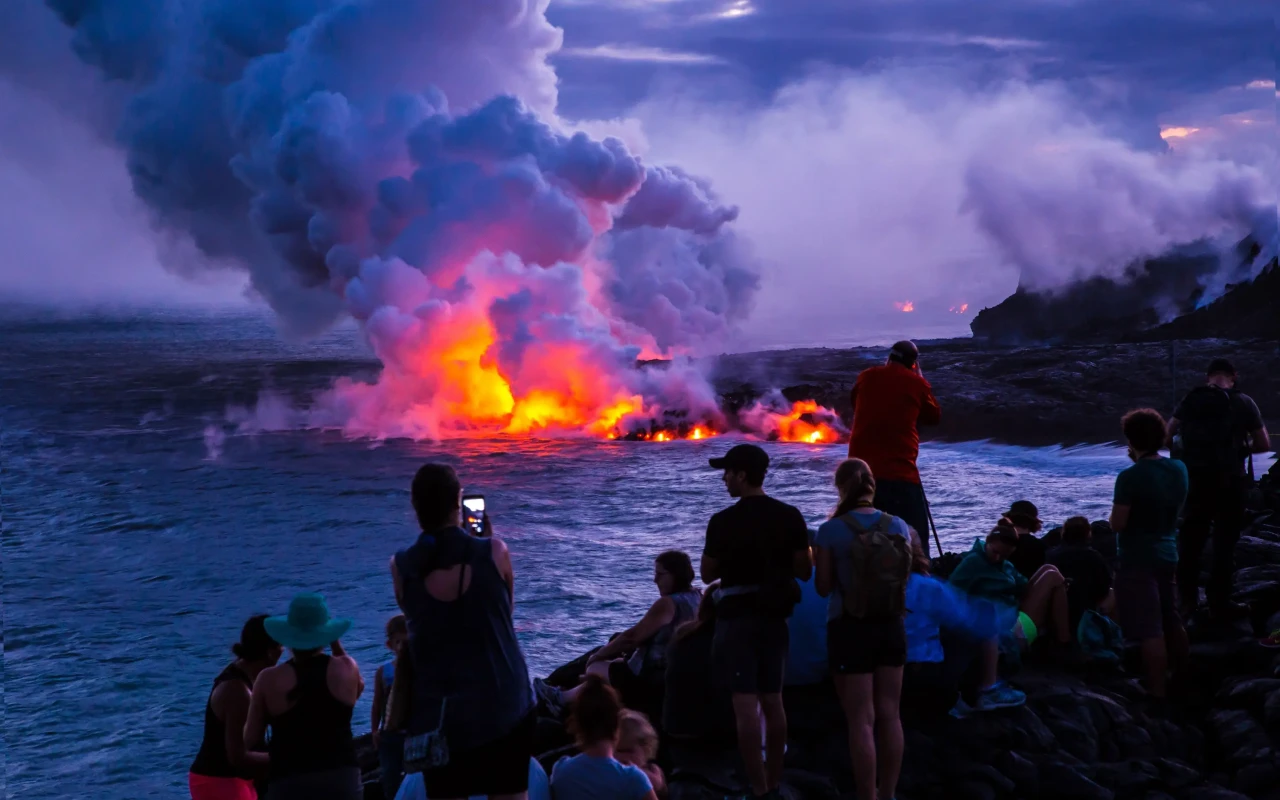
- Photography: The park offers stunning photography opportunities, especially at sunrise and sunset, with dramatic volcanic landscapes and unique flora.
- WIFI: WiFi is not widely available in the park; visitors are encouraged to download maps and information in advance.
- Picnic Area: Picnic areas are available at designated sites within the park, providing a scenic spot to enjoy meals amidst nature.
- Handicap Accessible: Many facilities and trails in the park are handicap accessible, including the Kilauea Visitor Center and certain viewpoints.
- Pets: Pets are not allowed on trails or in the backcountry, but they are permitted in parking areas and campgrounds if leashed.
- Guided Tours: Guided tours are available, providing insights into the park's geology, ecology, and cultural history led by knowledgeable rangers and naturalists.
- Restaurant or Cafe: The Volcano House Restaurant offers dining with views of the caldera, while the Kilauea Visitor Center has a small café for snacks.
- Gift Shop: A gift shop at the Kilauea Visitor Center sells souvenirs, educational materials, and local artisan products.
- Handicap Accessible: Many facilities and trails in the park are handicap accessible, including the Kilauea Visitor Center and certain viewpoints.
- Pets: Pets are not allowed on trails or in the backcountry, but they are permitted in parking areas and campgrounds if leashed.
- Guided Tours: Guided tours are available, providing insights into the park's geology, ecology, and cultural history led by knowledgeable rangers and naturalists.
- Restaurant or Cafe: The Volcano House Restaurant offers dining with views of the caldera, while the Kilauea Visitor Center has a small café for snacks.
- Gift Shop: A gift shop at the Kilauea Visitor Center sells souvenirs, educational materials, and local artisan products.
- Parking: Parking is available at various designated lots throughout the park, with some areas providing access to trails and visitor centers.
- Family Friendly: Hawaii Volcanoes National Park is family-friendly, offering educational programs and easy trails suitable for children.
- Photography: The park offers stunning photography opportunities, especially at sunrise and sunset, with dramatic volcanic landscapes and unique flora.
- WIFI: WiFi is not widely available in the park; visitors are encouraged to download maps and information in advance.
- Picnic Area: Picnic areas are available at designated sites within the park, providing a scenic spot to enjoy meals amidst nature.
Photos of Hawaii Volcanoes National Park
Hawaii Volcanoes National Park, located on the Big Island of Hawaii, offers visitors a unique opportunity to explore a live volcanic landscape. Home to some of the most active volcanoes in the world, Kīlauea and Mauna Loa, the park provides a fascinating look at volcanic processes and the rebirth of ecosystems in the wake of eruptions.
Getting to Hawaii Volcanoes National Park
The park is accessible by car from Hilo (45 minutes) and Kona (2.5 hours) on the Big Island. The closest airport with scheduled service is Hilo International Airport, with Kona International Airport serving as an alternative for those coming from other parts of Hawaii or the mainland USA.
Must-See Attractions
Kīlauea Volcano
One of the most active volcanoes on Earth, Kīlauea offers visitors dramatic volcanic landscapes and is the centerpiece of the park. The summit caldera, Halema‘uma‘u Crater, has recently displayed impressive volcanic activity that can be viewed safely from designated overlooks.
Thurston Lava Tube (Nāhuku)
This walk-through lava tube offers a glimpse into the geological processes that shape the Hawaiian Islands. The tube is illuminated, making it easy to explore and enjoy the unique rock formations inside.
Activities and Adventures
Crater Rim Drive
This scenic drive circles Kīlauea's summit caldera, offering access to numerous overlooks, walking trails, and the park’s main visitor center. Stops along the drive provide panoramic views of the caldera and access to various trails that explore the surrounding rainforest and volcanic features.
Hiking Trails
The park boasts a variety of trails that offer everything from easy walks to challenging treks across volcanic landscapes. Popular trails include the Kīlauea Iki Trail, which traverses a crater floor that was once a molten lake of lava, and the Devastation Trail, which showcases the impacts of past eruptions.
Planning Your Visit
Accommodations
While there are no hotels inside the park, camping is available at the Nāmakanipaio Campground and backcountry sites. Nearby Volcano Village offers a range of lodging options, including hotels, bed and breakfasts, and vacation rentals.
Visitor Centers and Ranger Programs
The Kīlauea Visitor Center is a great starting point for your visit, providing educational exhibits, park information, and daily ranger-led talks and hikes that enhance the experience of the park’s dynamic environment.
Safety and Conservation
Volcanic Hazards
The park's volcanic activity can pose unique safety risks. Visitors should stay on marked trails, heed all warning signs, and check with park rangers for current conditions. It's crucial to respect closed areas, which protect both personal safety and sensitive environments.
Extended Trips and Nearby Attractions
Exploring the Big Island
Beyond the park, the Big Island offers diverse experiences, from the lush rainforests of the Hamakua Coast to the sunny beaches of the Kona coast, providing a full spectrum of Hawaii’s natural beauty.
Hawaii Volcanoes National Park is not just a park but a vivid exhibit of the Earth's most fundamental processes. It offers a profound encounter with the natural forces that shape our planet, providing visitors with both a sense of awe and a deeper understanding of Hawaii’s unique landscapes and cultural heritage.