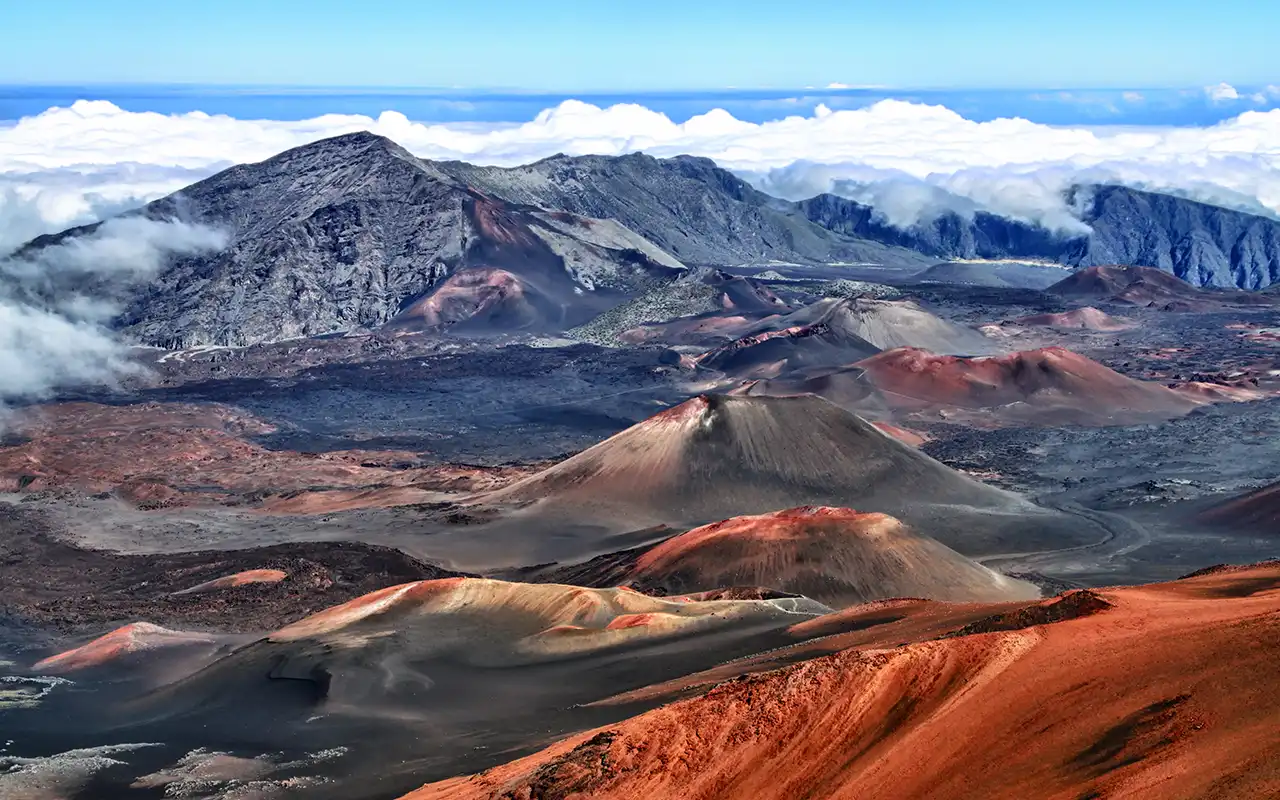
Claim to Fame
The Haleakala National Park is renowned for its breathtaking landscapes, unique ecosystems, and stunning sunrises above the clouds, standing as a testament to Hawaii’s diverse natural beauty.
📌 Navigating Haleakala National Park : Answers to Frequently Asked Questions
- Washrooms: Washrooms are available at the visitor center and other facilities within the park.
- Hours of Operation: Haleakala National Park is open 24 hours a day, but specific visitor center hours may vary.
- Important Information: Visitors should dress in layers as temperatures can vary significantly, especially at higher elevations, and be mindful of altitude sickness.
- Admission Fee: The admission fee is $30 per vehicle, valid for three days, or $15 for pedestrians and cyclists.
- How Long to Visit: A visit to the park typically lasts 2 to 4 hours, depending on the activities and sites you choose to explore.
- Admission Fee: The admission fee is $30 per vehicle, valid for three days, or $15 for pedestrians and cyclists.
- How Long to Visit: A visit to the park typically lasts 2 to 4 hours, depending on the activities and sites you choose to explore.
- Washrooms: Washrooms are available at the visitor center and other facilities within the park.
- Hours of Operation: Haleakala National Park is open 24 hours a day, but specific visitor center hours may vary.
- Important Information: Visitors should dress in layers as temperatures can vary significantly, especially at higher elevations, and be mindful of altitude sickness.
- Handicap Accessible: The park offers some handicap-accessible facilities, including restrooms and certain trails.
- Pets: Pets are not allowed in the park to protect native wildlife and preserve the natural environment.
- Guided Tours: Guided tours are available through various companies, offering insights into the park's unique ecosystem and cultural history.
- Restaurant or Cafe: There are no full-service restaurants or cafes within the park, but visitors can find dining options in nearby towns.
- Gift Shop: A gift shop is located at the visitor center, offering souvenirs, books, and educational materials about the park.
- Parking: Parking is available at various locations within Haleakala National Park, including the summit area and visitor centers.
- Family Friendly: Haleakala National Park is family-friendly with easy trails and educational programs suitable for children.
- Photography: The park is renowned for its stunning sunrise and sunset views, making it a popular spot for photography.
- WIFI: Wi-Fi is not available in the park, so visitors should prepare to be offline during their visit.
- Picnic Area: Picnic areas are available in designated spots, allowing visitors to enjoy meals surrounded by nature.
- Parking: Parking is available at various locations within Haleakala National Park, including the summit area and visitor centers.
- Family Friendly: Haleakala National Park is family-friendly with easy trails and educational programs suitable for children.
- Photography: The park is renowned for its stunning sunrise and sunset views, making it a popular spot for photography.
- WIFI: Wi-Fi is not available in the park, so visitors should prepare to be offline during their visit.
- Picnic Area: Picnic areas are available in designated spots, allowing visitors to enjoy meals surrounded by nature.
- Handicap Accessible: The park offers some handicap-accessible facilities, including restrooms and certain trails.
- Pets: Pets are not allowed in the park to protect native wildlife and preserve the natural environment.
- Guided Tours: Guided tours are available through various companies, offering insights into the park's unique ecosystem and cultural history.
- Restaurant or Cafe: There are no full-service restaurants or cafes within the park, but visitors can find dining options in nearby towns.
- Gift Shop: A gift shop is located at the visitor center, offering souvenirs, books, and educational materials about the park.
📌Heads up: All times, prices and visitor policies are subject to change without notice. Please check the official website for the most recent information.
Photos of Haleakala National Park
What to Expect
As you step into Haleakala National Park, prepare to be enveloped by the serenity of its otherworldly terrain. Towering volcanic craters, sweeping vistas, and extensive hiking trails create an environment that feels both alien and mesmerizing. The park spans over 30,000 acres, encompassing a diverse range of ecosystems that transition dramatically from lush rainforests to arid deserts. Each step you take reveals a kaleidoscope of colors, with vibrant native plants and animal life thriving in this protected sanctuary. The park’s centerpiece, the summit of Haleakala, invites visitors to witness astonishing sunrises and sunsets that paint the sky in hues of orange, pink, and purple. The famous observatory at the summit offers not only spectacular views but also a glimpse into the universe above through some of the world’s most advanced telescopes. Whether you’re an avid astronomer or simply a stargazer, the celestial backdrop at Haleakala is unparalleled. The climate within the park is as varied as its landscape, with temperatures at the summit significantly cooler than at lower elevations. This means you're likely to encounter a range of weather conditions during your visit. Dress in layers and be prepared for sudden changes to make the most of your time in this captivating environment.Background and Cultural Context
Haleakala, often referred to as the “House of the Sun,” has deep cultural significance in Hawaiian tradition. Indigenous Hawaiian legends tell of the demigod Maui capturing the sun atop the summit to prolong the daylight hours for his people. This rich history is deeply woven into the fabric of the park, where ancient Hawaiians once resided and farmed the fertile lands. The stories and traditions invoke a sense of respect and reverence for the land that continues to be felt by visitors today. Modern conservation efforts within Haleakala National Park honor these traditions while preserving its unique ecological attributes. The park is home to many endemic species, some of which are found nowhere else on earth. The delicate balance between preserving the land and encouraging tourism is a fine line walked by the National Park Service, with ongoing education efforts aimed at raising awareness about the importance of environmental stewardship. Beyond the stunning geological features and rich biodiversity, the park also stands as a testament to the collaborative effort of native Hawaiians and conservationists working to maintain the cultural heritage and natural integrity of the land. This dynamic history impresses upon visitors a deeper understanding of the significance of Haleakala beyond its visual splendor.Best Time to Visit
The ideal time to explore Haleakala National Park accommodates a variety of visitor preferences, with each season offering unique experiences. The dry season, from April to October, presents the best weather for hiking and outdoor activities, providing clear skies and warm temperatures, especially at lower elevations. However, visiting during this time also means encountering higher numbers of tourists, particularly at sunrise and sunset viewing spots. Conversely, the wet season, from November to March, brings cooler temperatures and occasional rainfall, creating a lush landscape that rejuvenates the park's flora. Although the weather may be less predictable, fewer crowds mean that you can enjoy a more solitary experience while immersing yourself in the tranquil environment. The clouds and mist can also add an ethereal quality to your photographs. Regardless of when you choose to visit, it is advisable to arrive early for sunrise or to plan your visits around less crowded times. By doing so, you will not only experience the majestic views unique to Haleakala but also avoid the bustling crowds that often accompany peak visiting hours.How to Get There
Reaching Haleakala National Park is a journey that offers scenic drives and remarkable views of Maui’s landscapes. The park is located on the east side of the island, approximately 30 miles from the town of Kahului. The most common route to the park is via the Haleakala Highway (State Route 37), a winding road that leads you through lush pastures and forests, culminating in breathtaking vies as you approach the summit. For those looking to visit the park without a personal vehicle, shuttle services operate from various points on the island, particularly catering to tourists wanting to catch the stunning sunrise or sunset. Reservations are often required, especially during peak seasons, so it’s wise to plan ahead to guarantee your spot. Once inside the park, the road network allows easy access to numerous trailheads and viewing points, making it convenient to explore various areas without strenuous travel demands. Park rangers are also available at visitor centers to provide maps and guidance, ensuring you get the most out of your visit.Photo Opportunities
- Sunrise at Haleakala Summit
- Majestic views of the crater and its unique geological features
- The vibrant colors of the Silversword plant in bloom
- Starry night skies above the summit
- Picturesque roads winding through the park
- The stark contrast between desert landscapes and lush rainforest
Travel Tips
- Dress in layers to handle temperature fluctuations.
- Ensure reservations for shuttle services, especially for sunrise visits.
- Stay well-hydrated, particularly when hiking at high elevations.
- Respect park guidelines and wildlife.
- Bring a camera to capture breathtaking landscapes.