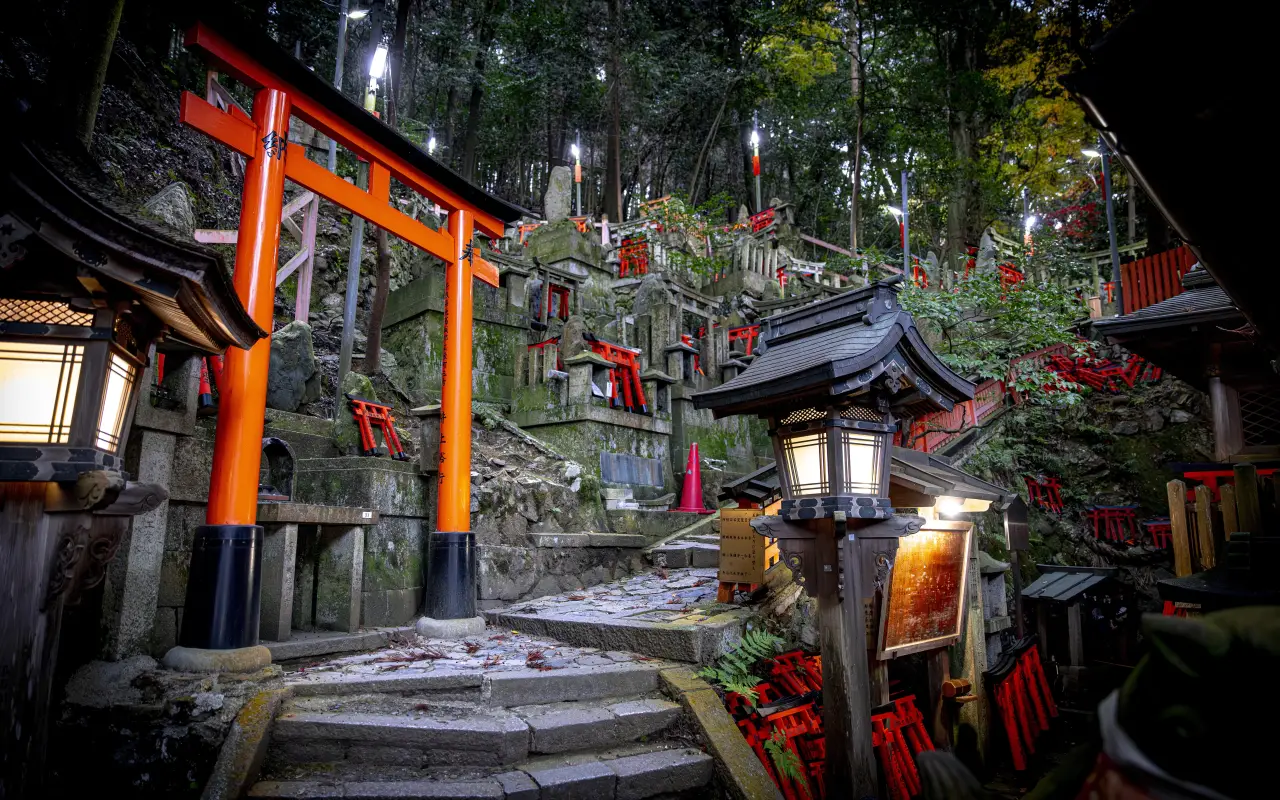
Claim to Fame
The Fushimi Inari Shrine is renowned for its thousands of vermilion torii gates that create a mesmerizing pathway leading up to Mount Inari, making it one of Japan's most iconic and celebrated Shinto shrines.
📌 Navigating Fushimi Inari Shrine in Kyoto : Answers to Frequently Asked Questions
- Admission Fee: There is no admission fee to enter Fushimi Inari Shrine, making it accessible to all visitors.
- How Long to Visit: A visit to Fushimi Inari Shrine typically takes around 1 to 3 hours, depending on how many trails you choose to explore.
- Washrooms: Washrooms are available at the entrance and near the main pathways of the shrine.
- Hours of Operation: The shrine is open 24 hours a day, but the best visiting times are early morning or late afternoon to avoid crowds.
- Important Information: Visitors should wear comfortable shoes for walking and be prepared for some steep trails and stairs.
- Handicap Accessible: The shrine is partially handicap accessible, with some pathways suitable for wheelchairs, but many trails may be challenging.
- Pets: Pets are not allowed in the shrine grounds to preserve the sanctity of the area.
- Guided Tours: Guided tours are available and can enhance the experience by providing historical and cultural context.
- Restaurant or Cafe: There are several food stalls and small kiosks selling snacks near the entrance, but no sit-down restaurants within the shrine.
- Gift Shop: A small gift shop is located at the base of the shrine where visitors can purchase souvenirs and traditional items.
- Parking: There is limited parking available near the entrance of Fushimi Inari Shrine, with additional paid parking options nearby.
- Family Friendly: Fushimi Inari Shrine is family-friendly, with wide paths and plenty of open space for children to explore.
- Photography: Photography is encouraged throughout the shrine, particularly among the iconic torii gates.
- WIFI: Free public Wi-Fi is not available at the shrine, but mobile data coverage is generally good.
- Picnic Area: Picnicking is not permitted within the shrine grounds, but nearby parks may offer suitable spots.
📌Heads up: All times, prices and visitor policies are subject to change without notice. Please check the official website for the most recent information.
Photos of Fushimi Inari Shrine in Kyoto
What to Expect
As you approach Fushimi Inari Taisha, the air fills with a palpable sense of spirituality and a vibrant atmosphere that weaves through the sacred grounds. The first sight that greets visitors is the grand entrance, framed by striking torii gates that stretch like a crimson tunnel into the heart of the mountain. The paths meander through lush greenery, interspersed with smaller shrines dedicated to various kami (deities), inviting explorers to pause and reflect on their beauty and significance. As you ascend, the crowds naturally thin, offering a more intimate experience with nature and serenity. The trail is lined with flora unique to the region, creating a peaceful ambiance that envelops those who venture further into the forested hills. Each torii gate, a donation from individuals or businesses seeking the blessings of Inari, has its own inscription, creating a mosaic of human devotion and history that tells a story of its own. The pilgrimage up the mountain can take anywhere from two to four hours, depending on your pace and how frequently you pause to take in the stunning views of Kyoto below. Along the route, you may encounter fox statues, revered as Inari's messengers, imbuing the sacred site with a sense of mystique and importance that transcends the ordinary tourist experience.Background and Cultural Context
Fushimi Inari Shrine historically dates back to 711 AD, making it one of Japan's oldest and most significant shrines. Inari, the deity honored here, symbolizes agriculture and rice cultivation, key components of traditional Japanese life. The prominence of this shrine demonstrates the reverence bestowed upon the divine, intertwined with agricultural prosperity, nourished by centuries of tradition and belief. The thousands of torii gates lining the trails are not merely structures but artifacts of devotion, each one a testament to the individual or business that sponsored its creation. This unique cultural practice showcases the interconnectedness of community and spirituality in Japan, where the act of donation is viewed as both an offering and a hopeful prayer for good fortune and success. Each gate bears the name of its donor, connecting the present with generations past. In addition to its religious significance, Fushimi Inari Shrine holds a pivotal place in Kyoto’s identity. The shrine attracts millions of visitors each year, both locals and tourists, who come to seek blessings, partake in rituals, and capture the stunning scenery. Its prominence in popular culture—featured in films and art—further cements its status as a symbol of Japan's rich heritage and enduring spiritual traditions.Best Time to Visit
The Fushimi Inari Shrine is awe-inspiring year-round, but the choice of when to visit can significantly enhance the experience. The spring months of March to May usher in a breathtaking array of cherry blossoms throughout Kyoto, creating a picturesque backdrop that harmonizes beautifully with the vibrant torii gates. Early mornings during this time can offer a tranquil escape from the crowds, allowing for a more contemplative exploration. Autumn, particularly from late October to early November, also presents an enchanting time to visit. The foliage transforms into a captivating palette of golden, red, and orange hues, complementing the shrine's signature crimson gates. If you decide to visit during the fall, arrive early in the morning or later in the evening to avoid peak tourist hours and revel in the serenity of nature’s artistry. While summer casts a warm glow upon the shrine, the humidity can be quite intense. Nonetheless, many visitors are drawn to the unique appeal of experiencing Fushimi Inari Shrine under the lush canopy of green leaves, providing a refreshing respite. However, if you're uncomfortable in high temperatures, fall and spring would be more favorable seasons for your visit.How to Get There
Navigating to Fushimi Inari Shrine is relatively straightforward, thanks to Kyoto's well-connected public transport system. The most convenient approach is via the JR Nara Line, which connects directly to Inari Station. The shrine is located just outside the station, making it a hassle-free journey that takes less than fifteen minutes from Kyoto Station. Trains run frequently, so you won’t have to wait long for transportation. Once you arrive at Inari Station, the vibrant torii gates are an unmistakable indication that you’ve reached your destination. For those opting for a more leisurely method, consider renting a bicycle in the city or even taking a taxi, though walking and cycling allow for additional exploration of the surrounding area. If you’re venturing into Kyoto from the Kansai International Airport, you can take the Haruka Express to Kyoto Station and transfer to the JR Nara Line. Alternatively, shuttle bus services are available from the airport directly to various locations within Kyoto, giving you the flexibility to travel as you prefer.Photo Opportunities
- Rows of torii gates forming stunning perspectives
- Fox statues scattered throughout the shrine
- Panoramic views of Kyoto from the mountain’s summit
- The serene atmosphere at dawn or dusk with soft light
- Landscapes featuring seasonal changes, like cherry blossoms or autumn leaves
Travel Tips
- Wear comfortable shoes for walking and hiking the trails
- Start your visit early in the morning for fewer crowds and cooler temperatures
- Bring water and snacks, especially if planning to hike to the summit
- Respect the cultural significance of the shrine; behave appropriately
- Consider visiting on weekdays to avoid large tourist groups
FAQs
1. Is there an entrance fee to visit Fushimi Inari Shrine?No, entry to Fushimi Inari Shrine is completely free, allowing visitors to enjoy its beauty without any cost. 2. How long does it take to hike to the top of Mount Inari?
The hike to the summit can take approximately 2 to 4 hours, depending on your pace and the number of stops you take along the way.