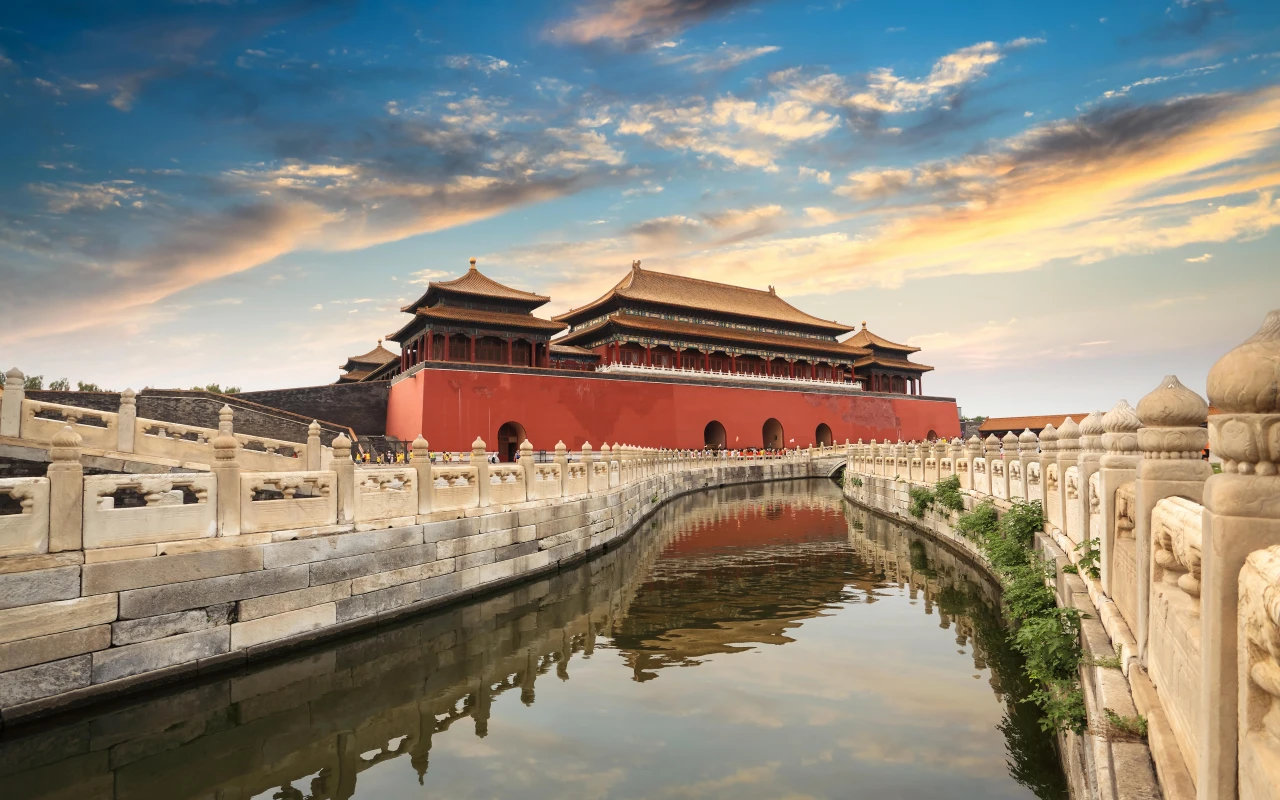
Claim to Fame
Commissioned in 1406 by the Ming Yongle Emperor and completed in 1420, the Forbidden City served as the imperial seat for 24 Ming and Qing emperors over 500 years. Today it stands as the world’s largest preserved wooden palace complex and a UNESCO World Heritage Site.
📌 Navigating Forbidden City in Beijing : Answers to Frequently Asked Questions
- Washrooms: Washrooms are available throughout the site, with facilities located at strategic points for visitor convenience.
- Hours of Operation: The Forbidden City is open daily from 8:30 AM to 5:00 PM, with extended hours during peak tourist seasons.
- Important Information: It is recommended to purchase tickets in advance online and to check for any special events or closures before visiting.
- Admission Fee: Admission fees vary by age and season, with discounts for students and seniors; check the official website for current pricing.
- How Long to Visit: Visitors typically spend 2 to 3 hours exploring the Forbidden City to fully appreciate its vast grounds and intricate details.
- Parking: Parking is limited in the area surrounding the Forbidden City, with nearby parking garages available for a fee.
- Family Friendly: The site is family-friendly, offering educational experiences and spacious areas suitable for children to explore.
- Photography: Photography is permitted throughout the complex, but tripods and commercial photography require prior permission.
- WIFI: Free Wi-Fi is available in certain areas of the Forbidden City for visitor convenience.
- Picnic Area: Picnicking is not allowed within the Forbidden City grounds, but nearby parks provide suitable areas for this activity.
- Handicap Accessible: The Forbidden City is wheelchair accessible, with ramps and paths to accommodate visitors with mobility challenges.
- Pets: Pets are not allowed inside the Forbidden City to preserve the historical site and its artifacts.
- Guided Tours: Guided tours are available in multiple languages, providing in-depth insights into the history and architecture of the Forbidden City.
- Restaurant or Cafe: There are no restaurants inside the Forbidden City; however, nearby dining options offer Chinese cuisine.
- Gift Shop: A gift shop is located at the exit, offering souvenirs, books, and traditional Chinese crafts.
Photos of Forbidden City in Beijing
Situated at the heart of Beijing, the Forbidden City—also known as the Palace Museum—spans 72 hectares and houses nearly 9,000 rooms, though legend tells of 9,999. It’s a marvel of Ming‑Qing architecture, featuring grand halls, intricate wooden craftsmanship, and vibrant symbolism drawn from Feng Shui and imperial ritual.
What to Expect
Enter through the majestic Meridian Gate, then proceed along the central axis through vast courtyards and climb marble terraces flanked by dragons. Key structures include the Hall of Supreme Harmony (the grandest wooden hall in China), the Emperor’s intimate residences in the Inner Court, and ornate side halls once used for judicial, scholarly, and religious affairs. Artifacts from the Ming and Qing dynasties—paintings, pottery, imperial clocks—are displayed to showcase lavish court life.
Background & Cultural Context
Designed by architect Kuai Xiang, the Forbidden City was constructed using interlocking wooden beams without nails—a feat of engineering reflecting ancient Chinese mastery. Its layout, colors (yellow roofs, red walls), and decorative details represent supreme imperial power and cosmic order. Yellow symbolized the emperor, symmetry reinforced authority, and animal statuettes atop roofs denoted building importance.
Best Time to Visit
Arrive early—ideally at opening time—to beat midday crowds and capture morning light across the vast courtyards. Late afternoon offers soft illumination on marble terraces and intricate details. Avoid national holidays (May Day, National Day) or visit after 4 PM when crowds thin.
How to Get There
Located at 4 Jingshan Front Street in Dongcheng District, the Forbidden City is accessed via Tiananmen Square. Entrance requires an e‑ticket tied to your passport; daily visitor limits are capped at 40,000. Guided and audio tours are available near the Meridian Gate.
Photo Opportunities
- Symmetrical courtyards with the Hall of Supreme Harmony framed by marble balustrades
- Golden-glazed rooflines and roof-statuette details backlit by clear blue skies
- Marble ramps and dragon bas-reliefs on the central axis terraces
- Reflections of corner towers in the surrounding moat at dusk
Travel Tips
- Bring your passport to collect and verify your ticket.
- Wear comfortable shoes—expect extensive walking.
- Use an audio guide or join a guided tour to appreciate architectural symbolism and hidden stories.
- Hydrate and take breaks—the complex is expansive and sun exposure can be high.
- Combine your visit with a stroll through neighboring Jingshan Park for a panoramic view from the hill.
FAQs
How long should I allow?
Plan for at least 2–3 hours to cover the main halls and courtyards; half a day is ideal to explore more fully.
Can I take photos?
Yes, but no tripods or flash inside halls. Photography is allowed in most exterior areas.
Are there food or rest areas?
Limited cafés are just outside the exits. Bring water and snacks for the tour.
Final Thoughts
The Forbidden City is a masterpiece of imperial design, rich in architectural drama and cultural symbolism. Exploring its vast halls, vibrant courtyards, and hidden corridors offers an unparalleled glimpse into China’s dynastic past—placing you at the crossroads of power, tradition, and artistry in Beijing’s storied heart.