Claim to Fame
Tate Britain is the national gallery of British art from 1500 to the present, renowned for its unrivaled collection of works by J.M.W. Turner and its role in preserving Britain’s artistic legacy.
📌 Navigating Tate Britain : Answers to Frequently Asked Questions
- Washrooms: Accessible restrooms and baby changing facilities are available.
- Hours of Operation: Open daily from 10 AM to 6 PM.
- Important Information: Check for temporary exhibitions, talks, and workshops on the gallery's website.
- Admission Fee: Admission to the main collection is free; some special exhibitions require a ticket.
- How Long to Visit: Visitors typically spend 2-4 hours exploring the collections and exhibitions.
- Parking: Limited parking available; public transport is recommended.
- Family Friendly: Family-friendly with activities and resources for children.
- Photography: Photography is allowed in most areas, but some exhibitions may have restrictions.
- WIFI: Free WIFI is available throughout the gallery.
- Picnic Area: No picnic areas inside, but Millbank Gardens provides an outdoor space nearby.
- Handicap Accessible: The gallery is fully accessible for visitors with disabilities.
- Pets: Service animals are permitted; pets are not allowed.
- Guided Tours: Guided tours are available, providing insight into British art and artists featured in the gallery.
- Restaurant or Cafe: The gallery offers a café and a restaurant for dining options.
- Gift Shop: The gallery shop sells a wide range of art books, prints, and gifts.
Photos of Tate Britain
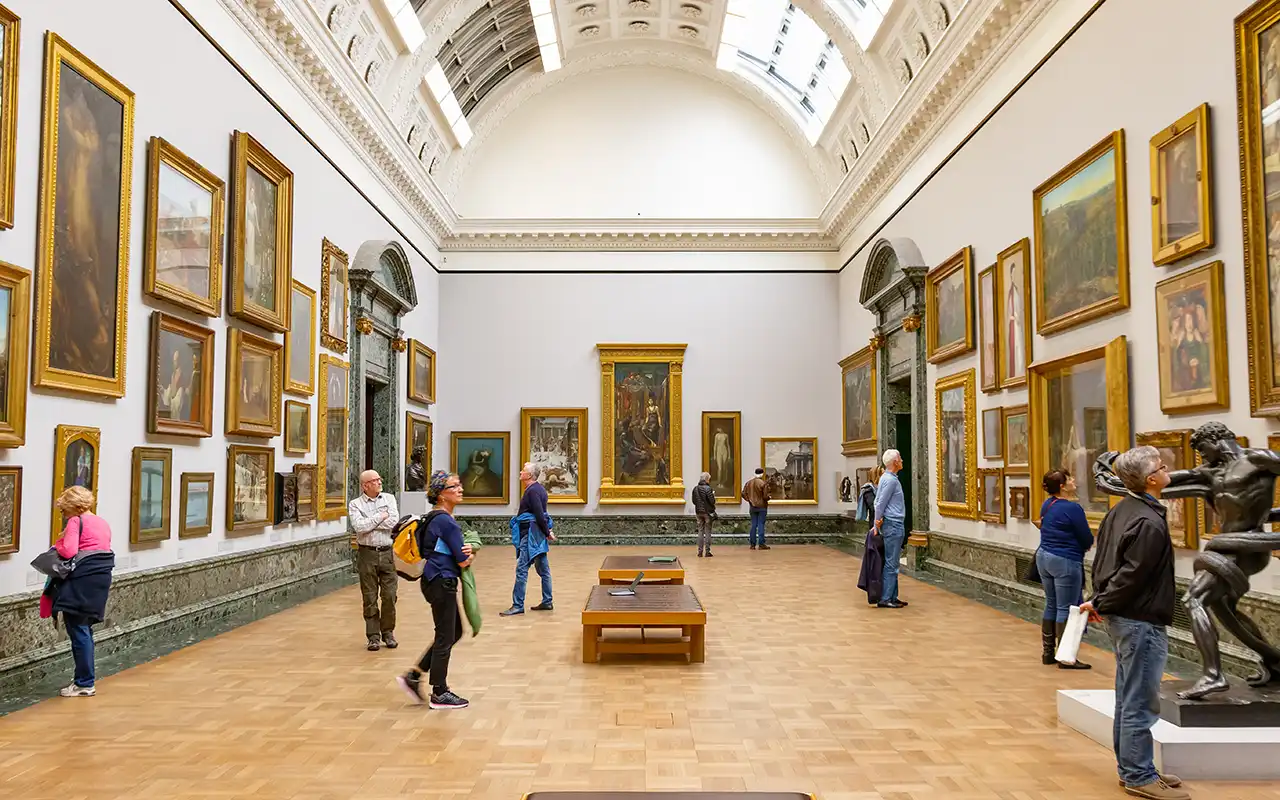
Located in the heart of Westminster along the River Thames, Tate Britain is one of London’s most prestigious art institutions. It offers a deep dive into the evolution of British art, showcasing centuries of masterpieces in a stately neoclassical building that’s both historic and modern in spirit.
What to Expect
Tate Britain is best known for its comprehensive collection of works by J.M.W. Turner, Britain’s iconic Romantic painter. The gallery also features major pieces by William Blake, John Constable, Dante Gabriel Rossetti, and contemporary artists such as David Hockney and Tracey Emin.
Rotating exhibitions and the acclaimed Turner Prize make each visit unique. The building itself is a blend of grandeur and innovation, with the Duveen Galleries providing a dramatic setting for large-scale installations and sculptures.
Background and Cultural Context
Originally founded as the National Gallery of British Art in 1897, Tate Britain is the oldest of the four Tate institutions. It was renamed in honor of sugar magnate and philanthropist Henry Tate, who funded the gallery and donated his art collection to the nation.
Today, Tate Britain serves as a vital archive of the UK’s artistic journey, housing works that reflect the country’s cultural, social, and political history. It’s also a dynamic space for exploring identity, expression, and change through a British lens.
Best Time to Visit
Tate Britain is generally less crowded than other major London museums, especially on weekday mornings. Temporary exhibitions may draw larger crowds, so advance booking is advised during major shows or the Turner Prize season.
How to Get There
Tate Britain is located on Millbank in Westminster. The closest Tube station is Pimlico (Victoria Line), just a 5-minute walk. You can also take a scenic Thames Clipper boat between Tate Britain and Tate Modern via the river — a great way to connect both museums.
Photo Opportunities
- The sweeping staircase and geometric ceiling of the rotunda
- Turner’s vibrant seascapes and dramatic skies
- Sculpture displays in the Duveen Galleries
- The museum’s stately façade lit up at dusk
Travel Tips
- Admission to the permanent collection is free — pay only for special exhibitions.
- Download the free Tate app for self-guided tours and exhibition info.
- The Djanogly Café onsite serves lunch, coffee, and light bites with a view of the Thames.
- Combine with a visit to Westminster Abbey or the Houses of Parliament, both nearby.
FAQs
Is Tate Britain different from Tate Modern?
Yes — Tate Britain focuses on British art from the 1500s to the present, while Tate Modern features international contemporary and modern art.
Are photography and sketching allowed?
Photography is allowed (no flash); sketching is encouraged in most galleries, but check signage for restrictions.
Does the museum have wheelchair access?
Yes — Tate Britain is fully accessible, with step-free access, elevators, and accessible restrooms.
Final Thoughts
Tate Britain is a journey through the soul of British art. From Romantic landscapes to contemporary provocations, it provides visitors with insight into the people, events, and movements that shaped the UK’s cultural identity. It’s a must-visit for art lovers and history buffs alike.