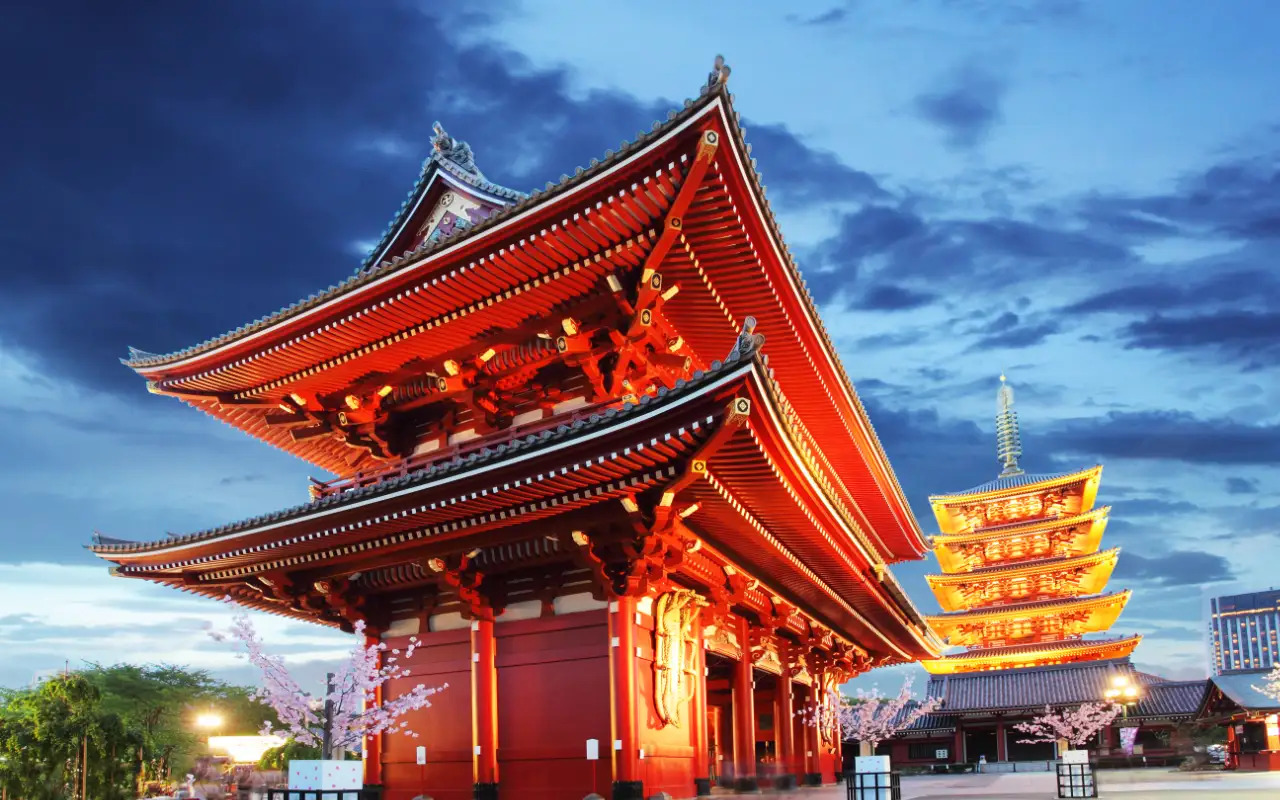
Claim to Fame
Sensō-ji Temple is Tokyo’s oldest and most visited Buddhist temple, famous for its iconic Kaminarimon Gate, bustling Nakamise shopping street, and dramatic red pagoda — a symbol of tradition in Japan’s hyper-modern capital.
📌 Navigating Senso-ji Temple : Answers to Frequently Asked Questions
- Washrooms: Washrooms are available for public use near the entrance and throughout the temple complex.
- Hours of Operation: The temple is open 24 hours a day, but the main halls and shops have specific operating hours from 6:00 AM to 5:00 PM.
- Important Information: Visitors are encouraged to be respectful of the temple's sacred space and adhere to local customs and etiquette.
- Admission Fee: Admission to Senso-ji Temple is free, although some special exhibitions may have a fee.
- How Long to Visit: A typical visit can last from 1 to 2 hours, depending on your interest in exploring the surroundings and participating in rituals.
- Parking: Parking is available nearby, but it can be limited and fills up quickly, so public transportation is recommended.
- Family Friendly: The temple is family friendly, featuring spacious grounds and activities that are suitable for all ages.
- Photography: Photography is permitted throughout the temple complex, allowing visitors to capture its stunning architecture and atmosphere.
- WIFI: Free public Wi-Fi is accessible in certain areas around the temple, though connectivity may vary.
- Picnic Area: There is no designated picnic area within the temple grounds, but visitors can enjoy nearby parks.
- Handicap Accessible: Senso-ji Temple is handicap accessible with ramps and facilities to accommodate visitors with mobility challenges.
- Pets: Pets are not allowed within the temple grounds to maintain the sanctity of the site.
- Guided Tours: Guided tours are available and can enhance the experience by providing historical context and cultural insights.
- Restaurant or Cafe: There are several restaurants and cafes nearby, offering traditional Japanese cuisine and snacks.
- Gift Shop: A gift shop is available on-site, selling souvenirs, traditional crafts, and temple-related items.
Photos of Senso-ji Temple
Located in the Asakusa district, Sensō-ji Temple was founded in 645 AD, making it the oldest temple in Tokyo. Dedicated to Kannon, the goddess of mercy, it has long been a spiritual center and a vibrant hub of culture, festivals, and street life. Its striking red architecture, incense-filled courtyards, and centuries-old rituals draw millions of visitors each year.
What to Expect
Your journey begins at the Kaminarimon (Thunder Gate), with its massive red lantern — one of Tokyo’s most photographed landmarks. From there, walk along Nakamise-dori, a lively street lined with stalls selling traditional snacks, souvenirs, yukata, and handcrafted goods. At the end of the street, you'll reach the temple’s grand Main Hall and five-story pagoda.
Visitors often purify themselves at the water basin and waft incense smoke for good fortune. Inside the hall, you can pray, make a small offering, and draw a paper fortune (omikuji). The atmosphere blends reverence and excitement, especially during festivals like Sanja Matsuri.
Background and Cultural Context
Sensō-ji’s origins are rooted in legend: two fishermen reportedly found a statue of Kannon in the Sumida River, prompting a local lord to enshrine it. Despite being destroyed during WWII air raids, the temple was rebuilt as a symbol of resilience and peace. Today, it's a cultural treasure that bridges Japan’s ancient spiritual traditions and modern urban life.
Best Time to Visit
Early morning (before 9 AM) offers a serene experience with fewer crowds and soft morning light for photography. Evenings are also magical, with the temple beautifully illuminated. Avoid weekends and major holidays if you prefer a quieter visit.
How to Get There
Sensō-ji is easily accessed via Asakusa Station (served by the Tokyo Metro Ginza Line, Toei Asakusa Line, and Tobu Skytree Line). The Kaminarimon Gate is just a 5-minute walk from the station.
Photo Opportunities
- Kaminarimon Gate with its giant red lantern
- The temple’s main hall and five-story pagoda
- Colorful stalls and traditional snacks on Nakamise-dori
- Evening shots with lanterns and the temple lit up
Travel Tips
- Dress modestly when visiting the temple; it's a religious site.
- Try street foods like ningyo-yaki (sponge cakes) and melon pan.
- Combine your visit with a Sumida River cruise or stop by nearby Tokyo Skytree.
- The temple is free to enter, but donations are welcome.
FAQs
Is Sensō-ji Temple open at night?
Yes — the grounds are always open, though the main hall typically closes around 5 PM. Night visits are peaceful and beautifully lit.
Can I get a temple stamp?
Yes — you can collect a goshuin (temple stamp) in your stamp book for a small fee at designated counters.
Are guided tours available?
Yes — English-speaking guides and walking tours are available in the Asakusa area, often including the temple and cultural landmarks nearby.
Final Thoughts
Sensō-ji Temple is more than just a historic site — it’s a living, breathing part of Tokyo’s cultural soul. Whether you’re drawn by its spiritual aura, traditional market stalls, or iconic photo spots, a visit here offers a memorable connection to Japan’s past and present.