Claim to Fame
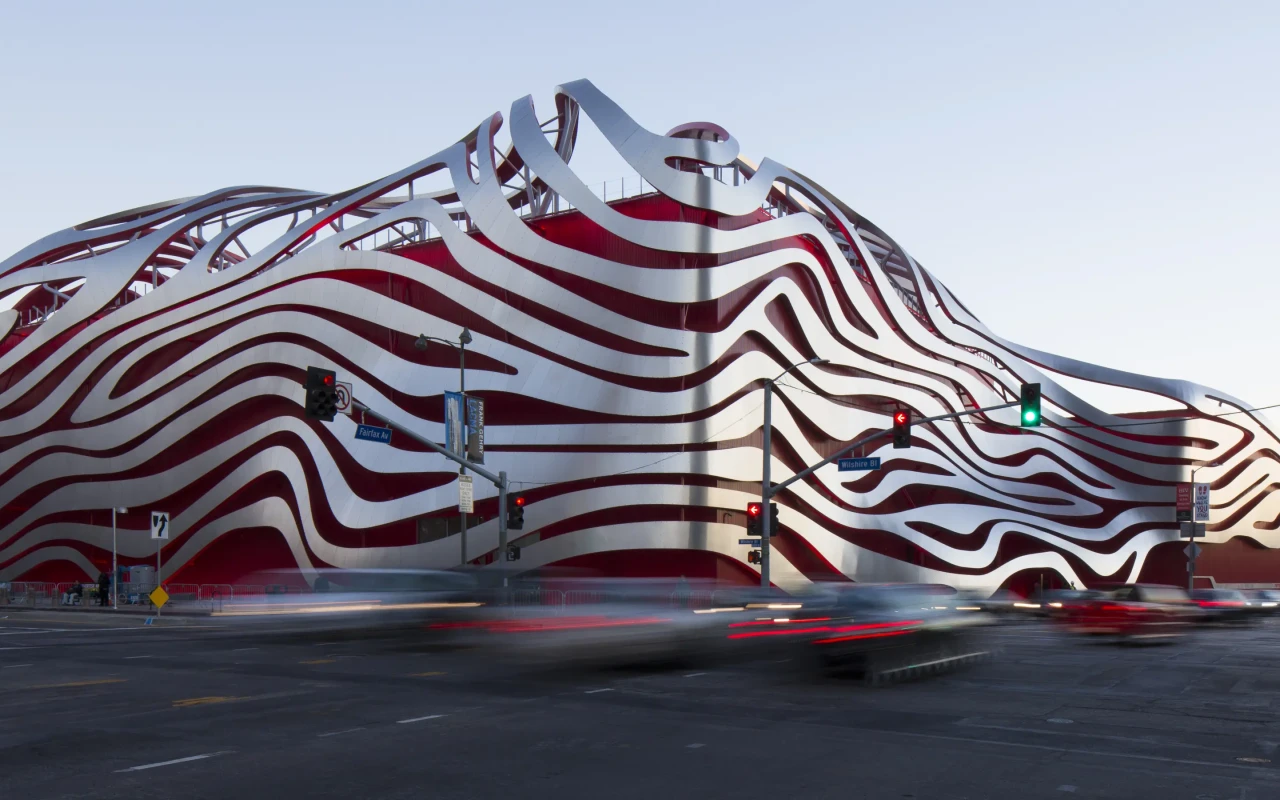
The Petersen Automotive Museum houses one of the world’s largest automotive collections—over 300 cars and motorcycles spanning vintage classics, Hollywood legends, and cutting-edge concept vehicles—all showcased within its striking bow-tie façade on Wilshire Boulevard.
📌 Navigating Petersen Automotive Museum : Answers to Frequently Asked Questions
- Admission Fee: Admission fees vary by age and membership status, with discounts available for seniors and students.
- How Long to Visit: A typical visit lasts around 2 to 3 hours, depending on individual interest in the exhibits.
- Washrooms: Washrooms are available within the museum and are regularly maintained for visitor convenience.
- Hours of Operation: The museum operates from 10 AM to 6 PM daily, with extended hours on certain days.
- Important Information: Visitors are encouraged to check the museum's website for any special events or temporary exhibit changes before planning their visit.
- Handicap Accessible: The museum is handicap accessible, providing wheelchair ramps and elevators for ease of movement.
- Pets: Pets are not allowed inside the museum, with the exception of service animals.
- Guided Tours: Guided tours are available and can be booked in advance for an enhanced experience.
- Restaurant or Cafe: The museum has an on-site cafe offering a variety of food and beverage options.
- Gift Shop: The gift shop features a selection of automotive-themed merchandise, books, and memorabilia.
- Parking: The Petersen Automotive Museum offers a parking structure with paid parking available on-site.
- Family Friendly: The facility is family-friendly, featuring interactive exhibits and activities suitable for children of all ages.
- Photography: Photography is permitted throughout the museum, but flash and tripods are not allowed.
- WIFI: Free WiFi is available for visitors throughout the museum.
- Picnic Area: There is no designated picnic area; visitors are encouraged to enjoy meals in the cafe.
Photos of Petersen Automotive Museum
Located on Museum Row in the Miracle Mile district, the Petersen Automotive Museum invites car enthusiasts and curious visitors to explore automotive history from horseless carriages to hypercars. Its dynamic exhibits—from Hollywood movie cars like the 1966 Batmobile to pioneering electric vehicles—are displayed in thematic galleries across four floors. Interactive experiences, restoration shops, and rotating special exhibits make the Petersen both a shrine to automotive culture and a hands-on center for innovation and design.
What to Expect
Begin on the ground floor's “Legends of Hollywood” gallery to admire screen-famous vehicles: the DeLorean from *Back to the Future* and the Dodge Charger from *The Fast and the Furious*. Ascend to the mid-century design hall to compare 1950s Cadillacs and Corvettes. On the second floor’s “Dream Cars” gallery, marvel at concept prototypes from automakers worldwide. The third floor features “Racing Icons” with Indianapolis 500 winners and Le Mans champions. Don’t miss the rooftop restoration pavilion, where live demos show paintwork and engine rebuilds, and the VR racing simulators for a virtual drive on famous tracks.
Background and Cultural Context
Founded in 1994 by magazine publisher Robert E. Petersen, the museum originally occupied a smaller space before a landmark 2015 renovation by Kohn Pedersen Fox and harmon/kitz to create its stainless-ribbon exterior. The Petersen reflects Los Angeles’s car-centric culture and the city’s role in entertainment, design, and automotive innovation. Through partnerships with studios, manufacturers, and collectors, the museum preserves rare vehicles and tells stories of mobility’s impact on society and pop culture.
Best Time to Visit
Weekday mornings (10–12 PM) offer fewer crowds and easy access to the interactive simulators. Late afternoons (2–4 PM) allow time for special-event talks and restoration shop demos. First Fridays feature evening hours with live music and car meet-ups in the plaza. Avoid weekend midday peaks—arrive at opening or during guided-tour slots to get up close to star exhibits.
How to Get There
The Petersen is at 6060 Wilshire Blvd., Los Angeles. Metro: Purple Line (future) will stop nearby; currently, take the Metro 720 bus along Wilshire to Fairfax. Paid parking is available in the museum’s underground garage off Ogden Drive and metered street parking on Fairfax Avenue. Rideshares drop off at the main entrance. The museum is fully wheelchair-accessible with elevators, ramps, and companion seating in theaters.
Photo Opportunities
- Front-on shot of the “bow-tie” stainless ribbons glinting in the sun
- Classic chrome bumper and fins of a 1957 Cadillac Eldorado in the mid-century gallery
- Concept car profile under futuristic lighting in the “Dream Cars” hall
- Racing veteran lined up in the “Racing Icons” display with period liveries
- Restoration shop action: paint spray-gun and polished fender in progress
Travel Tips
- Purchase tickets online to reserve guided-tour times and skip the ticket line.
- Allow 2–3 hours to explore all galleries, simulators, and the restoration pavilion.
- Check the daily schedule for curator talks, restoration demos, and film screenings in the Peter & Judy Snyder Theater.
- Bring a camera with wide-angle lens—the ribbon exterior and cavernous galleries yield dramatic shots.
- Combine with nearby LACMA and La Brea Tar Pits for a full Museum Row outing.
FAQs
Is admission required?
Yes—general admission is USD 17 for adults, USD 14 for seniors/students, USD 9 for youth (4–12); under-4 free. Simulators incur a small additional fee.
Are guided tours available?
Yes—daily docent-led tours depart at 11 AM and 2 PM; private group tours can be arranged online.
Can I book the simulators?
Yes—reserve VR racing and driving simulators at the admissions desk; slots fill quickly on weekends.
Final Thoughts
The Petersen Automotive Museum celebrates the artistry, engineering, and cultural power of the automobile. Whether you’re a gearhead, a movie fan, or a design enthusiast, its unparalleled collection and immersive experiences promise an exhilarating journey through the history and future of mobility.