Claim to Fame
The Natural History Museum of Los Angeles County is California’s oldest scientific museum—home to the spectacular Dinosaur Hall, the world’s largest Tyrannosaurus rex growth series, and immersive “Age of Mammals” dioramas.
📌 Navigating Natural History Museum of Los Angeles County : Answers to Frequently Asked Questions
- Admission Fee: Admission fees vary by age and membership status, with discounts available for students and seniors.
- How Long to Visit: Visitors typically spend between 2 to 4 hours exploring the exhibits, depending on their interests.
- Washrooms: Washrooms are conveniently located throughout the museum for visitor use.
- Hours of Operation: The museum operates from 9:30 AM to 5:00 PM daily, with extended hours during special events.
- Important Information: It is recommended to check the museum's official website for any special events or temporary exhibit changes before your visit.
- Handicap Accessible: The Natural History Museum is fully handicap accessible, with ramps and elevators for easy navigation.
- Pets: Pets are not allowed inside the museum, with the exception of service animals.
- Guided Tours: Guided tours are available and can be booked in advance to enhance your museum experience.
- Restaurant or Cafe: The museum features a café that offers a variety of food and beverage options for guests.
- Gift Shop: A gift shop is available, offering a range of educational toys, books, and souvenirs related to natural history.
- Parking: The museum offers a parking lot with paid parking options available on-site.
- Family Friendly: The museum is family friendly, featuring interactive exhibits and programs designed for children of all ages.
- Photography: Photography is permitted in most areas of the museum, but flash photography and tripods are not allowed.
- WIFI: Free Wi-Fi is accessible throughout the museum for visitors.
- Picnic Area: There is no designated picnic area on the museum grounds, but nearby parks may offer suitable spaces.
Photos of Natural History Museum of Los Angeles County
Located in Exposition Park, the Natural History Museum (NHM) invites visitors to explore Earth’s deep past and present biodiversity across 120 acres of exhibitions and gardens. From towering T. rex skeletons to vibrant butterfly pavilions, its halls blend cutting-edge science with stunning specimens. Special exhibitions—like “Becoming Los Angeles” and “Beyond the Bone” fossil digs—engage families, students, and researchers in the planet’s evolving story.
What to Expect
Begin in the Rose Garden entrance and pass under the grand rotunda to the Dinosaur Hall—marvel at more than 300 fossils, including “Montana,” an articulated T. rex. Continue to the Age of Mammals hall to see life-size dioramas of saber-toothed cats and giant ground sloths. Wander through the Gem and Mineral Hall’s crystalline treasures, then descend into the Nature Gardens to observe live monarch butterflies in the Butterfly Pavilion (seasonal) and California’s native plants in the Nature Lab. Throughout, interactive stations, 3D theaters, and scientist-led programs bring specimens to life.
Background and Cultural Context
Founded in 1913, NHM has grown from its original 100,000-specimen collection to over 35 million objects and specimens. Its historic Beaux-Arts building—expanded with a 2013 West Wing addition by ZGF Architects—balances classical architecture with sustainable design. As part of the Natural History Museums of Los Angeles County network, it drives research in paleontology, entomology, and biodiversity, while forging community partnerships in STEM education and conservation.
Best Time to Visit
Weekday mornings (10 AM–12 PM) offer quieter galleries and shorter lines at popular exhibits. Late afternoons (2–4 PM) provide softer light in the Gem and Mineral Hall and allow time for outdoor Nature Garden exploration before closing. School breaks and weekends fill quickly—arrive at opening or reserve timed-entry tickets online. Seasonal highlights include Butterfly Pavilion (May–September) and special “Dinosaur Encounters” weekend demos.
How to Get There
NHM is at 900 Exposition Boulevard, DTLA. Metro Expo Line to Expo Park/USC Station places you at the park entrance; DASH shuttle services Exposition Park loops. Street parking is limited; the museum offers paid parking lots on Figueroa and Vermont. Ample bike racks and accessible drop-off at the main entrance. The entire museum, gardens, and theaters are wheelchair-accessible, with elevators and companion restrooms.
Photo Opportunities
- “Montana” T. rex skeleton roaring under the vaulted Dinosaur Hall ceiling
- Giant ground sloth diorama lit by natural skylights in the Age of Mammals hall
- Butterflies feeding on native blossoms in the glass-walled Butterfly Pavilion
- Flash of color in the Gem and Mineral Hall’s illuminated sapphire and ruby displays
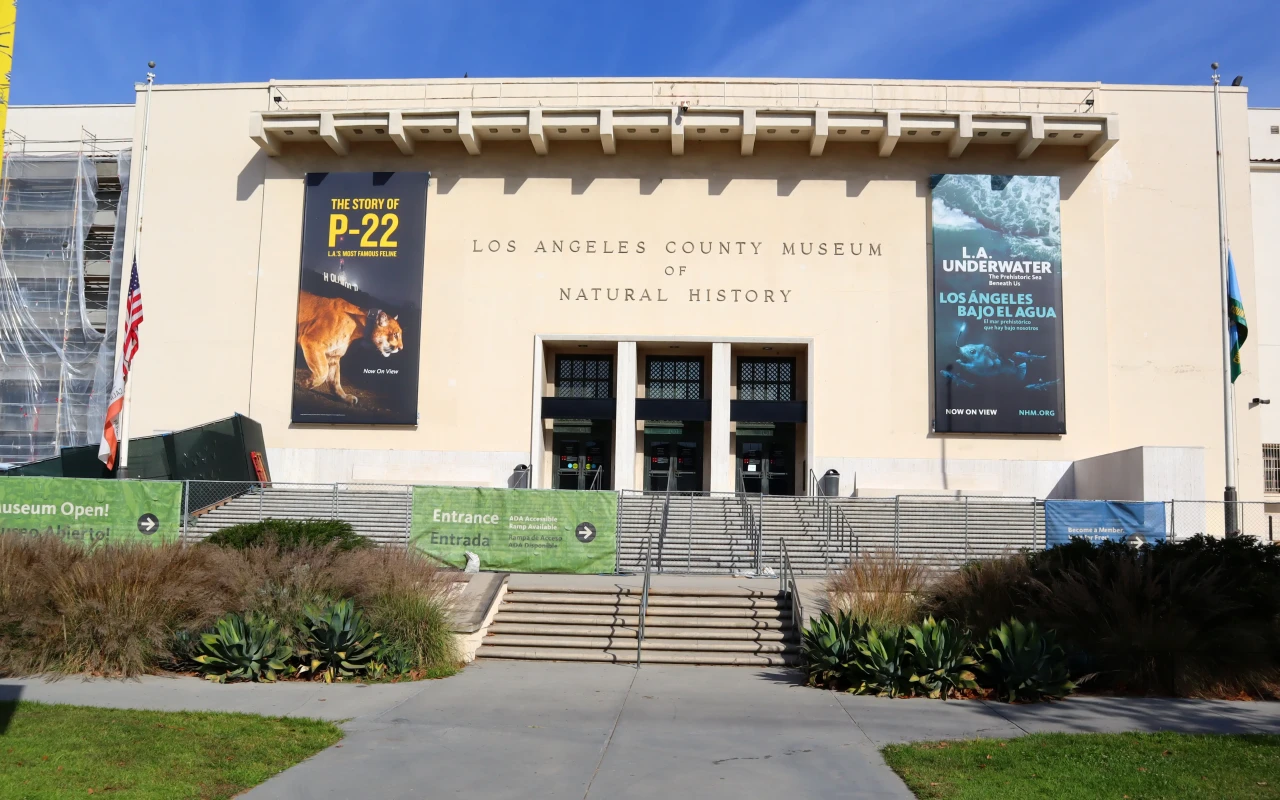
- Panoramic shot of the historic Beaux‐Arts façade framed by the Rose Garden blooms
Travel Tips
- Buy “All-Access” timed-entry tickets online to secure entry to special exhibits and the Butterfly Pavilion.
- Allow 3–4 hours for core galleries plus Nature Gardens; full-day visits welcome deep dives and lunch at the on-site café.
- Check the daily schedule for Fossil Lab viewings, live Animal Encounters, and 3D theater showtimes.
- Bring a reusable water bottle—water refill stations are available in public spaces.
- Combine with the California Science Center and Exposition Park Rose Garden for a full-day cultural itinerary.
FAQs
Is admission required?
Yes—general admission is USD 15 for adults, USD 12 for seniors/students, USD 9 for youth (3–12); children under 3 enter free. Butterfly Pavilion tickets or timed-entry passes may incur additional fees.
Are guided tours available?
Yes—free highlights tours depart daily at 11 AM and 2 PM; private group tours and school programs can be booked in advance.
Can I touch specimens?
Hands-on Discovery Labs allow supervised handling of select fossils and minerals; most galleries require no-touch viewing.
Final Thoughts
The Natural History Museum of Los Angeles County offers a captivating voyage through time—from T. rex stomps to fluttering butterflies—anchored by world-class research and community engagement. Whether you’re igniting a child’s curiosity, deepening your scientific knowledge, or simply marveling at nature’s wonders, NHM promises an unforgettable expedition into Earth’s story.