Claim to Fame
Toronto’s Graffiti Alley is the city’s most famous open-air street art gallery — a vibrant, ever-changing corridor of murals, tags, and visual storytelling stretching nearly a kilometer.
📌 Navigating Graffiti Alley : Answers to Frequently Asked Questions
- Washrooms: Public washrooms are not available in Graffiti Alley, but facilities can be found in nearby establishments.
- Hours of Operation: Graffiti Alley is open year-round, but the best time to visit is during daylight hours for optimal viewing of the art.
- Important Information: Visitors should be respectful of the art and the area, as it is a public space maintained by local artists.
- Admission Fee: There is no admission fee to enter Graffiti Alley, making it a free attraction for visitors.
- How Long to Visit: A visit typically lasts between 30 minutes to an hour, depending on the time spent exploring and taking photos.
- Parking: Street parking is available nearby, but it can be limited and frequently monitored for compliance.
- Family Friendly: The area is family-friendly, offering a vibrant and engaging environment for visitors of all ages.
- Photography: Graffiti Alley is a popular spot for photography, showcasing colorful street art and murals ideal for capturing unique images.
- WIFI: Free public WiFi is not available in the alley, but nearby cafes and establishments may offer connectivity.
- Picnic Area: There are no designated picnic areas within Graffiti Alley, but nearby parks may offer suitable spaces for picnicking.
- Handicap Accessible: Graffiti Alley is accessible for individuals with mobility challenges, with some areas featuring smoother paths.
- Pets: Pets are generally allowed in the area, but visitors should keep them leashed and clean up after them.
- Guided Tours: Guided tours are available, providing insights into the history and artists of the graffiti art on display.
- Restaurant or Cafe: There are no dedicated restaurants or cafes directly in Graffiti Alley, but numerous options are available in the surrounding area.
- Gift Shop: There is no gift shop within Graffiti Alley; however, local shops nearby may sell art and souvenirs.
Photos of Graffiti Alley
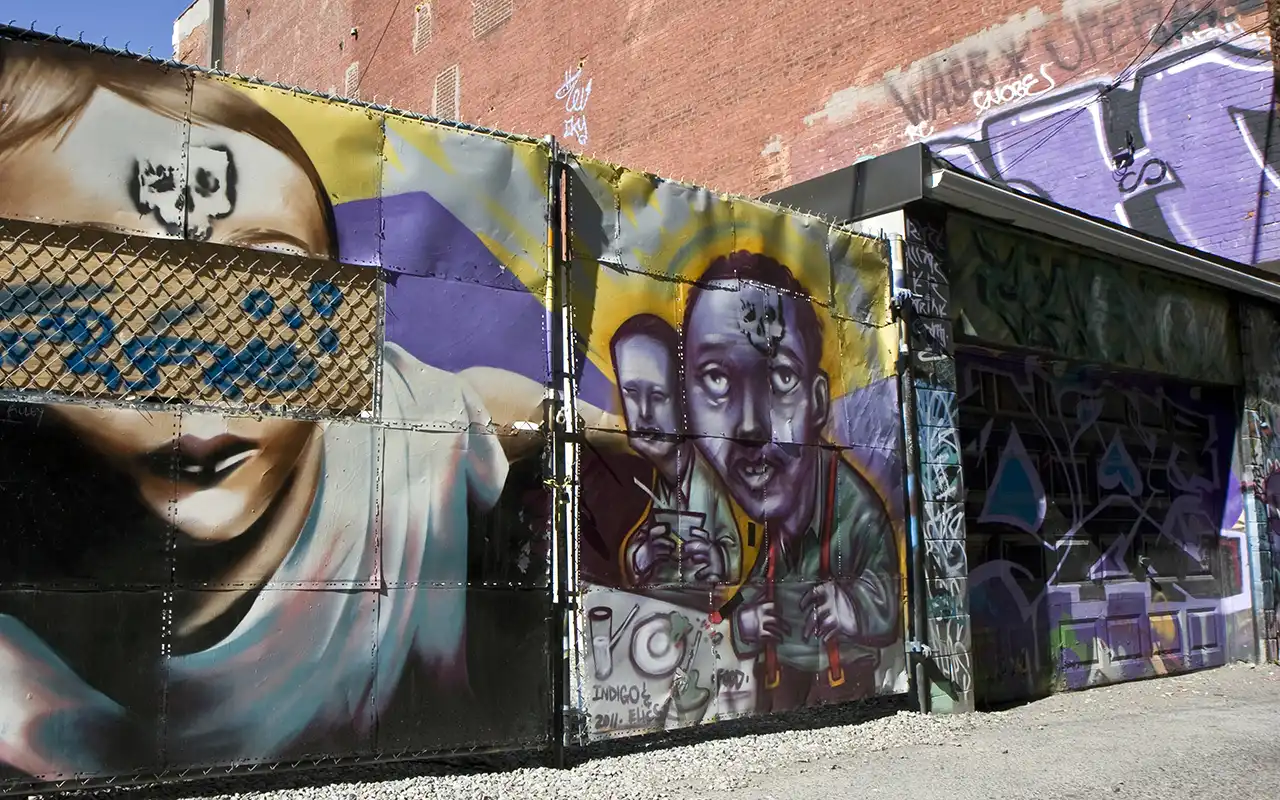
Graffiti Alley — officially known as Rush Lane — is one of Toronto’s most iconic creative spaces. Tucked behind Queen Street West, this vibrant stretch of alleyway explodes with color, satire, protest, and imagination. The artwork here isn’t static — it evolves constantly, turning the alley into a living gallery that reflects the pulse of the city.
It’s a favorite destination for photographers, travelers, art lovers, and anyone curious to experience a raw and expressive side of Toronto’s culture beyond traditional galleries and museums.
What to Expect
Expect bold murals that span entire building walls, layered tags, hidden characters, and surprise installations tucked into corners and garage doors. While some pieces are professional commissions by notable Canadian street artists, others are spontaneous acts of creativity or political commentary.
You can walk the full length of the alley — about 1 km — starting near Spadina Avenue and stretching west toward Portland Street. The surfaces change constantly, meaning no two visits are ever quite the same. You might catch artists at work, especially in summer.
Background and Cultural Context
Graffiti Alley has long been a controversial and celebrated part of Toronto’s urban identity. Once considered a hotspot for illegal tagging, the area gained legal protection in 2011 through efforts led by organizations like the Queen Street West BIA and artist groups such as Style in Progress.
Toronto’s street art scene has since flourished, and Graffiti Alley stands as its boldest canvas. It has been featured in music videos, fashion shoots, and even political ads — all while remaining true to its underground roots.
Best Time to Visit
Late morning to early evening offers the best natural lighting for photography. Weekdays tend to be quieter, but weekends bring more foot traffic and often live painting sessions. Summer and fall are ideal for both weather and street activity.
How to Get There
Enter from the alley off Spadina Avenue, just south of Queen Street West. You can also join from Augusta Avenue, Portland Street, or any cross-alley along Rush Lane. The nearest transit stop is Osgoode Station (subway) or Spadina streetcar.
Photo Opportunities
- Full-wall murals and artist tags
- Close-ups of painted doors, pipes, and hidden graffiti characters
- Portrait shots with vibrant, layered backdrops
- Timelapse or process photos if artists are actively working
Travel Tips
- Bring a camera — a phone will do, but the detail deserves high resolution.
- Wear good shoes — it’s a real alley, with uneven surfaces and occasional puddles.
- Respect the space — don’t tag over existing work or interrupt artists.
- Pair your visit with nearby cafes and shops on Queen Street West.
FAQs
Is Graffiti Alley safe?
Yes — it’s well-trafficked during the day and located in a busy area. Like any urban alley, it’s best avoided at night when alone.
Is the artwork permanent?
No — pieces are painted over regularly. That’s part of what makes the space dynamic and worth revisiting.
Are there guided tours?
Yes — several local companies offer street art walking tours that include Graffiti Alley and surrounding murals.
Final Thoughts
Graffiti Alley is a bold, creative heartbeat in Toronto’s artistic landscape. Whether you’re there to snap photos, soak in the energy, or simply explore, this vibrant space proves that great art doesn’t need a frame — just a wall and a city willing to embrace it.