
Claim to Fame
Fushimi Inari Taisha is world-renowned for its mesmerizing path of thousands of vermilion torii gates winding through a sacred forest — a symbol of Kyoto and one of Japan’s most iconic spiritual sites.
📌 Navigating Fushimi Inari Taisha : Answers to Frequently Asked Questions
- Washrooms: Washrooms are available at the base of the shrine and in some areas along the trails.
- Hours of Operation: The shrine is open 24 hours a day, allowing visitors to explore at their convenience.
- Important Information: Be prepared for a fair amount of walking; comfortable shoes and hydration are recommended.
- Admission Fee: Admission to Fushimi Inari Taisha is free of charge, as it is a Shinto shrine.
- How Long to Visit: Visitors typically spend about 1-2 hours on a quick visit, but exploring the entire trail can take longer.
- Parking: Parking is available at nearby lots, but it can fill up quickly, especially during peak hours.
- Family Friendly: Fushimi Inari Taisha is family-friendly, with plenty of open space and interesting sights for children.
- Photography: Photography is encouraged, especially among the iconic torii gates, but visitors should be respectful of worshippers.
- WIFI: Free Wi-Fi is not typically available on-site; visitors should consider using mobile data for internet access.
- Picnic Area: There are no designated picnic areas within the shrine, but nearby parks can be suitable for picnicking.
- Handicap Accessible: The main paths are mostly accessible for wheelchair users, but some steeper trails may pose challenges.
- Pets: Pets are not allowed within the shrine grounds to maintain the sanctity of the site.
- Guided Tours: Guided tours are available and can enhance the experience by providing historical and cultural context.
- Restaurant or Cafe: There are several food stalls and small cafes nearby offering traditional Japanese snacks and drinks.
- Gift Shop: A gift shop is located on-site, selling souvenirs, traditional crafts, and religious items.
Photos of Fushimi Inari Taisha
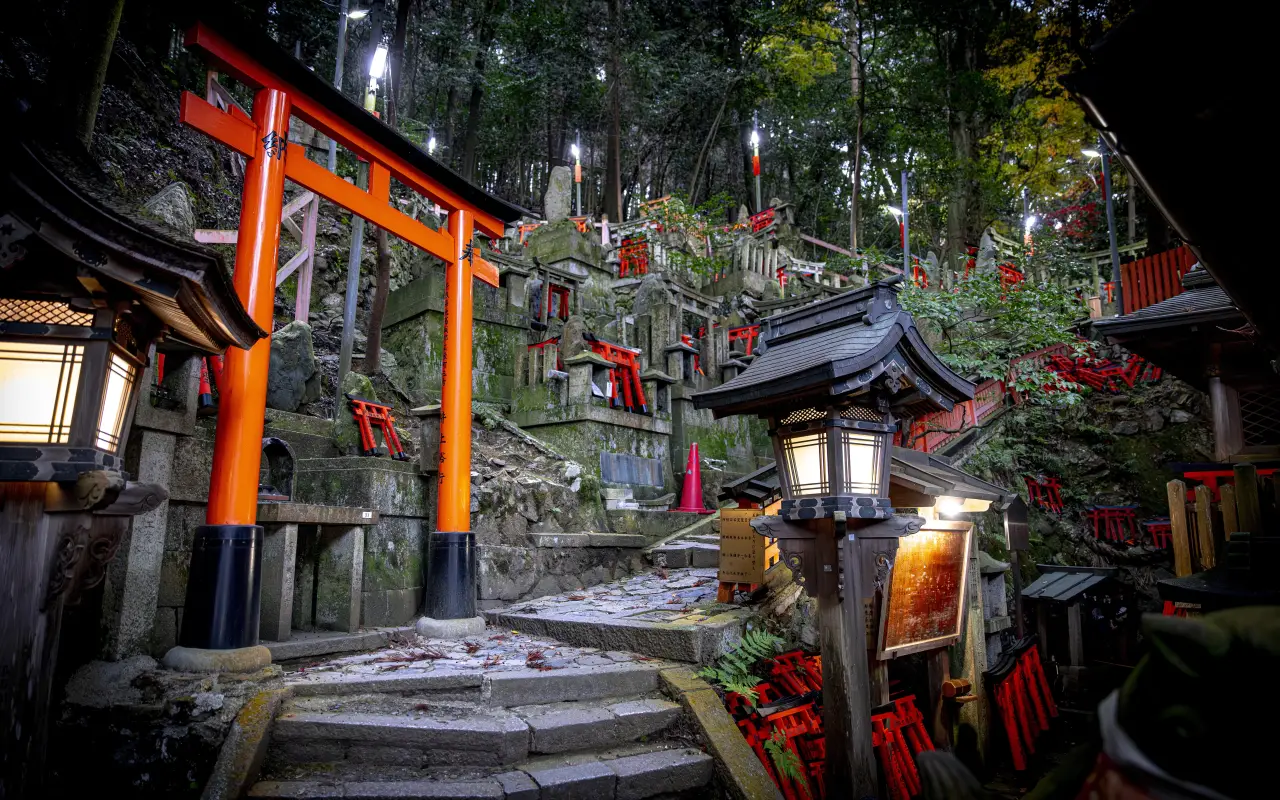
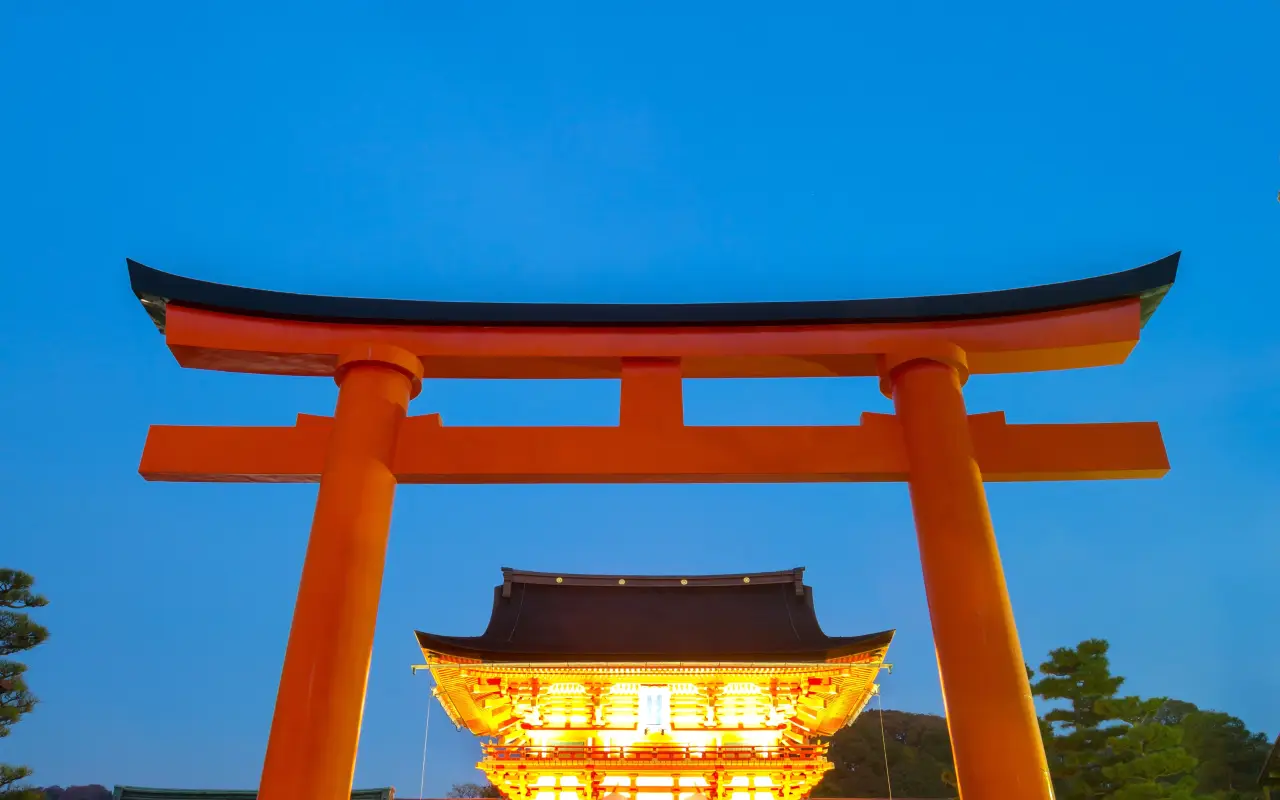
Located at the base of Kyoto’s sacred Mount Inari, Fushimi Inari Taisha is the head shrine of over 30,000 Inari shrines throughout Japan. Founded in the 8th century, this Shinto shrine is dedicated to Inari, the deity of rice, prosperity, and business, and has long been a pilgrimage site for merchants and worshippers seeking fortune.
What to Expect
The shrine’s most famous feature is the Senbon Torii, or “thousands of torii gates,” which form tunnels along trails that lead up the wooded slopes of Mount Inari. Each gate, donated by individuals or businesses, is inscribed with the donor’s name and date. The trail takes about 2–3 hours round trip to hike fully, offering peace, beauty, and breathtaking views over Kyoto.
Along the way, you’ll encounter stone fox statues (called kitsune) believed to be messengers of Inari, small sub-shrines, and secluded tea houses nestled into the hillside. At the base of the mountain, the main shrine complex features ornate pavilions, incense burners, and prayer areas.
Background and Cultural Context
Fushimi Inari dates back to 711 AD, making it one of Japan’s oldest and most historically significant shrines. The practice of donating torii gates began during the Edo period, and the striking red-orange gates have come to symbolize spiritual passage and purification.
Foxes are a major motif throughout the grounds — often depicted holding keys in their mouths, symbolizing access to the rice granaries they protect. Today, the site is a blend of sacred heritage and cultural spectacle, attracting millions of visitors annually.
Best Time to Visit
For a quieter, more atmospheric experience, visit early in the morning or in the late evening. Sunrise and dusk provide beautiful lighting for photos and a more meditative ambiance. Avoid mid-morning to early afternoon, when the shrine becomes very crowded.
How to Get There
The shrine is easily reached from Kyoto Station via the JR Nara Line — get off at Inari Station, just a 2-minute walk from the entrance. It’s also a short walk from Fushimi Inari Station on the Keihan Line.
Photo Opportunities
- The iconic tunnel of torii gates — best photographed when uncrowded
- Stone fox guardian statues with moss-covered bases
- Sunlight casting patterns through the torii paths
- Panoramic views from midway up Mount Inari
Travel Tips
- Wear comfortable shoes — the full hike involves stairs and forest paths.
- Bring water, especially in warmer months — there are few vending machines once on the trail.
- Be respectful of locals praying or participating in rituals at the shrines.
- Visit early or late to enjoy the atmosphere without the crowds.
FAQs
Is admission free?
Yes — Fushimi Inari Taisha is open 24/7 and free to enter.
Can I buy a torii gate?
Yes — individuals or businesses can sponsor torii gates, with prices based on size (typically arranged through the shrine office).
Are there restrooms and shops nearby?
Yes — the base area has restrooms, souvenir stalls, and food vendors offering street snacks like inari sushi and grilled mochi.
Final Thoughts
Fushimi Inari Taisha offers a truly enchanting and spiritually rich experience. Whether you’re seeking striking photographs, cultural insight, or a serene walk through a sacred forest, this iconic Kyoto shrine leaves a lasting impression and is a must-visit for anyone exploring Japan.