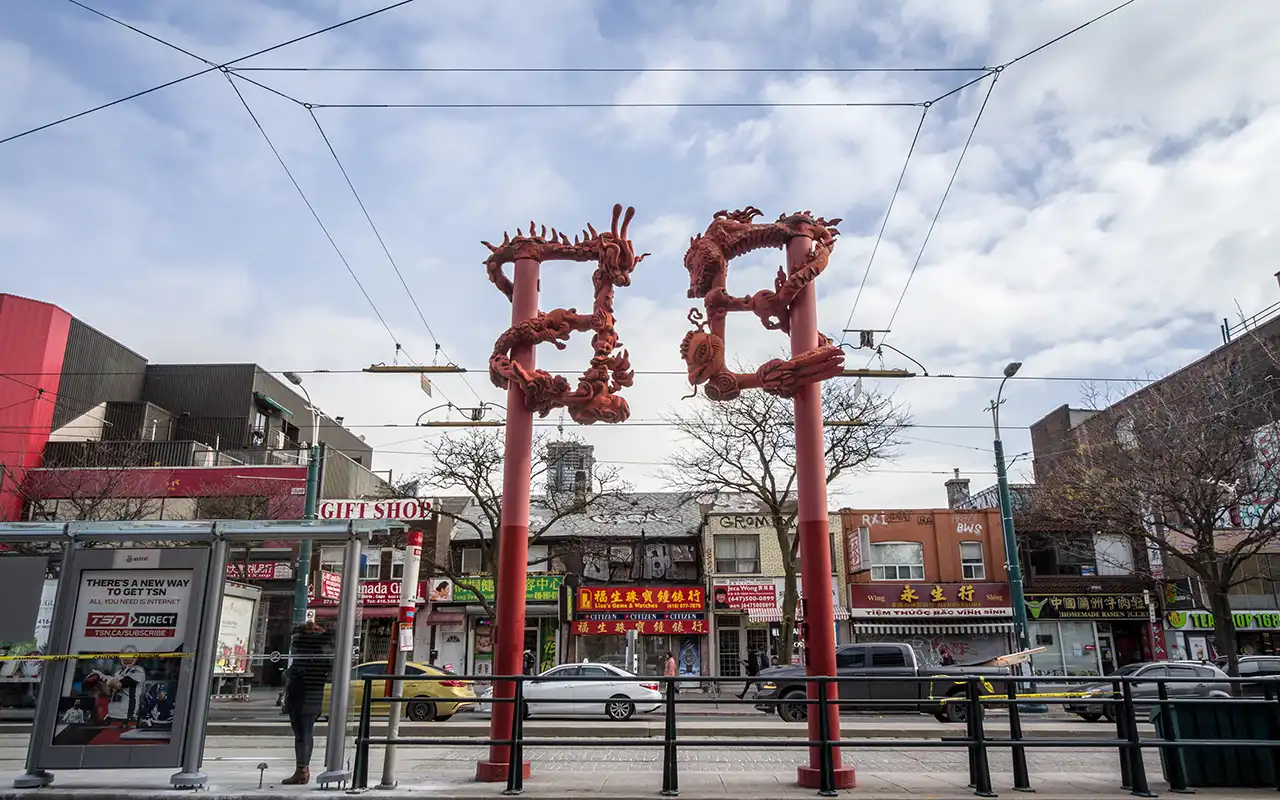
Claim to Fame
Toronto’s Chinatown is one of the largest and most vibrant in North America — a lively hub of Asian culture, cuisine, and community just west of the city’s core.
📌 Navigating Chinatown : Answers to Frequently Asked Questions
- Admission Fee: There is no admission fee to explore Chinatown, but individual attractions, shops, and restaurants will have their own costs.
- How Long to Visit: Time spent in Chinatown can vary from a quick meal to several hours exploring shops, markets, and cultural sites.
- Washrooms: Public washrooms are limited in Chinatown. Facilities are available in some restaurants for customers.
- Hours of Operation: Chinatown is open daily, with business hours varying by individual establishments. Evening hours are bustling with diners and shoppers.
- Important Information: Toronto's Chinatown is one of North America's largest, offering a vibrant exploration of Chinese and Asian cultures through its diverse array of shops, markets, and restaurants.
- Handicap Accessible: Sidewalks in Chinatown are accessible, but the area can be crowded. Some smaller shops may have limited accessibility.
- Pets: Pets are allowed in outdoor areas, but individual store policies may vary regarding pets inside.
- Guided Tours: Guided tours are available, offering insights into the history, culture, and culinary specialties of Chinatown.
- Restaurant or Cafe: Chinatown offers a wide variety of dining options, from street food to sit-down restaurants, specializing in various Chinese and Asian cuisines.
- Gift Shop: Shops throughout Chinatown offer a range of products, from traditional Chinese medicine to souvenirs, clothing, and groceries.
- Parking: Street parking is limited in Chinatown. Public parking lots are available, but public transportation or walking is recommended due to the area's high traffic.
- Family Friendly: Chinatown is a family-friendly area with shops, restaurants, and markets that cater to all ages.
- Photography: Photography is welcomed in public spaces, but be respectful of photographing individuals without consent or inside private businesses.
- WIFI: Public WIFI may be available in some restaurants or cafes, but there is no widespread public WIFI in the area.
- Picnic Area: There are no designated picnic areas in Chinatown, but nearby parks such as Grange Park offer space for outdoor eating.
Photos of Chinatown
Just steps from Kensington Market and the Art Gallery of Ontario, Toronto’s Chinatown is a bustling neighborhood that brims with energy, color, and flavor. Spanning several city blocks along Spadina Avenue and Dundas Street West, it’s a sensory adventure where steaming dim sum, lantern-lined storefronts, herbal medicine shops, and street vendors all compete for attention.
Whether you’re shopping for exotic ingredients, dining on authentic Cantonese, Vietnamese, or Sichuan fare, or simply soaking in the atmosphere, Chinatown offers an immersive cultural experience at the heart of the city.
What to Expect
Expect a lively, walkable district full of shops, restaurants, markets, and community hubs. The street signage is often bilingual, and the smell of fresh dumplings, barbecued meats, and sweet bubble tea fills the air. Many establishments are family-owned and steeped in tradition, with authentic flavors passed down for generations.
You'll find everything from bustling produce stands and dim sum halls to bubble tea cafés and karaoke bars. Street art, lion statues, and bright red décor give the area its unique and colorful identity. It’s a neighborhood that invites you to explore slowly, taste freely, and interact with locals.
Background and Cultural Context
Toronto’s Chinatown dates back to the late 19th century, with waves of immigration shaping its growth. The community grew rapidly after WWII and again following the 1967 immigration reforms, which brought new cultural energy and commercial development.
Today, the neighborhood includes a mix of Chinese, Vietnamese, Thai, and other East Asian influences, creating a mosaic of language, food, and traditions. It remains a cultural anchor for the Chinese Canadian population and a living example of multicultural urban vibrancy.
Best Time to Visit
Chinatown is active year-round, but weekends bring the most buzz, especially around lunchtime and late at night. Visit during Chinese New Year or the Toronto Chinatown Festival in the summer to enjoy cultural performances, dragon dances, and street celebrations. Evening visits reveal a glowing, neon-lit charm that’s perfect for photos and food adventures.
How to Get There
Easily accessible by public transit, Chinatown is located just west of downtown Toronto. Take the TTC streetcar along Spadina Avenue or Dundas Street, or walk from Osgoode or St. Patrick subway stations. Street parking is limited, so public transit or walking is best.
Photo Opportunities
- Colorful shopfronts and red lanterns on Spadina Avenue
- Fresh produce and spice stalls along the sidewalks
- Chinatown murals and public art installations
- Dishes like Peking duck, pho, or bubble tea — highly Instagrammable!
Travel Tips
- Bring cash — some small restaurants and markets are cash-only.
- Try a dim sum brunch at a traditional banquet-style hall.
- Venture off Spadina onto side streets for hidden gems and quieter spots.
- Brush up on basic food-related Mandarin or Cantonese terms — it’s appreciated!
FAQs
Is Toronto’s Chinatown safe?
Yes — it’s a busy and well-patrolled area, even at night. As with all urban neighborhoods, stay alert and use common sense.
Is it accessible for people with mobility needs?
Generally yes, but some older storefronts may have steps. Main sidewalks and restaurants are mostly accessible.
Are guided tours available?
Yes — local food tours and cultural walking tours are available and often include tastings at hidden spots you might miss on your own.
Final Thoughts
Toronto’s Chinatown is more than a neighborhood — it’s a flavorful, colorful, ever-changing community that captures the spirit of multicultural Toronto. Whether you're a foodie, a culture seeker, or a curious traveler, Chinatown invites you to slow down, explore, and taste something new.