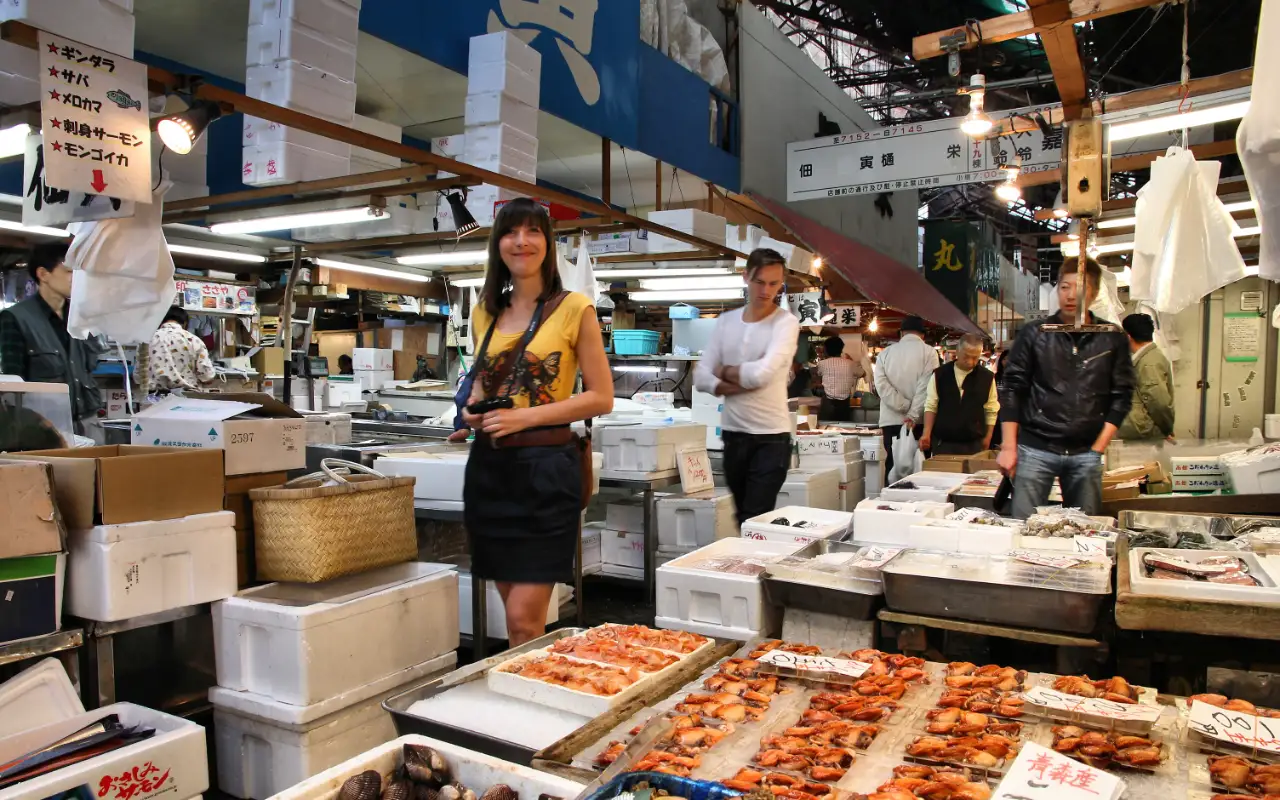
Claim to Fame
Tsukiji Outer Market—bursting with over 400 shops and stalls—has been Tokyo’s premier destination for fresh seafood, street-food delights, and artisanal cooking tools since the inner wholesale market relocated in 2018.
📌 Navigating Tsukiji Outer Market : Answers to Frequently Asked Questions
- Washrooms: Washrooms are available within the market, but they can be limited in number.
- Hours of Operation: The market typically operates from 5 AM to 2 PM, with hours varying by vendor.
- Important Information: It is advisable to arrive early in the morning for the freshest selections and to experience the market at its busiest.
- Admission Fee: There is no admission fee to enter the Tsukiji Outer Market.
- How Long to Visit: A visit to the market usually takes around 1 to 2 hours, depending on your interest in shopping and sampling food.
- Parking: Parking is limited in the Tsukiji Outer Market area, so it is recommended to use public transportation.
- Family Friendly: The market is family friendly, with many food stalls and shops that cater to children.
- Photography: Photography is welcomed, but it's respectful to ask for permission when taking photos of vendors or their products.
- WIFI: Free Wi-Fi is not widely available, but some cafes may offer it to customers.
- Picnic Area: There are no designated picnic areas within the market, but many visitors enjoy their food on-the-go.
- Handicap Accessible: The market is generally handicap accessible, with some areas being easier to navigate than others.
- Pets: Pets are not allowed in the market to maintain hygiene and food safety standards.
- Guided Tours: Guided tours are available and can enhance the experience by providing insights into the market's history and offerings.
- Restaurant or Cafe: There are numerous restaurants and cafes within the market, serving fresh seafood and local delicacies.
- Gift Shop: Several gift shops are available, offering local specialties and food-related souvenirs.
Photos of Tsukiji Outer Market
Winding through narrow lanes off Namiyoke Street in Chūō Ward, Tsukiji Outer Market entices food lovers to sample sashimi-topped rice bowls at dawn, nibble on grilled scallops and tamago-yaki, and browse gleaming knives forged by centuries-old smithies. Though the famed inner auction moved to Toyosu, Tsukiji’s outer rows retain their authentic Edo-period ambience—where sushi chefs source their morning catch, home cooks seek specialty seasonings, and visitors discover the heart of Tokyo’s culinary culture.
What to Expect
Arrive early (8–10 AM) to beat the crowds and taste freshly sliced tuna on rice (maguro-don) at long-standing sushi counters like Daiwa or Sushi Sei. Wander aisles of dried seaweed (nori), fish cakes (kamaboko), and pickles (tsukemono), alongside street-food stands offering grilled sweet eggs (dashimaki tamago) and fragrant meat skewers. Kitchenware shops display professional-grade yanagiba knives and copper pots. Don’t miss the outer-market lane known as “Kitchen Town” for ceramic bowls and lacquerware souvenirs, and pause at the Vegetable Market section for colorful seasonal produce and flower stalls.
Background and Cultural Context
Tsukiji has been Tokyo’s fish-trading hub since 1935, supplying the city’s restaurants and households. When the auction moved in 2018, the outer market thrived on its heritage and visitor loyalty. The market embodies Japan’s “washoku” tradition—where freshness, seasonality, and craftsmanship converge. Many current vendors are third-generation operators preserving recipes and techniques passed down since the Meiji era.
Best Time to Visit
Early mornings (7–10 AM) on weekdays yield the best seafood sampling and open vendors. Saturdays are lively but busier—arrive by 8 AM for prime sushi-bar seating. Most stalls begin closing by noon and finish teardown by 2 PM—plan to finish your visit before lunchtime ends. Spring (March–May) offers cherry-blossom motifs on pickles, while autumn sees matsutake mushrooms and fresh uni (sea urchin).
How to Get There
Tsukiji Outer Market lies at 4-16-2 Tsukiji, Chūō-ku. Metro: Toei Ōedo Line to Tsukiji-Shijō Station (Exit A1) or Hibiya Line to Tsukiji Station (Exit 1). Walk 3–5 minutes to the main lanes. Street parking is extremely limited; taxis can drop off at the market’s northern gate on Harumi Dori. The pedestrian-only lanes are wheel-accessible, though crowds and narrow paths require caution.
Photo Opportunities
- Vibrant sushi-counter chef slicing tuna behind glistening glass cases
- Street-food stall grilling skewers of scallops over open flame
- Artisan knife shop displaying rows of polished yanagiba blades
- Colorful stacks of pickled vegetables and dried shellfish in wicker baskets
- Morning light slanting onto wooden signs above teeming market stalls
Travel Tips
- Carry small bills—many vendors operate on cash-only basis for quick purchases.
- Bring a reusable bag for soy-sauce packs, dried snacks, and utensil purchases.
- Wear comfortable, non-slip shoes—floors can be wet and uneven between stalls.
- Learn basic Japanese phrases (e.g., “onegaishimasu”) to politely order or ask prices.
- Combine your visit with nearby Hamarikyu Gardens or Ginza for a full Tokyo morning itinerary.
FAQs
Is admission required?
No—entry to Tsukiji Outer Market is free; individual purchases vary by stall.
Can I tour the inner wholesale area?
No—the inner wholesale auction has relocated to Toyosu; Tsukiji’s outer market remains open to the public.
Final Thoughts
Tsukiji Outer Market remains Tokyo’s culinary crossroads—where the morning’s freshest catch meets centuries-old traditions in every bite and blade. Whether you’re savoring a perfectly seasoned oyster, collecting a handcrafted knife, or simply soaking in the market’s energetic rhythm, a stroll through Tsukiji is an essential taste of Japan’s gastronomic soul.