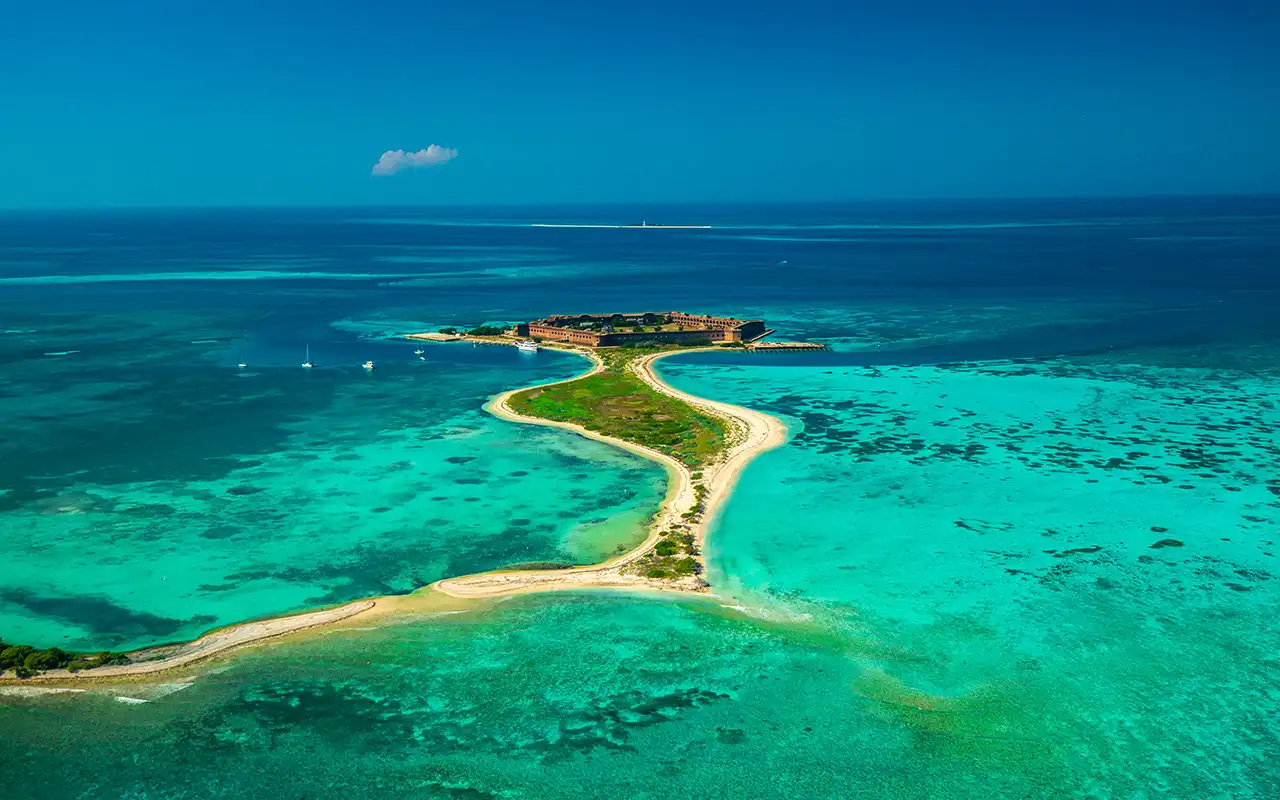
Claim to Fame
The Dry Tortugas National Park is renowned for its crystal-clear waters, abundant marine life, and the historic Fort Jefferson, creating a unique blend of natural and cultural experiences unlike any other in the United States.
📌 Navigating Dry Tortugas National Park : Answers to Frequently Asked Questions
- Washrooms: Restroom facilities are available at the visitor center and within Fort Jefferson.
- Hours of Operation: The park is open year-round, with ferry service operating daily, but hours may vary seasonally.
- Important Information: Visitors should come prepared with water, sunscreen, and appropriate gear, as there are limited amenities on the island.
- Admission Fee: The admission fee includes the ferry or seaplane cost, typically around $30 for adults, with discounts for children.
- How Long to Visit: A visit typically lasts between 4 to 8 hours, depending on ferry schedules and personal interests.
- Admission Fee: The admission fee includes the ferry or seaplane cost, typically around $30 for adults, with discounts for children.
- How Long to Visit: A visit typically lasts between 4 to 8 hours, depending on ferry schedules and personal interests.
- Washrooms: Restroom facilities are available at the visitor center and within Fort Jefferson.
- Hours of Operation: The park is open year-round, with ferry service operating daily, but hours may vary seasonally.
- Important Information: Visitors should come prepared with water, sunscreen, and appropriate gear, as there are limited amenities on the island.
- Picnic Area: Picnic areas are available, allowing visitors to enjoy meals while surrounded by scenic views.
- Handicap Accessible: The park is partially handicap accessible, with some facilities, such as restrooms, accommodating wheelchair users.
- Pets: Pets are not allowed in the park to protect the native wildlife and preserve the natural environment.
- Guided Tours: Guided tours are available through the ferry service, providing insights into the park's history and ecology.
- Restaurant or Cafe: There are no traditional restaurants or cafes, but refreshments are available on the ferry and at the visitor center.
- Gift Shop: A small gift shop can be found at the visitor center, offering souvenirs and educational materials.
- Parking: There is no parking available on Dry Tortugas National Park; visitors must arrive by ferry or seaplane.
- Family Friendly: Dry Tortugas National Park is family-friendly, offering educational programs and activities suitable for all ages.
- Photography: Photography opportunities abound, with stunning landscapes, historic Fort Jefferson, and diverse wildlife.
- WIFI: There is no public Wi-Fi available within the park, so visitors should plan accordingly.
- Restaurant or Cafe: There are no traditional restaurants or cafes, but refreshments are available on the ferry and at the visitor center.
- Gift Shop: A small gift shop can be found at the visitor center, offering souvenirs and educational materials.
- Parking: There is no parking available on Dry Tortugas National Park; visitors must arrive by ferry or seaplane.
- Family Friendly: Dry Tortugas National Park is family-friendly, offering educational programs and activities suitable for all ages.
- Photography: Photography opportunities abound, with stunning landscapes, historic Fort Jefferson, and diverse wildlife.
- WIFI: There is no public Wi-Fi available within the park, so visitors should plan accordingly.
- Picnic Area: Picnic areas are available, allowing visitors to enjoy meals while surrounded by scenic views.
- Handicap Accessible: The park is partially handicap accessible, with some facilities, such as restrooms, accommodating wheelchair users.
- Pets: Pets are not allowed in the park to protect the native wildlife and preserve the natural environment.
- Guided Tours: Guided tours are available through the ferry service, providing insights into the park's history and ecology.
📌Heads up: All times, prices and visitor policies are subject to change without notice. Please check the official website for the most recent information.
Photos of Dry Tortugas National Park
What to Expect
When you arrive at Dry Tortugas National Park, prepare to be enveloped by a sense of isolation and serenity. This remote paradise, situated about 70 miles west of Key West, Florida, is made up of seven small islands surrounded by stunning turquoise waters. Known for its exceptional snorkeling and diving locations, the park is a haven for marine enthusiasts. Vibrant coral reefs teem with life, offering a glimpse into an underwater world that captivates visitors. Above water, you can stroll along pristine beaches, take in panoramic views of the Gulf of Mexico, and soak up the sun in a relatively untouched setting. The centerpiece of the park, Fort Jefferson, dates back to the 19th century and is the largest masonry structure in the Western Hemisphere. As you walk along its ramparts, you'll feel the weight of history, learning about the fort's role in the Civil War and its subsequent use as a naval hospital. The juxtaposition of the fort's stone structure against the brilliant blue backdrop of the ocean creates a captivating visual contrast that is perfect for photography enthusiasts. Throughout the island, there is an atmosphere of tranquility, with the gentle sound of waves lapping against the shore providing a soothing soundtrack to your exploration. In addition to the historical aspects, Dry Tortugas offers myriad recreational opportunities. Birdwatching is particularly rewarding, as millions of seabirds flock to the islands, especially during migration seasons. Whether you're hiking the nature trails or simply lounging on the beach, the sense of peace and the abundance of natural beauty offer something for every traveler seeking to escape the hustle and bustle of everyday life.Background and Cultural Context
Dry Tortugas National Park finds its origins in a rich tapestry of history and culture. The park's name, which translates to "dry turtles," originally alluded to the sea turtles that once thrived in these waters. Discovered in the late 1500s by Spanish explorer Ponce de León, the islands have served various purposes over the centuries, from a coconut palm oasis to a strategic military outpost. With the construction of Fort Jefferson beginning in 1846, the islands transformed into a critical defensive site for the southern United States during the Civil War, as well as a destination for countless shipwrecked sailors seeking refuge. The cultural influences in the park are evident in the remnants of the fort and the stories of those who occupied it. From Union soldiers to the infamous Dr. Samuel Mudd, who was imprisoned within its walls, the narratives are both compelling and somber, revealing America's layered history. Visiting Fort Jefferson not only provides insight into military architecture but also serves as a reminder of the sacrifices made to protect the nation’s borders and the maritime routes connecting it to the rest of the world. Today, Dry Tortugas has been designated a national park, a testament to its historical and ecological significance. The preservation efforts ensure that future generations can appreciate the natural splendor and intriguing history that the park offers. Additionally, as an essential part of the larger Florida Keys ecosystem, the park plays a vital role in maintaining biodiversity, which is increasingly threatened by climate change and human activity.Best Time to Visit
The ideal time to visit Dry Tortugas National Park largely depends on your interests. The most pleasant weather typically occurs between November and April when temperatures are mild and humidity is lower. This period attracts numerous visitors, known as "seasonal tourists," eager to escape the chill of northern climates. The mild conditions are perfect for hiking, swimming, and exploring the outdoors—making this the peak season for the park. Between May and October, temperatures can soar, reaching into the high 80s and low 90s Fahrenheit. While this period may see fewer visitors and more opportunities for solitude, be mindful that summer months also bring the potential for tropical storms and hurricanes. Visitors during this time should remain flexible in their plans, ready to adapt to weather changes while enjoying less crowded trails and beaches. Despite the heat, underwater activities like snorkeling and diving remain exceptional, allowing you to cool off in the refreshing ocean. If you enjoy wildlife watching, visiting during the spring and fall migrations—notably from March to April and September to October—can provide an awe-inspiring spectacle as migrating bird species make their way through the region. No matter when you choose to visit, the stunning sunsets over the Gulf of Mexico create a magical backdrop that is sure to leave a lasting impression.How to Get There
Reaching Dry Tortugas National Park requires some planning, as it is only accessible by boat or seaplane. The most popular option is the ferry service operated by Yankee Freedom III, which departs from Key West. The journey takes about two and a half hours, and along the way, the boat offers a scenic view of the sparkling sea and nearby islands. Reservations are highly recommended, especially during peak season, as spots fill quickly. The ferry also provides amenities such as food and restrooms, adding comfort to your ocean voyage. For those seeking a unique experience, consider booking a seaplane flight, which offers stunning aerial views of the park and its surroundings. The flight, lasting approximately 40 minutes, provides a bird's-eye perspective of the expansive blue waters and coral reefs below—an unforgettable prelude to your visit. While the seaplane option is pricier, the experience adds a sense of adventure and excitement to your travel itinerary. Once you arrive at the park, transportation on the island is minimal; most visitors explore on foot. Trails weave through the landscape, leading to attractions like Fort Jefferson and the various beaches. Be sure to wear comfortable shoes and apply sunscreen, as the sun can be intense even on cloudy days. While facilities are limited, there are picnic areas and restrooms available, so prepare accordingly to ensure a comfortable day of exploration.Photo Opportunities
- Fort Jefferson's imposing structure against the backdrop of turquoise waters.
- Vibrant coral reefs while snorkeling or from a boat.
- Seabirds nesting along the shores and flying overhead.
- Sunsets over the Gulf of Mexico from the fort's ramparts.
- Crystal-clear waters reflecting sunlight in vibrant shades of blue.
- Historical artifacts and remnants within Fort Jefferson.
Travel Tips
- Book your ferry or seaplane tickets in advance to secure your spot.
- Pack ample water and snacks, as food options are limited on the islands.
- Bring snorkeling gear and a waterproof camera to capture the underwater beauty.
- Apply reef-safe sunscreen to protect the fragile marine ecosystem.
- Dress in lightweight, breathable clothing and wear a wide-brimmed hat for sun protection.
- Be mindful of the park's rules and regulations to help preserve its natural beauty.