Claim to Fame
The Congaree National Park is renowned for its ancient hardwood forest, towering trees, and rich ecosystems, offering a unique glimpse into one of the largest intact expanses of old-growth bottomland hardwood forest in the United States.
📌 Navigating Congaree National Park : Answers to Frequently Asked Questions
- Washrooms: Restroom facilities are located at the visitor center and along some of the main trails.
- Hours of Operation: The park is open year-round, 24 hours a day, although the visitor center has specific hours of operation.
- Important Information: Important information includes the need for bug spray during the warmer months and the recommendation to stay hydrated while exploring.
- Admission Fee: Admission to Congaree National Park is free of charge.
- How Long to Visit: A typical visit can last anywhere from a couple of hours to a full day, depending on the activities planned.
- Admission Fee: Admission to Congaree National Park is free of charge.
- How Long to Visit: A typical visit can last anywhere from a couple of hours to a full day, depending on the activities planned.
- Washrooms: Restroom facilities are located at the visitor center and along some of the main trails.
- Hours of Operation: The park is open year-round, 24 hours a day, although the visitor center has specific hours of operation.
- Important Information: Important information includes the need for bug spray during the warmer months and the recommendation to stay hydrated while exploring.
- Picnic Area: Picnic areas are available, equipped with tables and grills, for visitors to enjoy meals amidst nature.
- Handicap Accessible: The park is largely accessible for visitors with disabilities, including paved trails and accessible restrooms.
- Pets: Pets are allowed in the park but must be kept on a leash and are not permitted on trails or in buildings.
- Guided Tours: Guided tours are available through the park, led by park rangers or local naturalists, focusing on different aspects of the park's ecology.
- Restaurant or Cafe: There are no restaurants or cafes within the park; however, nearby towns offer dining options.
- Gift Shop: The visitor center features a small gift shop where visitors can purchase souvenirs and educational materials.
- Parking: Congaree National Park offers a variety of parking options, including a large parking lot near the visitor center.
- Family Friendly: Congaree is family-friendly, featuring easy trails and educational programs suitable for all ages.
- Photography: The park's diverse ecosystems provide excellent opportunities for photography, especially in the early morning and late afternoon light.
- WIFI: There is no public WiFi available in Congaree National Park, so visitors should plan to be offline during their visit.
- Restaurant or Cafe: There are no restaurants or cafes within the park; however, nearby towns offer dining options.
- Gift Shop: The visitor center features a small gift shop where visitors can purchase souvenirs and educational materials.
- Parking: Congaree National Park offers a variety of parking options, including a large parking lot near the visitor center.
- Family Friendly: Congaree is family-friendly, featuring easy trails and educational programs suitable for all ages.
- Photography: The park's diverse ecosystems provide excellent opportunities for photography, especially in the early morning and late afternoon light.
- WIFI: There is no public WiFi available in Congaree National Park, so visitors should plan to be offline during their visit.
- Picnic Area: Picnic areas are available, equipped with tables and grills, for visitors to enjoy meals amidst nature.
- Handicap Accessible: The park is largely accessible for visitors with disabilities, including paved trails and accessible restrooms.
- Pets: Pets are allowed in the park but must be kept on a leash and are not permitted on trails or in buildings.
- Guided Tours: Guided tours are available through the park, led by park rangers or local naturalists, focusing on different aspects of the park's ecology.
📌Heads up: All times, prices and visitor policies are subject to change without notice. Please check the official website for the most recent information.
Photos of Congaree National Park
What to Expect
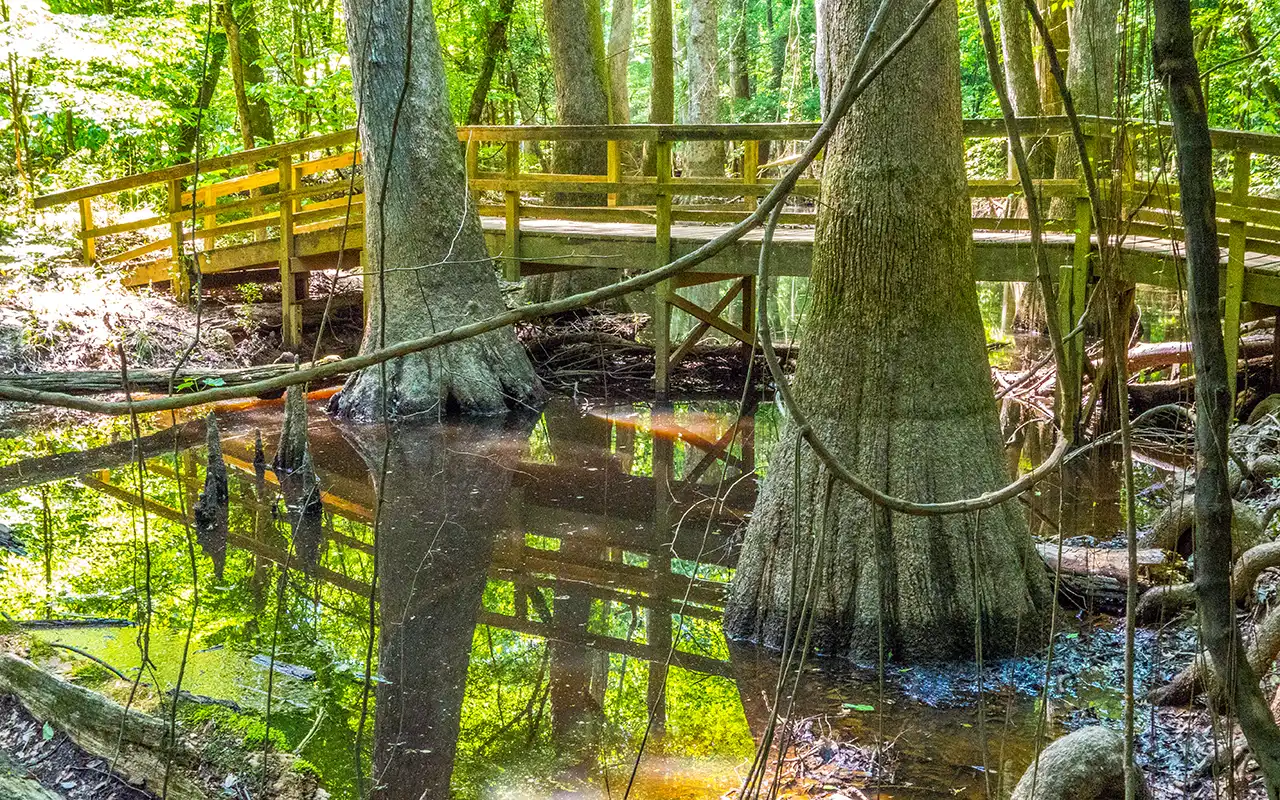
As you step into Congaree National Park, prepare to immerse yourself in a world of towering trees and diverse wildlife. The park's dense canopy, composed primarily of old-growth loblolly and longleaf pines, paints a vivid green landscape, while the underbrush teems with life. You might hear the distinctive calls of songbirds or catch a glimpse of deer silently roaming the trails. With over 25 miles of designated trails, this park invites visitors to choose their own adventure, whether on elevated boardwalks that wind through swampy areas or along rugged paths that navigate old logging roads. A key feature of Congaree National Park is its dynamic ecosystem, shaped by seasonal flooding that revitalizes the soil and sustains the diverse plant and animal life. You might encounter fascinating flora, such as the rare Carolina redroot or see towering cypress trees draped in Spanish moss, creating an enchanting atmosphere. Keep an eye out for the stealthy river otters playing near the creek edges or the mischievous raccoons scavenging in the shadows. The park operates on a "leave no trace" ethic, encouraging visitors to immerse themselves responsibly in the natural beauty. Expect to encounter muddy trails and uneven terrain; sturdy shoes are essential. Summer brings humidity that can challenge even seasoned hikers, while spring and fall present a delightful range of temperatures and vibrant foliage.Background and Cultural Context
Congaree National Park was designated as a National Park in 2003, but its history stretches back thousands of years. The land has been inhabited by various indigenous peoples who understood the value of the resources provided by the rivers and forests. The park's rich biodiversity has long been revered, but it wasn’t until the late 20th century that efforts truly ramped up to protect this unique ecosystem from encroaching development and logging activities that threatened its survival. The park's designation as a National Monument in 1976 was a significant step in conservation, reflecting a growing awareness of the importance of preserving natural habitats. The push for protection has roots in the passionate advocacy of local citizens and conservation groups, who rallied to highlight the area’s ecological significance. Today, Congaree National Park stands as a testament to their efforts, showcasing a well-preserved slice of Carolina’s natural heritage. This park not only harbors great biodiversity but also serves as a cultural touchstone that invokes a sense of appreciation for the natural world. Hikers traversing the park’s paths walk in the footsteps of generations who have viewed these woods as sacred, highlighting the intertwined nature of culture and environment in the region.Best Time to Visit
Determining the best time to visit Congaree National Park largely depends on your interests and activities planned. Spring, particularly late March to May, is a marvelous time to experience the park. As the flowers bloom and the trees leaf out, the rich array of wildflowers and vibrant greens invigorate the landscape, creating a picturesque scene. Wildlife becomes more active during this season, providing excellent opportunities for birdwatching and photography. The moderate temperatures in spring enhance the hiking experience, making it accessible for trekkers of all levels. Summer, while known for its lush beauty, tends to bring high humidity and the occasional thunderstorm. The park can become quite crowded during peak summer months, as families and groups flock to enjoy the long days. If you're prepared for the heat, an early morning visit can provide a tranquil experience in the cooler temperatures and the chance to witness wildlife in its most active state. Fall ushers in a vibrant tapestry of colors as the leaves turn, offering a stunning backdrop for exploration. The cooler temperatures make for comfortable hiking conditions, and the reduced crowds allow for a more intimate connection with nature. Winter, while quiet and often chilly, provides a unique perspective as the park reveals its skeletal beauty, allowing you to appreciate the intricate outlines of trees and freshly fallen leaves.How to Get There
Located in South Carolina, Congaree National Park is easily accessible from Columbia, the state's capital, which is just a short drive away. If you're traveling by car, take Interstate 77 and exit onto U.S. Highway 601 South, following the signs to the park entrance. The park has ample parking facilities that accommodate visitors year-round, but during peak seasons, it’s wise to arrive early to secure a spot and maximize your time exploring the trails. For those opting for public transportation, the nearest major airport is Columbia Metropolitan Airport (CAE), about 30 minutes away by car. From the airport, car rentals or rideshares can conveniently connect you to the park. If you're staying in Columbia, local buses may provide transport, but a personal vehicle is recommended for flexibility and access to more remote areas of the park. While visitations typically spike in good weather months, it’s always beneficial to check the Congaree National Park website for any alerts, trail conditions, or events that may be occurring during your visit.Photo Opportunities
- The majestic cypress trees in the floodplain.
- Sunlight filtering through the dense canopy at dawn.
- The starry night sky, perfect for astrophotography.
- Wildflowers and other flora in full bloom during spring.
- Wildlife moments, like deer grazing or birds in flight.
Travel Tips
- Wear appropriate footwear for wet and muddy trails.
- Bring insect repellent, especially in warmer months.
- Consider visiting during weekdays to avoid crowds.
- Pack a refillable water bottle to stay hydrated.
- Download a park map or trail guide before arriving.