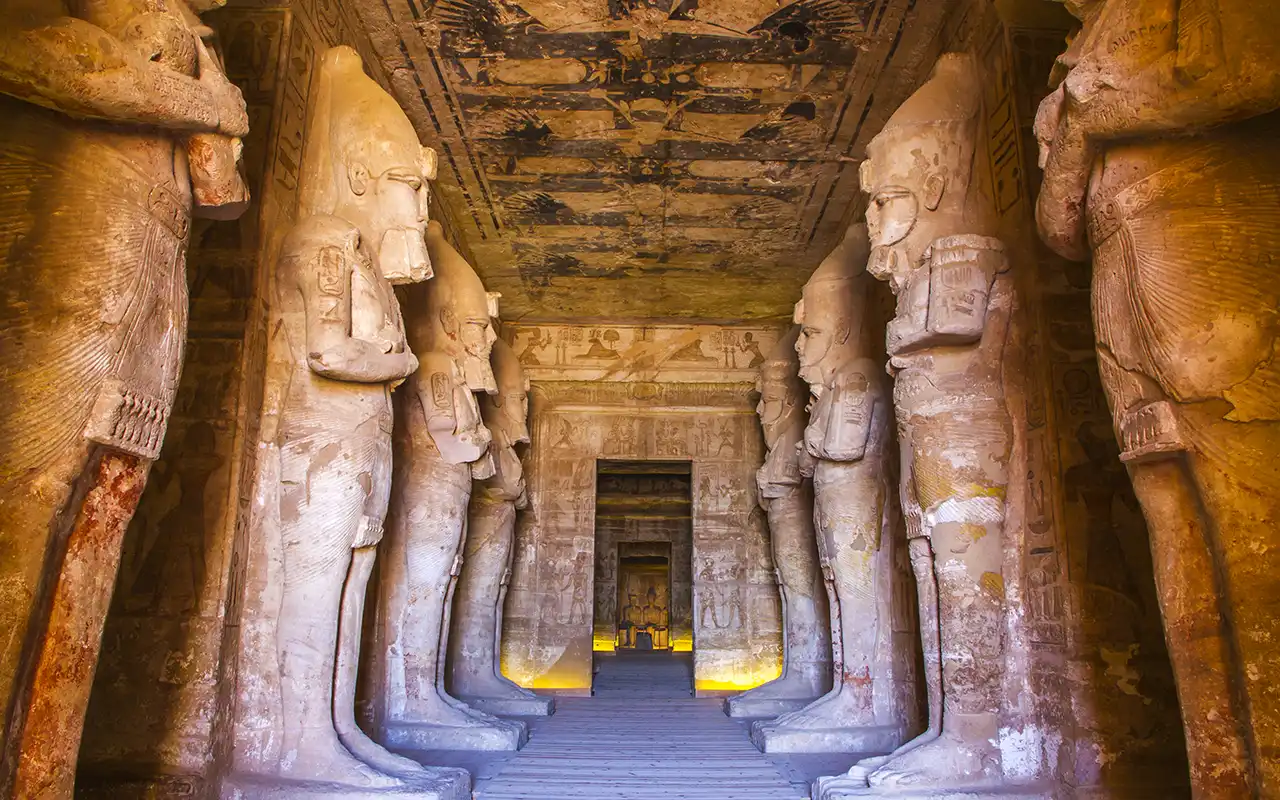
Claim to Fame
Carved directly into a Nubian cliff, the twin temples of Abu Simbel were built by Ramses II to honor himself and his queen Nefertari—featuring colossal 20-meter statues and precise solar alignment that still dazzles modern visitors.
📌 Navigating Marvel at Abu Simbel Temples : Answers to Frequently Asked Questions
- Washrooms: Washrooms are available near the entrance for visitor convenience.
- Hours of Operation: The site is open daily from 6 AM to 6 PM, but hours may vary seasonally.
- Important Information: It is advisable to arrive early to avoid crowds and to take advantage of guided tours.
- Admission Fee: The admission fee for the Abu Simbel Temples varies; check local listings for current prices.
- How Long to Visit: A visit typically takes about 1 to 2 hours to fully appreciate the temples and their surroundings.
- Parking: Parking is available near the entrance with designated areas for visitors.
- Family Friendly: Abu Simbel Temples are family-friendly, providing educational experiences for children and adults alike.
- Photography: Photography is permitted outside the temples, but flash photography inside is prohibited.
- WIFI: WIFI is not available on-site; visitors should plan accordingly.
- Picnic Area: Picnic areas are not officially designated, but visitors can find spaces to sit outside.
- Handicap Accessible: The site is partially handicap accessible, with some areas offering ramps and assistance.
- Pets: Pets are not allowed within the temple complex to preserve the site's integrity.
- Guided Tours: Guided tours are available and highly recommended to enhance the understanding of the site's history.
- Restaurant or Cafe: There is a small restaurant and cafe nearby offering refreshments and local dishes.
- Gift Shop: A gift shop is available on-site, offering souvenirs and educational materials related to the temples.
Photos of Marvel at Abu Simbel Temples
Set on the western bank of Lake Nasser, near Egypt’s southern border with Sudan, the Abu Simbel Temples are among the most iconic and awe-inspiring monuments of ancient Egypt. Built in the 13th century BCE, the temples honor Ramses II’s divine status and military might. With their massive façades, intricate carvings, and astronomical precision, they reflect both religious devotion and pharaonic propaganda. The entire site was famously relocated in the 1960s to avoid submersion by the Aswan High Dam—a feat of modern engineering rivaling the ancient original.
What to Expect
The site features two main temples: the Great Temple of Ramses II, fronted by four seated colossi, and the smaller Temple of Hathor, dedicated to Queen Nefertari. Inside, visitors can explore pillared halls adorned with scenes of battle, gods, and sacred rituals. Look for the legendary Kadesh battle relief, and the stunning solar alignment chamber, where twice a year (February 22 and October 22), sunlight illuminates the sanctuary’s inner statues. The site includes a visitor center with exhibits about the UNESCO relocation project.
Background and Cultural Context
Ramses II commissioned Abu Simbel to glorify his reign, assert control over Nubia, and emphasize his divine association with gods like Ra-Horakhty and Amun. The temples symbolized Egyptian power deep in conquered southern territories. In the 1960s, when the creation of Lake Nasser threatened to flood the site, a massive UNESCO-led campaign dismantled and reassembled the entire complex on higher ground—saving one of humanity’s greatest architectural treasures.
Best Time to Visit
The best time to visit is early morning, especially for day-trippers from Aswan. The sun festivals on February 22 and October 22 draw large crowds to witness the solar alignment—book well in advance for these dates. Weather is most pleasant from October to March, with cooler desert temperatures. Avoid the midday heat, which can be intense even in winter.
How to Get There
Abu Simbel is 280 km (174 miles) south of Aswan and reachable by:
- Flight – 45-minute flights from Aswan are available daily.
- Private car or tour bus – ~3.5-hour desert drive each way (often in convoy).
Photo Opportunities
- Sunrise light hitting the colossi of Ramses II at the Great Temple
- Interior reliefs showing Ramses’ battles and offerings to Ra-Horakhty
- Queen Nefertari and Hathor statues on the smaller temple façade
- Wide-angle shot of both temples with Lake Nasser in the background
- The illuminated sanctuary during the solar alignment (if timed right)
Travel Tips
- Book flights or tours early—Abu Simbel is remote and demand can be high.
- Bring water, sunglasses, and sun protection—shade is limited.
- Use wide-angle or panorama mode to capture the full scale of the temples.
- Guides are highly recommended—there is limited signage within the temples.
- Consider staying overnight in Abu Simbel for a more relaxed visit and stargazing.
FAQs
Why are the Abu Simbel Temples so famous?
They combine colossal artistry, deep historical symbolism, and extraordinary preservation—plus the UNESCO relocation effort makes them a modern marvel too.
Can I visit without a guide?
Yes, but a guide enhances the experience by explaining the reliefs, mythology, and solar phenomena. Tours often include transportation and expert commentary.
Are photos allowed inside?
Yes—non-flash photography is generally permitted, though restrictions may apply in certain chambers.
Final Thoughts
Abu Simbel is a journey into the grandeur of ancient Egypt—and into the mind of a ruler determined to be remembered for eternity. Whether you come for the towering statues, the celestial alignment, or the incredible rescue that saved it all, a visit to Abu Simbel is unforgettable and deeply humbling.